
*From Southern Belle to Self-Made Woman — Vivien Leigh Teaches Us That Claiming Your Life Means Refusing to Stay Broken*
—
She lost her home. She lost her security. She lost her world. But Scarlett O’Hara refused to lose herself.
When Atlanta burned, Scarlett didn’t crumble into the ashes. She didn’t accept defeat as permanent. She stood in the ruins and said words that would echo through generations: *”I’ll think of some way to get him back. After all, tomorrow is another day.”*
This is the philosophy of a woman who claimed her life not when it was easy, not when society approved, but when everything—absolutely everything—told her to surrender.
Vivien Leigh, in her Oscar-winning portrayal of Scarlett O’Hara in *Gone with the Wind* (1939), gave us more than a character. She gave us a masterclass in resilience, reinvention, and the fierce elegance required to survive when the world collapses.
—
## The Scarlett Philosophy: Refusal as Power
Scarlett O’Hara inherited a legacy of gentility and Southern charm, but she claimed something far more valuable: agency.
When the war came, Southern society expected women to fade. To become invisible. To wait passively for men to fix things. To accept their powerlessness as inevitable.
Scarlett said no.
She looked at impossible circumstances—a destroyed plantation, a family depending on her, a society that forbade women from working—and she asked herself the only question that matters: *What can I do?*
Not “What am I allowed to do?”
Not “What does society expect?”
Not “What if I fail?”
Just: *What can I do?*
And then she did it.
She married for survival (a scandal). She ran a business (unthinkable for a woman). She danced at a charity ball while still in mourning (shocking). She cut down her mother’s velvet curtains to make a dress (practical and defiant). She refused to disappear.
**This is claiming your life not in luxury, but in crisis.**
—
## Elegance as a Form of Survival
Here’s what people often miss about Scarlett: her elegance wasn’t frivolous. It was strategic.
Even as she struggled to survive, she never stopped tending to herself. She wore her best dress. She arranged her hair. She maintained her composure. She refused to let circumstance strip her of dignity.
This wasn’t vanity. This was claiming power in the only way available to her.
When you’re a woman in a world that has taken everything, your elegance becomes your refusal to be diminished. Your grooming becomes an act of rebellion. Your grace under pressure becomes proof that they cannot break you.
Scarlett understood something essential: **claiming your life means refusing to look defeated, even when you feel broken.**
She taught us that elegance is not about wealth or status or perfect circumstances. Elegance is about showing up, standing tall, and refusing to accept that your circumstances define your worth.
In the ruins of Tara, with nothing but a dress made from curtains, Scarlett was still *Scarlett*—fierce, alive, unapologetic.
That is the power of claiming your life through grace.
—
## Reinvention as Survival Strategy
Scarlett didn’t have one identity. She had many.
She was the spoiled belle, charming and manipulative.
She was the desperate widow, clinging to survival.
She was the ruthless businesswoman, willing to do what others wouldn’t.
She was the woman who loved Rhett Butler with a passion that terrified her.
Each version of Scarlett was a response to circumstance, but also a choice. She didn’t wait to become a better version of herself. She became whatever she needed to be to survive, and in doing so, she discovered her own power.
**Claiming your life means accepting that you will change, reinvent, evolve—and that’s not weakness. That’s survival.**
The Scarlett we meet at the beginning of the film—spoiled, thoughtless, concerned only with pleasing men—wouldn’t have survived Atlanta’s burning. But she *became* someone who could survive it. She transformed herself through crisis into someone stronger, more capable, more real.
This is not the same as losing yourself. This is the opposite. This is discovering who you actually are when pretense burns away and only truth remains.
—
## How to Claim Your Life Like Scarlett
If everything fell apart tomorrow, would you survive? Not just physically—but would you claim your life and rebuild it, or would you spend years waiting for someone else to fix it?
Scarlett teaches us that claiming your life means:
### 1. **Refuse to Accept Defeat as Permanent**
When Scarlett’s world burned, she didn’t collapse into permanent despair. She said, *”Tomorrow is another day.”* Not because she was naive or dismissive of her suffering, but because she refused to let today’s destruction determine tomorrow’s possibilities.
**Your practice:** When you face a setback, don’t ask “Why is this happening to me?” Ask instead: “What can I do now? What’s possible tomorrow?”
### 2. **Use Every Tool at Your Disposal**
Scarlett didn’t apologize for being beautiful, charming, or intelligent. She used these gifts strategically. She didn’t have money or power or status—but she had herself, and she wielded that with absolute clarity.
**Your practice:** Stop diminishing your own gifts. If you’re intelligent, use that intelligence. If you’re beautiful, claim that power unapologetically. If you’re capable, let that capability show. Don’t wait to be “worthy” of using what you have.
### 3. **Maintain Your Elegance, Especially in Crisis**
Even as she struggled, Scarlett never stopped tending to herself. She arranged her hair. She wore her best dress. She refused to let circumstances strip her of dignity.
**Your practice:** In your hardest seasons, tend to yourself with *more* care, not less. Take the bath. Wear the good perfume. Do your hair. Put on the dress that makes you feel powerful. Elegance in crisis is an act of self-respect.
### 4. **Do What Others Won’t**
Scarlett succeeded where others failed because she was willing to be uncomfortable, misunderstood, even condemned. She ran a business. She scandalized society. She did what was necessary, not what was approved.
**Your practice:** Ask yourself: What am I avoiding because it’s unconventional? What would I do if I stopped caring what people thought? Sometimes claiming your life means being willing to be judged.
### 5. **Never Accept Powerlessness as Truth**
Scarlett lived in a world designed to keep women powerless. But she found agency in every corner. She couldn’t control the war, but she could control her choices. She couldn’t control society’s rules, but she could refuse to obey them. She couldn’t control Rhett’s heart, but she could control her own.
**Your practice:** In every situation, ask: What can I control here? What choice do I have? Power isn’t about controlling everything. It’s about claiming agency in the areas where you do have choice.
### 6. **Reinvent When Necessary**
Scarlett didn’t cling to who she was at the beginning of the film. She let herself be transformed by circumstance, and in that transformation, she discovered her true strength.
**Your practice:** Stop apologizing for changing. You don’t have to be the same person you were last year, or last month, or yesterday. Evolution is not betrayal. It’s survival.
### 7. **Refuse to Disappear**
Even as the world tried to diminish her, Scarlett refused to become invisible. She took up space. She spoke her mind. She claimed her presence.
**Your practice:** Stop making yourself smaller to make others comfortable. Your voice matters. Your presence matters. Your needs matter. Claim the space you deserve.
—
## The Scarlett We Don’t Talk About
Here’s the truth they don’t tell you about Scarlett O’Hara: she’s not a perfect role model. She’s selfish. She’s manipulative. She hurts people. She loves the wrong man.
And yet—she claimed her life with a ferocity that most women only dream of.
Vivien Leigh understood this complexity. She played Scarlett not as a heroine to worship, but as a human to understand. Scarlett’s flaws don’t negate her power. They’re part of it. She’s powerful *and* flawed, brave *and* selfish, elegant *and* ruthless.
This is what claiming your life actually looks like. Not perfection. Not approval. Not fitting neatly into the boxes society prepared for you.
It looks like being willing to do what’s necessary, even when it costs you. It looks like standing up when you’ve been knocked down. It looks like saying *no* when the world expects yes.
It looks like Scarlett O’Hara, standing in the ruins of everything, refusing to break.
—
## The Final Lesson
At the end of *Gone with the Wind*, Rhett Butler leaves Scarlett. She’s devastated. She’s alone. Everything she thought she wanted has slipped through her fingers.
And what does she do?
She doesn’t accept this as the end. She doesn’t believe that her life is over because one man walked away. She says, quite simply: *”I’ll go home, and I’ll think of some way to get him back… After all, tomorrow is another day.”*
This is not naive optimism. This is the core of what it means to claim your life.
It means refusing to let anyone else’s departure define your story. It means believing in your own capacity to rebuild, reinvent, survive. It means understanding that your life is not determined by what happens to you, but by how you respond.
**Scarlett teaches us that claiming your life is an act of relentless, unapologetic refusal.** Refusal to break. Refusal to fade. Refusal to accept that your circumstances determine your worth.
—
## The Vivien Leigh Legacy
Vivien Leigh won the Academy Award for her portrayal of Scarlett O’Hara. But more than that, she gave us a character who has endured for nearly a century—not because she’s perfect, but because she’s real.
She’s the woman in all of us who refuses to surrender. She’s the fierce elegance we summon when the world burns down. She’s the voice that says, *”After all, tomorrow is another day.”*
This is the philosophy of Claiming Life: not that bad things won’t happen. Not that loss won’t come. Not that you won’t be broken sometimes.
But that you will rebuild. That you will reinvent. That you will claim agency in your own story, even when the world tells you the story is already written.
—
## Claiming Your Life Like Scarlett: A Daily Practice
– **Today:** Do one thing you’ve been too afraid to do. Be too bold, even if it’s small.
– **This week:** Maintain your elegance, especially in your hardest moments. Tend to yourself with intention.
– **This month:** Refuse something you’ve been conditioned to accept. Say no. Set a boundary. Choose yourself.
– **This season:** Reinvent something. Not because you have to, but because you choose to.
After all, tomorrow is another day.
And it’s yours to claim.
—
*The Claiming Life Times is a series celebrating iconic women who refused to fade. Each edition explores how we can claim our lives with intention, elegance, and unapologetic power.*
*Read more in the Claiming Life series.*
—
**By Amanda Scully | ClaimingLife.com**
*Where slow living, intentional beauty, and women’s empowerment meet.*
How to Survive Like Scarlett O’Hara: When Everything Burns Down, Elegance is Your Weapon
*From Southern Belle to Self-Made Woman — Vivien Leigh Teaches Us That Claiming Your Life Means Refusing to Stay Broken*
—
She lost her home. She lost her security. She lost her world. But Scarlett O’Hara refused to lose herself.
When Atlanta burned, Scarlett didn’t crumble into the ashes. She didn’t accept defeat as permanent. She stood in the ruins and said words that would echo through generations: *”I’ll think of some way to get him back. After all, tomorrow is another day.”*
This is the philosophy of a woman who claimed her life not when it was easy, not when society approved, but when everything—absolutely everything—told her to surrender.
Vivien Leigh, in her Oscar-winning portrayal of Scarlett O’Hara in *Gone with the Wind* (1939), gave us more than a character. She gave us a masterclass in resilience, reinvention, and the fierce elegance required to survive when the world collapses.
—
## The Scarlett Philosophy: Refusal as Power
Scarlett O’Hara inherited a legacy of gentility and Southern charm, but she claimed something far more valuable: agency.
When the war came, Southern society expected women to fade. To become invisible. To wait passively for men to fix things. To accept their powerlessness as inevitable.
Scarlett said no.
She looked at impossible circumstances—a destroyed plantation, a family depending on her, a society that forbade women from working—and she asked herself the only question that matters: *What can I do?*
Not “What am I allowed to do?”
Not “What does society expect?”
Not “What if I fail?”
Just: *What can I do?*
And then she did it.
She married for survival (a scandal). She ran a business (unthinkable for a woman). She danced at a charity ball while still in mourning (shocking). She cut down her mother’s velvet curtains to make a dress (practical and defiant). She refused to disappear.
**This is claiming your life not in luxury, but in crisis.**
—
## Elegance as a Form of Survival
Here’s what people often miss about Scarlett: her elegance wasn’t frivolous. It was strategic.
Even as she struggled to survive, she never stopped tending to herself. She wore her best dress. She arranged her hair. She maintained her composure. She refused to let circumstance strip her of dignity.
This wasn’t vanity. This was claiming power in the only way available to her.
When you’re a woman in a world that has taken everything, your elegance becomes your refusal to be diminished. Your grooming becomes an act of rebellion. Your grace under pressure becomes proof that they cannot break you.
Scarlett understood something essential: **claiming your life means refusing to look defeated, even when you feel broken.**
She taught us that elegance is not about wealth or status or perfect circumstances. Elegance is about showing up, standing tall, and refusing to accept that your circumstances define your worth.
In the ruins of Tara, with nothing but a dress made from curtains, Scarlett was still *Scarlett*—fierce, alive, unapologetic.
That is the power of claiming your life through grace.
—
## Reinvention as Survival Strategy
Scarlett didn’t have one identity. She had many.
She was the spoiled belle, charming and manipulative.
She was the desperate widow, clinging to survival.
She was the ruthless businesswoman, willing to do what others wouldn’t.
She was the woman who loved Rhett Butler with a passion that terrified her.
Each version of Scarlett was a response to circumstance, but also a choice. She didn’t wait to become a better version of herself. She became whatever she needed to be to survive, and in doing so, she discovered her own power.
**Claiming your life means accepting that you will change, reinvent, evolve—and that’s not weakness. That’s survival.**
The Scarlett we meet at the beginning of the film—spoiled, thoughtless, concerned only with pleasing men—wouldn’t have survived Atlanta’s burning. But she *became* someone who could survive it. She transformed herself through crisis into someone stronger, more capable, more real.
This is not the same as losing yourself. This is the opposite. This is discovering who you actually are when pretense burns away and only truth remains.
—
## How to Claim Your Life Like Scarlett
If everything fell apart tomorrow, would you survive? Not just physically—but would you claim your life and rebuild it, or would you spend years waiting for someone else to fix it?
Scarlett teaches us that claiming your life means:
### 1. **Refuse to Accept Defeat as Permanent**
When Scarlett’s world burned, she didn’t collapse into permanent despair. She said, *”Tomorrow is another day.”* Not because she was naive or dismissive of her suffering, but because she refused to let today’s destruction determine tomorrow’s possibilities.
**Your practice:** When you face a setback, don’t ask “Why is this happening to me?” Ask instead: “What can I do now? What’s possible tomorrow?”
### 2. **Use Every Tool at Your Disposal**
Scarlett didn’t apologize for being beautiful, charming, or intelligent. She used these gifts strategically. She didn’t have money or power or status—but she had herself, and she wielded that with absolute clarity.
**Your practice:** Stop diminishing your own gifts. If you’re intelligent, use that intelligence. If you’re beautiful, claim that power unapologetically. If you’re capable, let that capability show. Don’t wait to be “worthy” of using what you have.
### 3. **Maintain Your Elegance, Especially in Crisis**
Even as she struggled, Scarlett never stopped tending to herself. She arranged her hair. She wore her best dress. She refused to let circumstances strip her of dignity.
**Your practice:** In your hardest seasons, tend to yourself with *more* care, not less. Take the bath. Wear the good perfume. Do your hair. Put on the dress that makes you feel powerful. Elegance in crisis is an act of self-respect.
### 4. **Do What Others Won’t**
Scarlett succeeded where others failed because she was willing to be uncomfortable, misunderstood, even condemned. She ran a business. She scandalized society. She did what was necessary, not what was approved.
**Your practice:** Ask yourself: What am I avoiding because it’s unconventional? What would I do if I stopped caring what people thought? Sometimes claiming your life means being willing to be judged.
### 5. **Never Accept Powerlessness as Truth**
Scarlett lived in a world designed to keep women powerless. But she found agency in every corner. She couldn’t control the war, but she could control her choices. She couldn’t control society’s rules, but she could refuse to obey them. She couldn’t control Rhett’s heart, but she could control her own.
**Your practice:** In every situation, ask: What can I control here? What choice do I have? Power isn’t about controlling everything. It’s about claiming agency in the areas where you do have choice.
### 6. **Reinvent When Necessary**
Scarlett didn’t cling to who she was at the beginning of the film. She let herself be transformed by circumstance, and in that transformation, she discovered her true strength.
**Your practice:** Stop apologizing for changing. You don’t have to be the same person you were last year, or last month, or yesterday. Evolution is not betrayal. It’s survival.
### 7. **Refuse to Disappear**
Even as the world tried to diminish her, Scarlett refused to become invisible. She took up space. She spoke her mind. She claimed her presence.
**Your practice:** Stop making yourself smaller to make others comfortable. Your voice matters. Your presence matters. Your needs matter. Claim the space you deserve.
—
## The Scarlett We Don’t Talk About
Here’s the truth they don’t tell you about Scarlett O’Hara: she’s not a perfect role model. She’s selfish. She’s manipulative. She hurts people. She loves the wrong man.
And yet—she claimed her life with a ferocity that most women only dream of.
Vivien Leigh understood this complexity. She played Scarlett not as a heroine to worship, but as a human to understand. Scarlett’s flaws don’t negate her power. They’re part of it. She’s powerful *and* flawed, brave *and* selfish, elegant *and* ruthless.
This is what claiming your life actually looks like. Not perfection. Not approval. Not fitting neatly into the boxes society prepared for you.
It looks like being willing to do what’s necessary, even when it costs you. It looks like standing up when you’ve been knocked down. It looks like saying *no* when the world expects yes.
It looks like Scarlett O’Hara, standing in the ruins of everything, refusing to break.
—
## The Final Lesson
At the end of *Gone with the Wind*, Rhett Butler leaves Scarlett. She’s devastated. She’s alone. Everything she thought she wanted has slipped through her fingers.
And what does she do?
She doesn’t accept this as the end. She doesn’t believe that her life is over because one man walked away. She says, quite simply: *”I’ll go home, and I’ll think of some way to get him back… After all, tomorrow is another day.”*
This is not naive optimism. This is the core of what it means to claim your life.
It means refusing to let anyone else’s departure define your story. It means believing in your own capacity to rebuild, reinvent, survive. It means understanding that your life is not determined by what happens to you, but by how you respond.
**Scarlett teaches us that claiming your life is an act of relentless, unapologetic refusal.** Refusal to break. Refusal to fade. Refusal to accept that your circumstances determine your worth.
—
## The Vivien Leigh Legacy
Vivien Leigh won the Academy Award for her portrayal of Scarlett O’Hara. But more than that, she gave us a character who has endured for nearly a century—not because she’s perfect, but because she’s real.
She’s the woman in all of us who refuses to surrender. She’s the fierce elegance we summon when the world burns down. She’s the voice that says, *”After all, tomorrow is another day.”*
This is the philosophy of Claiming Life: not that bad things won’t happen. Not that loss won’t come. Not that you won’t be broken sometimes.
But that you will rebuild. That you will reinvent. That you will claim agency in your own story, even when the world tells you the story is already written.
—
## Claiming Your Life Like Scarlett: A Daily Practice
– **Today:** Do one thing you’ve been too afraid to do. Be too bold, even if it’s small.
– **This week:** Maintain your elegance, especially in your hardest moments. Tend to yourself with intention.
– **This month:** Refuse something you’ve been conditioned to accept. Say no. Set a boundary. Choose yourself.
– **This season:** Reinvent something. Not because you have to, but because you choose to.
After all, tomorrow is another day.
And it’s yours to claim.
—
*The Claiming Life Times is a series celebrating iconic women who refused to fade. Each edition explores how we can claim our lives with intention, elegance, and unapologetic power.*
*Read more in the Claiming Life series.*
—
**By Amanda Scully | ClaimingLife.com**
*Where slow living, intentional beauty, and women’s empowerment meet.*
How to Survive Like Scarlett O’Hara: When Everything Burns Down, Elegance is Your Weapon
*From Southern Belle to Self-Made Woman — Vivien Leigh Teaches Us That Claiming Your Life Means Refusing to Stay Broken*
—
She lost her home. She lost her security. She lost her world. But Scarlett O’Hara refused to lose herself.
When Atlanta burned, Scarlett didn’t crumble into the ashes. She didn’t accept defeat as permanent. She stood in the ruins and said words that would echo through generations: *”I’ll think of some way to get him back. After all, tomorrow is another day.”*
This is the philosophy of a woman who claimed her life not when it was easy, not when society approved, but when everything—absolutely everything—told her to surrender.
Vivien Leigh, in her Oscar-winning portrayal of Scarlett O’Hara in *Gone with the Wind* (1939), gave us more than a character. She gave us a masterclass in resilience, reinvention, and the fierce elegance required to survive when the world collapses.
—
## The Scarlett Philosophy: Refusal as Power
Scarlett O’Hara inherited a legacy of gentility and Southern charm, but she claimed something far more valuable: agency.
When the war came, Southern society expected women to fade. To become invisible. To wait passively for men to fix things. To accept their powerlessness as inevitable.
Scarlett said no.
She looked at impossible circumstances—a destroyed plantation, a family depending on her, a society that forbade women from working—and she asked herself the only question that matters: *What can I do?*
Not “What am I allowed to do?”
Not “What does society expect?”
Not “What if I fail?”
Just: *What can I do?*
And then she did it.
She married for survival (a scandal). She ran a business (unthinkable for a woman). She danced at a charity ball while still in mourning (shocking). She cut down her mother’s velvet curtains to make a dress (practical and defiant). She refused to disappear.
**This is claiming your life not in luxury, but in crisis.**
—
## Elegance as a Form of Survival
Here’s what people often miss about Scarlett: her elegance wasn’t frivolous. It was strategic.
Even as she struggled to survive, she never stopped tending to herself. She wore her best dress. She arranged her hair. She maintained her composure. She refused to let circumstance strip her of dignity.
This wasn’t vanity. This was claiming power in the only way available to her.
When you’re a woman in a world that has taken everything, your elegance becomes your refusal to be diminished. Your grooming becomes an act of rebellion. Your grace under pressure becomes proof that they cannot break you.
Scarlett understood something essential: **claiming your life means refusing to look defeated, even when you feel broken.**
She taught us that elegance is not about wealth or status or perfect circumstances. Elegance is about showing up, standing tall, and refusing to accept that your circumstances define your worth.
In the ruins of Tara, with nothing but a dress made from curtains, Scarlett was still *Scarlett*—fierce, alive, unapologetic.
That is the power of claiming your life through grace.
—
## Reinvention as Survival Strategy
Scarlett didn’t have one identity. She had many.
She was the spoiled belle, charming and manipulative.
She was the desperate widow, clinging to survival.
She was the ruthless businesswoman, willing to do what others wouldn’t.
She was the woman who loved Rhett Butler with a passion that terrified her.
Each version of Scarlett was a response to circumstance, but also a choice. She didn’t wait to become a better version of herself. She became whatever she needed to be to survive, and in doing so, she discovered her own power.
**Claiming your life means accepting that you will change, reinvent, evolve—and that’s not weakness. That’s survival.**
The Scarlett we meet at the beginning of the film—spoiled, thoughtless, concerned only with pleasing men—wouldn’t have survived Atlanta’s burning. But she *became* someone who could survive it. She transformed herself through crisis into someone stronger, more capable, more real.
This is not the same as losing yourself. This is the opposite. This is discovering who you actually are when pretense burns away and only truth remains.
—
## How to Claim Your Life Like Scarlett
If everything fell apart tomorrow, would you survive? Not just physically—but would you claim your life and rebuild it, or would you spend years waiting for someone else to fix it?
Scarlett teaches us that claiming your life means:
### 1. **Refuse to Accept Defeat as Permanent**
When Scarlett’s world burned, she didn’t collapse into permanent despair. She said, *”Tomorrow is another day.”* Not because she was naive or dismissive of her suffering, but because she refused to let today’s destruction determine tomorrow’s possibilities.
**Your practice:** When you face a setback, don’t ask “Why is this happening to me?” Ask instead: “What can I do now? What’s possible tomorrow?”
### 2. **Use Every Tool at Your Disposal**
Scarlett didn’t apologize for being beautiful, charming, or intelligent. She used these gifts strategically. She didn’t have money or power or status—but she had herself, and she wielded that with absolute clarity.
**Your practice:** Stop diminishing your own gifts. If you’re intelligent, use that intelligence. If you’re beautiful, claim that power unapologetically. If you’re capable, let that capability show. Don’t wait to be “worthy” of using what you have.
### 3. **Maintain Your Elegance, Especially in Crisis**
Even as she struggled, Scarlett never stopped tending to herself. She arranged her hair. She wore her best dress. She refused to let circumstances strip her of dignity.
**Your practice:** In your hardest seasons, tend to yourself with *more* care, not less. Take the bath. Wear the good perfume. Do your hair. Put on the dress that makes you feel powerful. Elegance in crisis is an act of self-respect.
### 4. **Do What Others Won’t**
Scarlett succeeded where others failed because she was willing to be uncomfortable, misunderstood, even condemned. She ran a business. She scandalized society. She did what was necessary, not what was approved.
**Your practice:** Ask yourself: What am I avoiding because it’s unconventional? What would I do if I stopped caring what people thought? Sometimes claiming your life means being willing to be judged.
### 5. **Never Accept Powerlessness as Truth**
Scarlett lived in a world designed to keep women powerless. But she found agency in every corner. She couldn’t control the war, but she could control her choices. She couldn’t control society’s rules, but she could refuse to obey them. She couldn’t control Rhett’s heart, but she could control her own.
**Your practice:** In every situation, ask: What can I control here? What choice do I have? Power isn’t about controlling everything. It’s about claiming agency in the areas where you do have choice.
### 6. **Reinvent When Necessary**
Scarlett didn’t cling to who she was at the beginning of the film. She let herself be transformed by circumstance, and in that transformation, she discovered her true strength.
**Your practice:** Stop apologizing for changing. You don’t have to be the same person you were last year, or last month, or yesterday. Evolution is not betrayal. It’s survival.
### 7. **Refuse to Disappear**
Even as the world tried to diminish her, Scarlett refused to become invisible. She took up space. She spoke her mind. She claimed her presence.
**Your practice:** Stop making yourself smaller to make others comfortable. Your voice matters. Your presence matters. Your needs matter. Claim the space you deserve.
—
## The Scarlett We Don’t Talk About
Here’s the truth they don’t tell you about Scarlett O’Hara: she’s not a perfect role model. She’s selfish. She’s manipulative. She hurts people. She loves the wrong man.
And yet—she claimed her life with a ferocity that most women only dream of.
Vivien Leigh understood this complexity. She played Scarlett not as a heroine to worship, but as a human to understand. Scarlett’s flaws don’t negate her power. They’re part of it. She’s powerful *and* flawed, brave *and* selfish, elegant *and* ruthless.
This is what claiming your life actually looks like. Not perfection. Not approval. Not fitting neatly into the boxes society prepared for you.
It looks like being willing to do what’s necessary, even when it costs you. It looks like standing up when you’ve been knocked down. It looks like saying *no* when the world expects yes.
It looks like Scarlett O’Hara, standing in the ruins of everything, refusing to break.
—
## The Final Lesson
At the end of *Gone with the Wind*, Rhett Butler leaves Scarlett. She’s devastated. She’s alone. Everything she thought she wanted has slipped through her fingers.
And what does she do?
She doesn’t accept this as the end. She doesn’t believe that her life is over because one man walked away. She says, quite simply: *”I’ll go home, and I’ll think of some way to get him back… After all, tomorrow is another day.”*
This is not naive optimism. This is the core of what it means to claim your life.
It means refusing to let anyone else’s departure define your story. It means believing in your own capacity to rebuild, reinvent, survive. It means understanding that your life is not determined by what happens to you, but by how you respond.
**Scarlett teaches us that claiming your life is an act of relentless, unapologetic refusal.** Refusal to break. Refusal to fade. Refusal to accept that your circumstances determine your worth.
—
## The Vivien Leigh Legacy
Vivien Leigh won the Academy Award for her portrayal of Scarlett O’Hara. But more than that, she gave us a character who has endured for nearly a century—not because she’s perfect, but because she’s real.
She’s the woman in all of us who refuses to surrender. She’s the fierce elegance we summon when the world burns down. She’s the voice that says, *”After all, tomorrow is another day.”*
This is the philosophy of Claiming Life: not that bad things won’t happen. Not that loss won’t come. Not that you won’t be broken sometimes.
But that you will rebuild. That you will reinvent. That you will claim agency in your own story, even when the world tells you the story is already written.
—
## Claiming Your Life Like Scarlett: A Daily Practice
– **Today:** Do one thing you’ve been too afraid to do. Be too bold, even if it’s small.
– **This week:** Maintain your elegance, especially in your hardest moments. Tend to yourself with intention.
– **This month:** Refuse something you’ve been conditioned to accept. Say no. Set a boundary. Choose yourself.
– **This season:** Reinvent something. Not because you have to, but because you choose to.
After all, tomorrow is another day.
And it’s yours to claim.
—
*The Claiming Life Times is a series celebrating iconic women who refused to fade. Each edition explores how we can claim our lives with intention, elegance, and unapologetic power.*
*Read more in the Claiming Life series.*
—
**By Amanda Scully | ClaimingLife.com**
*Where slow living, intentional beauty, and women’s empowerment meet.*
How to Survive Like Scarlett O’Hara: When Everything Burns Down, Elegance is Your Weapon
*From Southern Belle to Self-Made Woman — Vivien Leigh Teaches Us That Claiming Your Life Means Refusing to Stay Broken*
—
She lost her home. She lost her security. She lost her world. But Scarlett O’Hara refused to lose herself.
When Atlanta burned, Scarlett didn’t crumble into the ashes. She didn’t accept defeat as permanent. She stood in the ruins and said words that would echo through generations: *”I’ll think of some way to get him back. After all, tomorrow is another day.”*
This is the philosophy of a woman who claimed her life not when it was easy, not when society approved, but when everything—absolutely everything—told her to surrender.
Vivien Leigh, in her Oscar-winning portrayal of Scarlett O’Hara in *Gone with the Wind* (1939), gave us more than a character. She gave us a masterclass in resilience, reinvention, and the fierce elegance required to survive when the world collapses.
—
## The Scarlett Philosophy: Refusal as Power
Scarlett O’Hara inherited a legacy of gentility and Southern charm, but she claimed something far more valuable: agency.
When the war came, Southern society expected women to fade. To become invisible. To wait passively for men to fix things. To accept their powerlessness as inevitable.
Scarlett said no.
She looked at impossible circumstances—a destroyed plantation, a family depending on her, a society that forbade women from working—and she asked herself the only question that matters: *What can I do?*
Not “What am I allowed to do?”
Not “What does society expect?”
Not “What if I fail?”
Just: *What can I do?*
And then she did it.
She married for survival (a scandal). She ran a business (unthinkable for a woman). She danced at a charity ball while still in mourning (shocking). She cut down her mother’s velvet curtains to make a dress (practical and defiant). She refused to disappear.
**This is claiming your life not in luxury, but in crisis.**
—
## Elegance as a Form of Survival
Here’s what people often miss about Scarlett: her elegance wasn’t frivolous. It was strategic.
Even as she struggled to survive, she never stopped tending to herself. She wore her best dress. She arranged her hair. She maintained her composure. She refused to let circumstance strip her of dignity.
This wasn’t vanity. This was claiming power in the only way available to her.
When you’re a woman in a world that has taken everything, your elegance becomes your refusal to be diminished. Your grooming becomes an act of rebellion. Your grace under pressure becomes proof that they cannot break you.
Scarlett understood something essential: **claiming your life means refusing to look defeated, even when you feel broken.**
She taught us that elegance is not about wealth or status or perfect circumstances. Elegance is about showing up, standing tall, and refusing to accept that your circumstances define your worth.
In the ruins of Tara, with nothing but a dress made from curtains, Scarlett was still *Scarlett*—fierce, alive, unapologetic.
That is the power of claiming your life through grace.
—
## Reinvention as Survival Strategy
Scarlett didn’t have one identity. She had many.
She was the spoiled belle, charming and manipulative.
She was the desperate widow, clinging to survival.
She was the ruthless businesswoman, willing to do what others wouldn’t.
She was the woman who loved Rhett Butler with a passion that terrified her.
Each version of Scarlett was a response to circumstance, but also a choice. She didn’t wait to become a better version of herself. She became whatever she needed to be to survive, and in doing so, she discovered her own power.
**Claiming your life means accepting that you will change, reinvent, evolve—and that’s not weakness. That’s survival.**
The Scarlett we meet at the beginning of the film—spoiled, thoughtless, concerned only with pleasing men—wouldn’t have survived Atlanta’s burning. But she *became* someone who could survive it. She transformed herself through crisis into someone stronger, more capable, more real.
This is not the same as losing yourself. This is the opposite. This is discovering who you actually are when pretense burns away and only truth remains.
—
## How to Claim Your Life Like Scarlett
If everything fell apart tomorrow, would you survive? Not just physically—but would you claim your life and rebuild it, or would you spend years waiting for someone else to fix it?
Scarlett teaches us that claiming your life means:
### 1. **Refuse to Accept Defeat as Permanent**
When Scarlett’s world burned, she didn’t collapse into permanent despair. She said, *”Tomorrow is another day.”* Not because she was naive or dismissive of her suffering, but because she refused to let today’s destruction determine tomorrow’s possibilities.
**Your practice:** When you face a setback, don’t ask “Why is this happening to me?” Ask instead: “What can I do now? What’s possible tomorrow?”
### 2. **Use Every Tool at Your Disposal**
Scarlett didn’t apologize for being beautiful, charming, or intelligent. She used these gifts strategically. She didn’t have money or power or status—but she had herself, and she wielded that with absolute clarity.
**Your practice:** Stop diminishing your own gifts. If you’re intelligent, use that intelligence. If you’re beautiful, claim that power unapologetically. If you’re capable, let that capability show. Don’t wait to be “worthy” of using what you have.
### 3. **Maintain Your Elegance, Especially in Crisis**
Even as she struggled, Scarlett never stopped tending to herself. She arranged her hair. She wore her best dress. She refused to let circumstances strip her of dignity.
**Your practice:** In your hardest seasons, tend to yourself with *more* care, not less. Take the bath. Wear the good perfume. Do your hair. Put on the dress that makes you feel powerful. Elegance in crisis is an act of self-respect.
### 4. **Do What Others Won’t**
Scarlett succeeded where others failed because she was willing to be uncomfortable, misunderstood, even condemned. She ran a business. She scandalized society. She did what was necessary, not what was approved.
**Your practice:** Ask yourself: What am I avoiding because it’s unconventional? What would I do if I stopped caring what people thought? Sometimes claiming your life means being willing to be judged.
### 5. **Never Accept Powerlessness as Truth**
Scarlett lived in a world designed to keep women powerless. But she found agency in every corner. She couldn’t control the war, but she could control her choices. She couldn’t control society’s rules, but she could refuse to obey them. She couldn’t control Rhett’s heart, but she could control her own.
**Your practice:** In every situation, ask: What can I control here? What choice do I have? Power isn’t about controlling everything. It’s about claiming agency in the areas where you do have choice.
### 6. **Reinvent When Necessary**
Scarlett didn’t cling to who she was at the beginning of the film. She let herself be transformed by circumstance, and in that transformation, she discovered her true strength.
**Your practice:** Stop apologizing for changing. You don’t have to be the same person you were last year, or last month, or yesterday. Evolution is not betrayal. It’s survival.
### 7. **Refuse to Disappear**
Even as the world tried to diminish her, Scarlett refused to become invisible. She took up space. She spoke her mind. She claimed her presence.
**Your practice:** Stop making yourself smaller to make others comfortable. Your voice matters. Your presence matters. Your needs matter. Claim the space you deserve.
—
## The Scarlett We Don’t Talk About
Here’s the truth they don’t tell you about Scarlett O’Hara: she’s not a perfect role model. She’s selfish. She’s manipulative. She hurts people. She loves the wrong man.
And yet—she claimed her life with a ferocity that most women only dream of.
Vivien Leigh understood this complexity. She played Scarlett not as a heroine to worship, but as a human to understand. Scarlett’s flaws don’t negate her power. They’re part of it. She’s powerful *and* flawed, brave *and* selfish, elegant *and* ruthless.
This is what claiming your life actually looks like. Not perfection. Not approval. Not fitting neatly into the boxes society prepared for you.
It looks like being willing to do what’s necessary, even when it costs you. It looks like standing up when you’ve been knocked down. It looks like saying *no* when the world expects yes.
It looks like Scarlett O’Hara, standing in the ruins of everything, refusing to break.
—
## The Final Lesson
At the end of *Gone with the Wind*, Rhett Butler leaves Scarlett. She’s devastated. She’s alone. Everything she thought she wanted has slipped through her fingers.
And what does she do?
She doesn’t accept this as the end. She doesn’t believe that her life is over because one man walked away. She says, quite simply: *”I’ll go home, and I’ll think of some way to get him back… After all, tomorrow is another day.”*
This is not naive optimism. This is the core of what it means to claim your life.
It means refusing to let anyone else’s departure define your story. It means believing in your own capacity to rebuild, reinvent, survive. It means understanding that your life is not determined by what happens to you, but by how you respond.
**Scarlett teaches us that claiming your life is an act of relentless, unapologetic refusal.** Refusal to break. Refusal to fade. Refusal to accept that your circumstances determine your worth.
—
## The Vivien Leigh Legacy
Vivien Leigh won the Academy Award for her portrayal of Scarlett O’Hara. But more than that, she gave us a character who has endured for nearly a century—not because she’s perfect, but because she’s real.
She’s the woman in all of us who refuses to surrender. She’s the fierce elegance we summon when the world burns down. She’s the voice that says, *”After all, tomorrow is another day.”*
This is the philosophy of Claiming Life: not that bad things won’t happen. Not that loss won’t come. Not that you won’t be broken sometimes.
But that you will rebuild. That you will reinvent. That you will claim agency in your own story, even when the world tells you the story is already written.
—
## Claiming Your Life Like Scarlett: A Daily Practice
– **Today:** Do one thing you’ve been too afraid to do. Be too bold, even if it’s small.
– **This week:** Maintain your elegance, especially in your hardest moments. Tend to yourself with intention.
– **This month:** Refuse something you’ve been conditioned to accept. Say no. Set a boundary. Choose yourself.
– **This season:** Reinvent something. Not because you have to, but because you choose to.
After all, tomorrow is another day.
And it’s yours to claim.
—
*The Claiming Life Times is a series celebrating iconic women who refused to fade. Each edition explores how we can claim our lives with intention, elegance, and unapologetic power.*
*Read more in the Claiming Life series.*
—
**By Amanda Scully | ClaimingLife.com**
*Where slow living, intentional beauty, and women’s empowerment meet.*
How to Survive Like Scarlett O’Hara: When Everything Burns Down, Elegance is Your Weapon
*From Southern Belle to Self-Made Woman — Vivien Leigh Teaches Us That Claiming Your Life Means Refusing to Stay Broken*
—
She lost her home. She lost her security. She lost her world. But Scarlett O’Hara refused to lose herself.
When Atlanta burned, Scarlett didn’t crumble into the ashes. She didn’t accept defeat as permanent. She stood in the ruins and said words that would echo through generations: *”I’ll think of some way to get him back. After all, tomorrow is another day.”*
This is the philosophy of a woman who claimed her life not when it was easy, not when society approved, but when everything—absolutely everything—told her to surrender.
Vivien Leigh, in her Oscar-winning portrayal of Scarlett O’Hara in *Gone with the Wind* (1939), gave us more than a character. She gave us a masterclass in resilience, reinvention, and the fierce elegance required to survive when the world collapses.
—
## The Scarlett Philosophy: Refusal as Power
Scarlett O’Hara inherited a legacy of gentility and Southern charm, but she claimed something far more valuable: agency.
When the war came, Southern society expected women to fade. To become invisible. To wait passively for men to fix things. To accept their powerlessness as inevitable.
Scarlett said no.
She looked at impossible circumstances—a destroyed plantation, a family depending on her, a society that forbade women from working—and she asked herself the only question that matters: *What can I do?*
Not “What am I allowed to do?”
Not “What does society expect?”
Not “What if I fail?”
Just: *What can I do?*
And then she did it.
She married for survival (a scandal). She ran a business (unthinkable for a woman). She danced at a charity ball while still in mourning (shocking). She cut down her mother’s velvet curtains to make a dress (practical and defiant). She refused to disappear.
**This is claiming your life not in luxury, but in crisis.**
—
## Elegance as a Form of Survival
Here’s what people often miss about Scarlett: her elegance wasn’t frivolous. It was strategic.
Even as she struggled to survive, she never stopped tending to herself. She wore her best dress. She arranged her hair. She maintained her composure. She refused to let circumstance strip her of dignity.
This wasn’t vanity. This was claiming power in the only way available to her.
When you’re a woman in a world that has taken everything, your elegance becomes your refusal to be diminished. Your grooming becomes an act of rebellion. Your grace under pressure becomes proof that they cannot break you.
Scarlett understood something essential: **claiming your life means refusing to look defeated, even when you feel broken.**
She taught us that elegance is not about wealth or status or perfect circumstances. Elegance is about showing up, standing tall, and refusing to accept that your circumstances define your worth.
In the ruins of Tara, with nothing but a dress made from curtains, Scarlett was still *Scarlett*—fierce, alive, unapologetic.
That is the power of claiming your life through grace.
—
## Reinvention as Survival Strategy
Scarlett didn’t have one identity. She had many.
She was the spoiled belle, charming and manipulative.
She was the desperate widow, clinging to survival.
She was the ruthless businesswoman, willing to do what others wouldn’t.
She was the woman who loved Rhett Butler with a passion that terrified her.
Each version of Scarlett was a response to circumstance, but also a choice. She didn’t wait to become a better version of herself. She became whatever she needed to be to survive, and in doing so, she discovered her own power.
**Claiming your life means accepting that you will change, reinvent, evolve—and that’s not weakness. That’s survival.**
The Scarlett we meet at the beginning of the film—spoiled, thoughtless, concerned only with pleasing men—wouldn’t have survived Atlanta’s burning. But she *became* someone who could survive it. She transformed herself through crisis into someone stronger, more capable, more real.
This is not the same as losing yourself. This is the opposite. This is discovering who you actually are when pretense burns away and only truth remains.
—
## How to Claim Your Life Like Scarlett
If everything fell apart tomorrow, would you survive? Not just physically—but would you claim your life and rebuild it, or would you spend years waiting for someone else to fix it?
Scarlett teaches us that claiming your life means:
### 1. **Refuse to Accept Defeat as Permanent**
When Scarlett’s world burned, she didn’t collapse into permanent despair. She said, *”Tomorrow is another day.”* Not because she was naive or dismissive of her suffering, but because she refused to let today’s destruction determine tomorrow’s possibilities.
**Your practice:** When you face a setback, don’t ask “Why is this happening to me?” Ask instead: “What can I do now? What’s possible tomorrow?”
### 2. **Use Every Tool at Your Disposal**
Scarlett didn’t apologize for being beautiful, charming, or intelligent. She used these gifts strategically. She didn’t have money or power or status—but she had herself, and she wielded that with absolute clarity.
**Your practice:** Stop diminishing your own gifts. If you’re intelligent, use that intelligence. If you’re beautiful, claim that power unapologetically. If you’re capable, let that capability show. Don’t wait to be “worthy” of using what you have.
### 3. **Maintain Your Elegance, Especially in Crisis**
Even as she struggled, Scarlett never stopped tending to herself. She arranged her hair. She wore her best dress. She refused to let circumstances strip her of dignity.
**Your practice:** In your hardest seasons, tend to yourself with *more* care, not less. Take the bath. Wear the good perfume. Do your hair. Put on the dress that makes you feel powerful. Elegance in crisis is an act of self-respect.
### 4. **Do What Others Won’t**
Scarlett succeeded where others failed because she was willing to be uncomfortable, misunderstood, even condemned. She ran a business. She scandalized society. She did what was necessary, not what was approved.
**Your practice:** Ask yourself: What am I avoiding because it’s unconventional? What would I do if I stopped caring what people thought? Sometimes claiming your life means being willing to be judged.
### 5. **Never Accept Powerlessness as Truth**
Scarlett lived in a world designed to keep women powerless. But she found agency in every corner. She couldn’t control the war, but she could control her choices. She couldn’t control society’s rules, but she could refuse to obey them. She couldn’t control Rhett’s heart, but she could control her own.
**Your practice:** In every situation, ask: What can I control here? What choice do I have? Power isn’t about controlling everything. It’s about claiming agency in the areas where you do have choice.
### 6. **Reinvent When Necessary**
Scarlett didn’t cling to who she was at the beginning of the film. She let herself be transformed by circumstance, and in that transformation, she discovered her true strength.
**Your practice:** Stop apologizing for changing. You don’t have to be the same person you were last year, or last month, or yesterday. Evolution is not betrayal. It’s survival.
### 7. **Refuse to Disappear**
Even as the world tried to diminish her, Scarlett refused to become invisible. She took up space. She spoke her mind. She claimed her presence.
**Your practice:** Stop making yourself smaller to make others comfortable. Your voice matters. Your presence matters. Your needs matter. Claim the space you deserve.
—
## The Scarlett We Don’t Talk About
Here’s the truth they don’t tell you about Scarlett O’Hara: she’s not a perfect role model. She’s selfish. She’s manipulative. She hurts people. She loves the wrong man.
And yet—she claimed her life with a ferocity that most women only dream of.
Vivien Leigh understood this complexity. She played Scarlett not as a heroine to worship, but as a human to understand. Scarlett’s flaws don’t negate her power. They’re part of it. She’s powerful *and* flawed, brave *and* selfish, elegant *and* ruthless.
This is what claiming your life actually looks like. Not perfection. Not approval. Not fitting neatly into the boxes society prepared for you.
It looks like being willing to do what’s necessary, even when it costs you. It looks like standing up when you’ve been knocked down. It looks like saying *no* when the world expects yes.
It looks like Scarlett O’Hara, standing in the ruins of everything, refusing to break.
—
## The Final Lesson
At the end of *Gone with the Wind*, Rhett Butler leaves Scarlett. She’s devastated. She’s alone. Everything she thought she wanted has slipped through her fingers.
And what does she do?
She doesn’t accept this as the end. She doesn’t believe that her life is over because one man walked away. She says, quite simply: *”I’ll go home, and I’ll think of some way to get him back… After all, tomorrow is another day.”*
This is not naive optimism. This is the core of what it means to claim your life.
It means refusing to let anyone else’s departure define your story. It means believing in your own capacity to rebuild, reinvent, survive. It means understanding that your life is not determined by what happens to you, but by how you respond.
**Scarlett teaches us that claiming your life is an act of relentless, unapologetic refusal.** Refusal to break. Refusal to fade. Refusal to accept that your circumstances determine your worth.
—
## The Vivien Leigh Legacy
Vivien Leigh won the Academy Award for her portrayal of Scarlett O’Hara. But more than that, she gave us a character who has endured for nearly a century—not because she’s perfect, but because she’s real.
She’s the woman in all of us who refuses to surrender. She’s the fierce elegance we summon when the world burns down. She’s the voice that says, *”After all, tomorrow is another day.”*
This is the philosophy of Claiming Life: not that bad things won’t happen. Not that loss won’t come. Not that you won’t be broken sometimes.
But that you will rebuild. That you will reinvent. That you will claim agency in your own story, even when the world tells you the story is already written.
—
## Claiming Your Life Like Scarlett: A Daily Practice
– **Today:** Do one thing you’ve been too afraid to do. Be too bold, even if it’s small.
– **This week:** Maintain your elegance, especially in your hardest moments. Tend to yourself with intention.
– **This month:** Refuse something you’ve been conditioned to accept. Say no. Set a boundary. Choose yourself.
– **This season:** Reinvent something. Not because you have to, but because you choose to.
After all, tomorrow is another day.
And it’s yours to claim.
—
*The Claiming Life Times is a series celebrating iconic women who refused to fade. Each edition explores how we can claim our lives with intention, elegance, and unapologetic power.*
*Read more in the Claiming Life series.*
—
**By Amanda Scully | ClaimingLife.com**
*Where slow living, intentional beauty, and women’s empowerment meet.*
How to Survive Like Scarlett O’Hara: When Everything Burns Down, Elegance is Your Weapon
*From Southern Belle to Self-Made Woman — Vivien Leigh Teaches Us That Claiming Your Life Means Refusing to Stay Broken*
—
She lost her home. She lost her security. She lost her world. But Scarlett O’Hara refused to lose herself.
When Atlanta burned, Scarlett didn’t crumble into the ashes. She didn’t accept defeat as permanent. She stood in the ruins and said words that would echo through generations: *”I’ll think of some way to get him back. After all, tomorrow is another day.”*
This is the philosophy of a woman who claimed her life not when it was easy, not when society approved, but when everything—absolutely everything—told her to surrender.
Vivien Leigh, in her Oscar-winning portrayal of Scarlett O’Hara in *Gone with the Wind* (1939), gave us more than a character. She gave us a masterclass in resilience, reinvention, and the fierce elegance required to survive when the world collapses.
—
## The Scarlett Philosophy: Refusal as Power
Scarlett O’Hara inherited a legacy of gentility and Southern charm, but she claimed something far more valuable: agency.
When the war came, Southern society expected women to fade. To become invisible. To wait passively for men to fix things. To accept their powerlessness as inevitable.
Scarlett said no.
She looked at impossible circumstances—a destroyed plantation, a family depending on her, a society that forbade women from working—and she asked herself the only question that matters: *What can I do?*
Not “What am I allowed to do?”
Not “What does society expect?”
Not “What if I fail?”
Just: *What can I do?*
And then she did it.
She married for survival (a scandal). She ran a business (unthinkable for a woman). She danced at a charity ball while still in mourning (shocking). She cut down her mother’s velvet curtains to make a dress (practical and defiant). She refused to disappear.
**This is claiming your life not in luxury, but in crisis.**
—
## Elegance as a Form of Survival
Here’s what people often miss about Scarlett: her elegance wasn’t frivolous. It was strategic.
Even as she struggled to survive, she never stopped tending to herself. She wore her best dress. She arranged her hair. She maintained her composure. She refused to let circumstance strip her of dignity.
This wasn’t vanity. This was claiming power in the only way available to her.
When you’re a woman in a world that has taken everything, your elegance becomes your refusal to be diminished. Your grooming becomes an act of rebellion. Your grace under pressure becomes proof that they cannot break you.
Scarlett understood something essential: **claiming your life means refusing to look defeated, even when you feel broken.**
She taught us that elegance is not about wealth or status or perfect circumstances. Elegance is about showing up, standing tall, and refusing to accept that your circumstances define your worth.
In the ruins of Tara, with nothing but a dress made from curtains, Scarlett was still *Scarlett*—fierce, alive, unapologetic.
That is the power of claiming your life through grace.
—
## Reinvention as Survival Strategy
Scarlett didn’t have one identity. She had many.
She was the spoiled belle, charming and manipulative.
She was the desperate widow, clinging to survival.
She was the ruthless businesswoman, willing to do what others wouldn’t.
She was the woman who loved Rhett Butler with a passion that terrified her.
Each version of Scarlett was a response to circumstance, but also a choice. She didn’t wait to become a better version of herself. She became whatever she needed to be to survive, and in doing so, she discovered her own power.
**Claiming your life means accepting that you will change, reinvent, evolve—and that’s not weakness. That’s survival.**
The Scarlett we meet at the beginning of the film—spoiled, thoughtless, concerned only with pleasing men—wouldn’t have survived Atlanta’s burning. But she *became* someone who could survive it. She transformed herself through crisis into someone stronger, more capable, more real.
This is not the same as losing yourself. This is the opposite. This is discovering who you actually are when pretense burns away and only truth remains.
—
## How to Claim Your Life Like Scarlett
If everything fell apart tomorrow, would you survive? Not just physically—but would you claim your life and rebuild it, or would you spend years waiting for someone else to fix it?
Scarlett teaches us that claiming your life means:
### 1. **Refuse to Accept Defeat as Permanent**
When Scarlett’s world burned, she didn’t collapse into permanent despair. She said, *”Tomorrow is another day.”* Not because she was naive or dismissive of her suffering, but because she refused to let today’s destruction determine tomorrow’s possibilities.
**Your practice:** When you face a setback, don’t ask “Why is this happening to me?” Ask instead: “What can I do now? What’s possible tomorrow?”
### 2. **Use Every Tool at Your Disposal**
Scarlett didn’t apologize for being beautiful, charming, or intelligent. She used these gifts strategically. She didn’t have money or power or status—but she had herself, and she wielded that with absolute clarity.
**Your practice:** Stop diminishing your own gifts. If you’re intelligent, use that intelligence. If you’re beautiful, claim that power unapologetically. If you’re capable, let that capability show. Don’t wait to be “worthy” of using what you have.
### 3. **Maintain Your Elegance, Especially in Crisis**
Even as she struggled, Scarlett never stopped tending to herself. She arranged her hair. She wore her best dress. She refused to let circumstances strip her of dignity.
**Your practice:** In your hardest seasons, tend to yourself with *more* care, not less. Take the bath. Wear the good perfume. Do your hair. Put on the dress that makes you feel powerful. Elegance in crisis is an act of self-respect.
### 4. **Do What Others Won’t**
Scarlett succeeded where others failed because she was willing to be uncomfortable, misunderstood, even condemned. She ran a business. She scandalized society. She did what was necessary, not what was approved.
**Your practice:** Ask yourself: What am I avoiding because it’s unconventional? What would I do if I stopped caring what people thought? Sometimes claiming your life means being willing to be judged.
### 5. **Never Accept Powerlessness as Truth**
Scarlett lived in a world designed to keep women powerless. But she found agency in every corner. She couldn’t control the war, but she could control her choices. She couldn’t control society’s rules, but she could refuse to obey them. She couldn’t control Rhett’s heart, but she could control her own.
**Your practice:** In every situation, ask: What can I control here? What choice do I have? Power isn’t about controlling everything. It’s about claiming agency in the areas where you do have choice.
### 6. **Reinvent When Necessary**
Scarlett didn’t cling to who she was at the beginning of the film. She let herself be transformed by circumstance, and in that transformation, she discovered her true strength.
**Your practice:** Stop apologizing for changing. You don’t have to be the same person you were last year, or last month, or yesterday. Evolution is not betrayal. It’s survival.
### 7. **Refuse to Disappear**
Even as the world tried to diminish her, Scarlett refused to become invisible. She took up space. She spoke her mind. She claimed her presence.
**Your practice:** Stop making yourself smaller to make others comfortable. Your voice matters. Your presence matters. Your needs matter. Claim the space you deserve.
—
## The Scarlett We Don’t Talk About
Here’s the truth they don’t tell you about Scarlett O’Hara: she’s not a perfect role model. She’s selfish. She’s manipulative. She hurts people. She loves the wrong man.
And yet—she claimed her life with a ferocity that most women only dream of.
Vivien Leigh understood this complexity. She played Scarlett not as a heroine to worship, but as a human to understand. Scarlett’s flaws don’t negate her power. They’re part of it. She’s powerful *and* flawed, brave *and* selfish, elegant *and* ruthless.
This is what claiming your life actually looks like. Not perfection. Not approval. Not fitting neatly into the boxes society prepared for you.
It looks like being willing to do what’s necessary, even when it costs you. It looks like standing up when you’ve been knocked down. It looks like saying *no* when the world expects yes.
It looks like Scarlett O’Hara, standing in the ruins of everything, refusing to break.
—
## The Final Lesson
At the end of *Gone with the Wind*, Rhett Butler leaves Scarlett. She’s devastated. She’s alone. Everything she thought she wanted has slipped through her fingers.
And what does she do?
She doesn’t accept this as the end. She doesn’t believe that her life is over because one man walked away. She says, quite simply: *”I’ll go home, and I’ll think of some way to get him back… After all, tomorrow is another day.”*
This is not naive optimism. This is the core of what it means to claim your life.
It means refusing to let anyone else’s departure define your story. It means believing in your own capacity to rebuild, reinvent, survive. It means understanding that your life is not determined by what happens to you, but by how you respond.
**Scarlett teaches us that claiming your life is an act of relentless, unapologetic refusal.** Refusal to break. Refusal to fade. Refusal to accept that your circumstances determine your worth.
—
## The Vivien Leigh Legacy
Vivien Leigh won the Academy Award for her portrayal of Scarlett O’Hara. But more than that, she gave us a character who has endured for nearly a century—not because she’s perfect, but because she’s real.
She’s the woman in all of us who refuses to surrender. She’s the fierce elegance we summon when the world burns down. She’s the voice that says, *”After all, tomorrow is another day.”*
This is the philosophy of Claiming Life: not that bad things won’t happen. Not that loss won’t come. Not that you won’t be broken sometimes.
But that you will rebuild. That you will reinvent. That you will claim agency in your own story, even when the world tells you the story is already written.
—
## Claiming Your Life Like Scarlett: A Daily Practice
– **Today:** Do one thing you’ve been too afraid to do. Be too bold, even if it’s small.
– **This week:** Maintain your elegance, especially in your hardest moments. Tend to yourself with intention.
– **This month:** Refuse something you’ve been conditioned to accept. Say no. Set a boundary. Choose yourself.
– **This season:** Reinvent something. Not because you have to, but because you choose to.
After all, tomorrow is another day.
And it’s yours to claim.
—
*The Claiming Life Times is a series celebrating iconic women who refused to fade. Each edition explores how we can claim our lives with intention, elegance, and unapologetic power.*
*Read more in the Claiming Life series.*
—
**By Amanda Scully | ClaimingLife.com**
*Where slow living, intentional beauty, and women’s empowerment meet.*
How to Survive Like Scarlett O’Hara: When Everything Burns Down, Elegance is Your Weapon
*From Southern Belle to Self-Made Woman — Vivien Leigh Teaches Us That Claiming Your Life Means Refusing to Stay Broken*
—
She lost her home. She lost her security. She lost her world. But Scarlett O’Hara refused to lose herself.
When Atlanta burned, Scarlett didn’t crumble into the ashes. She didn’t accept defeat as permanent. She stood in the ruins and said words that would echo through generations: *”I’ll think of some way to get him back. After all, tomorrow is another day.”*
This is the philosophy of a woman who claimed her life not when it was easy, not when society approved, but when everything—absolutely everything—told her to surrender.
Vivien Leigh, in her Oscar-winning portrayal of Scarlett O’Hara in *Gone with the Wind* (1939), gave us more than a character. She gave us a masterclass in resilience, reinvention, and the fierce elegance required to survive when the world collapses.
—
## The Scarlett Philosophy: Refusal as Power
Scarlett O’Hara inherited a legacy of gentility and Southern charm, but she claimed something far more valuable: agency.
When the war came, Southern society expected women to fade. To become invisible. To wait passively for men to fix things. To accept their powerlessness as inevitable.
Scarlett said no.
She looked at impossible circumstances—a destroyed plantation, a family depending on her, a society that forbade women from working—and she asked herself the only question that matters: *What can I do?*
Not “What am I allowed to do?”
Not “What does society expect?”
Not “What if I fail?”
Just: *What can I do?*
And then she did it.
She married for survival (a scandal). She ran a business (unthinkable for a woman). She danced at a charity ball while still in mourning (shocking). She cut down her mother’s velvet curtains to make a dress (practical and defiant). She refused to disappear.
**This is claiming your life not in luxury, but in crisis.**
—
## Elegance as a Form of Survival
Here’s what people often miss about Scarlett: her elegance wasn’t frivolous. It was strategic.
Even as she struggled to survive, she never stopped tending to herself. She wore her best dress. She arranged her hair. She maintained her composure. She refused to let circumstance strip her of dignity.
This wasn’t vanity. This was claiming power in the only way available to her.
When you’re a woman in a world that has taken everything, your elegance becomes your refusal to be diminished. Your grooming becomes an act of rebellion. Your grace under pressure becomes proof that they cannot break you.
Scarlett understood something essential: **claiming your life means refusing to look defeated, even when you feel broken.**
She taught us that elegance is not about wealth or status or perfect circumstances. Elegance is about showing up, standing tall, and refusing to accept that your circumstances define your worth.
In the ruins of Tara, with nothing but a dress made from curtains, Scarlett was still *Scarlett*—fierce, alive, unapologetic.
That is the power of claiming your life through grace.
—
## Reinvention as Survival Strategy
Scarlett didn’t have one identity. She had many.
She was the spoiled belle, charming and manipulative.
She was the desperate widow, clinging to survival.
She was the ruthless businesswoman, willing to do what others wouldn’t.
She was the woman who loved Rhett Butler with a passion that terrified her.
Each version of Scarlett was a response to circumstance, but also a choice. She didn’t wait to become a better version of herself. She became whatever she needed to be to survive, and in doing so, she discovered her own power.
**Claiming your life means accepting that you will change, reinvent, evolve—and that’s not weakness. That’s survival.**
The Scarlett we meet at the beginning of the film—spoiled, thoughtless, concerned only with pleasing men—wouldn’t have survived Atlanta’s burning. But she *became* someone who could survive it. She transformed herself through crisis into someone stronger, more capable, more real.
This is not the same as losing yourself. This is the opposite. This is discovering who you actually are when pretense burns away and only truth remains.
—
## How to Claim Your Life Like Scarlett
If everything fell apart tomorrow, would you survive? Not just physically—but would you claim your life and rebuild it, or would you spend years waiting for someone else to fix it?
Scarlett teaches us that claiming your life means:
### 1. **Refuse to Accept Defeat as Permanent**
When Scarlett’s world burned, she didn’t collapse into permanent despair. She said, *”Tomorrow is another day.”* Not because she was naive or dismissive of her suffering, but because she refused to let today’s destruction determine tomorrow’s possibilities.
**Your practice:** When you face a setback, don’t ask “Why is this happening to me?” Ask instead: “What can I do now? What’s possible tomorrow?”
### 2. **Use Every Tool at Your Disposal**
Scarlett didn’t apologize for being beautiful, charming, or intelligent. She used these gifts strategically. She didn’t have money or power or status—but she had herself, and she wielded that with absolute clarity.
**Your practice:** Stop diminishing your own gifts. If you’re intelligent, use that intelligence. If you’re beautiful, claim that power unapologetically. If you’re capable, let that capability show. Don’t wait to be “worthy” of using what you have.
### 3. **Maintain Your Elegance, Especially in Crisis**
Even as she struggled, Scarlett never stopped tending to herself. She arranged her hair. She wore her best dress. She refused to let circumstances strip her of dignity.
**Your practice:** In your hardest seasons, tend to yourself with *more* care, not less. Take the bath. Wear the good perfume. Do your hair. Put on the dress that makes you feel powerful. Elegance in crisis is an act of self-respect.
### 4. **Do What Others Won’t**
Scarlett succeeded where others failed because she was willing to be uncomfortable, misunderstood, even condemned. She ran a business. She scandalized society. She did what was necessary, not what was approved.
**Your practice:** Ask yourself: What am I avoiding because it’s unconventional? What would I do if I stopped caring what people thought? Sometimes claiming your life means being willing to be judged.
### 5. **Never Accept Powerlessness as Truth**
Scarlett lived in a world designed to keep women powerless. But she found agency in every corner. She couldn’t control the war, but she could control her choices. She couldn’t control society’s rules, but she could refuse to obey them. She couldn’t control Rhett’s heart, but she could control her own.
**Your practice:** In every situation, ask: What can I control here? What choice do I have? Power isn’t about controlling everything. It’s about claiming agency in the areas where you do have choice.
### 6. **Reinvent When Necessary**
Scarlett didn’t cling to who she was at the beginning of the film. She let herself be transformed by circumstance, and in that transformation, she discovered her true strength.
**Your practice:** Stop apologizing for changing. You don’t have to be the same person you were last year, or last month, or yesterday. Evolution is not betrayal. It’s survival.
### 7. **Refuse to Disappear**
Even as the world tried to diminish her, Scarlett refused to become invisible. She took up space. She spoke her mind. She claimed her presence.
**Your practice:** Stop making yourself smaller to make others comfortable. Your voice matters. Your presence matters. Your needs matter. Claim the space you deserve.
—
## The Scarlett We Don’t Talk About
Here’s the truth they don’t tell you about Scarlett O’Hara: she’s not a perfect role model. She’s selfish. She’s manipulative. She hurts people. She loves the wrong man.
And yet—she claimed her life with a ferocity that most women only dream of.
Vivien Leigh understood this complexity. She played Scarlett not as a heroine to worship, but as a human to understand. Scarlett’s flaws don’t negate her power. They’re part of it. She’s powerful *and* flawed, brave *and* selfish, elegant *and* ruthless.
This is what claiming your life actually looks like. Not perfection. Not approval. Not fitting neatly into the boxes society prepared for you.
It looks like being willing to do what’s necessary, even when it costs you. It looks like standing up when you’ve been knocked down. It looks like saying *no* when the world expects yes.
It looks like Scarlett O’Hara, standing in the ruins of everything, refusing to break.
—
## The Final Lesson
At the end of *Gone with the Wind*, Rhett Butler leaves Scarlett. She’s devastated. She’s alone. Everything she thought she wanted has slipped through her fingers.
And what does she do?
She doesn’t accept this as the end. She doesn’t believe that her life is over because one man walked away. She says, quite simply: *”I’ll go home, and I’ll think of some way to get him back… After all, tomorrow is another day.”*
This is not naive optimism. This is the core of what it means to claim your life.
It means refusing to let anyone else’s departure define your story. It means believing in your own capacity to rebuild, reinvent, survive. It means understanding that your life is not determined by what happens to you, but by how you respond.
**Scarlett teaches us that claiming your life is an act of relentless, unapologetic refusal.** Refusal to break. Refusal to fade. Refusal to accept that your circumstances determine your worth.
—
## The Vivien Leigh Legacy
Vivien Leigh won the Academy Award for her portrayal of Scarlett O’Hara. But more than that, she gave us a character who has endured for nearly a century—not because she’s perfect, but because she’s real.
She’s the woman in all of us who refuses to surrender. She’s the fierce elegance we summon when the world burns down. She’s the voice that says, *”After all, tomorrow is another day.”*
This is the philosophy of Claiming Life: not that bad things won’t happen. Not that loss won’t come. Not that you won’t be broken sometimes.
But that you will rebuild. That you will reinvent. That you will claim agency in your own story, even when the world tells you the story is already written.
—
## Claiming Your Life Like Scarlett: A Daily Practice
– **Today:** Do one thing you’ve been too afraid to do. Be too bold, even if it’s small.
– **This week:** Maintain your elegance, especially in your hardest moments. Tend to yourself with intention.
– **This month:** Refuse something you’ve been conditioned to accept. Say no. Set a boundary. Choose yourself.
– **This season:** Reinvent something. Not because you have to, but because you choose to.
After all, tomorrow is another day.
And it’s yours to claim.
—
*The Claiming Life Times is a series celebrating iconic women who refused to fade. Each edition explores how we can claim our lives with intention, elegance, and unapologetic power.*
*Read more in the Claiming Life series.*
—
**By Amanda Scully | ClaimingLife.com**
*Where slow living, intentional beauty, and women’s empowerment meet.*
How to Survive Like Scarlett O’Hara: When Everything Burns Down, Elegance is Your Weapon
*From Southern Belle to Self-Made Woman — Vivien Leigh Teaches Us That Claiming Your Life Means Refusing to Stay Broken*
—
She lost her home. She lost her security. She lost her world. But Scarlett O’Hara refused to lose herself.
When Atlanta burned, Scarlett didn’t crumble into the ashes. She didn’t accept defeat as permanent. She stood in the ruins and said words that would echo through generations: *”I’ll think of some way to get him back. After all, tomorrow is another day.”*
This is the philosophy of a woman who claimed her life not when it was easy, not when society approved, but when everything—absolutely everything—told her to surrender.
Vivien Leigh, in her Oscar-winning portrayal of Scarlett O’Hara in *Gone with the Wind* (1939), gave us more than a character. She gave us a masterclass in resilience, reinvention, and the fierce elegance required to survive when the world collapses.
—
## The Scarlett Philosophy: Refusal as Power
Scarlett O’Hara inherited a legacy of gentility and Southern charm, but she claimed something far more valuable: agency.
When the war came, Southern society expected women to fade. To become invisible. To wait passively for men to fix things. To accept their powerlessness as inevitable.
Scarlett said no.
She looked at impossible circumstances—a destroyed plantation, a family depending on her, a society that forbade women from working—and she asked herself the only question that matters: *What can I do?*
Not “What am I allowed to do?”
Not “What does society expect?”
Not “What if I fail?”
Just: *What can I do?*
And then she did it.
She married for survival (a scandal). She ran a business (unthinkable for a woman). She danced at a charity ball while still in mourning (shocking). She cut down her mother’s velvet curtains to make a dress (practical and defiant). She refused to disappear.
**This is claiming your life not in luxury, but in crisis.**
—
## Elegance as a Form of Survival
Here’s what people often miss about Scarlett: her elegance wasn’t frivolous. It was strategic.
Even as she struggled to survive, she never stopped tending to herself. She wore her best dress. She arranged her hair. She maintained her composure. She refused to let circumstance strip her of dignity.
This wasn’t vanity. This was claiming power in the only way available to her.
When you’re a woman in a world that has taken everything, your elegance becomes your refusal to be diminished. Your grooming becomes an act of rebellion. Your grace under pressure becomes proof that they cannot break you.
Scarlett understood something essential: **claiming your life means refusing to look defeated, even when you feel broken.**
She taught us that elegance is not about wealth or status or perfect circumstances. Elegance is about showing up, standing tall, and refusing to accept that your circumstances define your worth.
In the ruins of Tara, with nothing but a dress made from curtains, Scarlett was still *Scarlett*—fierce, alive, unapologetic.
That is the power of claiming your life through grace.
—
## Reinvention as Survival Strategy
Scarlett didn’t have one identity. She had many.
She was the spoiled belle, charming and manipulative.
She was the desperate widow, clinging to survival.
She was the ruthless businesswoman, willing to do what others wouldn’t.
She was the woman who loved Rhett Butler with a passion that terrified her.
Each version of Scarlett was a response to circumstance, but also a choice. She didn’t wait to become a better version of herself. She became whatever she needed to be to survive, and in doing so, she discovered her own power.
**Claiming your life means accepting that you will change, reinvent, evolve—and that’s not weakness. That’s survival.**
The Scarlett we meet at the beginning of the film—spoiled, thoughtless, concerned only with pleasing men—wouldn’t have survived Atlanta’s burning. But she *became* someone who could survive it. She transformed herself through crisis into someone stronger, more capable, more real.
This is not the same as losing yourself. This is the opposite. This is discovering who you actually are when pretense burns away and only truth remains.
—
## How to Claim Your Life Like Scarlett
If everything fell apart tomorrow, would you survive? Not just physically—but would you claim your life and rebuild it, or would you spend years waiting for someone else to fix it?
Scarlett teaches us that claiming your life means:
### 1. **Refuse to Accept Defeat as Permanent**
When Scarlett’s world burned, she didn’t collapse into permanent despair. She said, *”Tomorrow is another day.”* Not because she was naive or dismissive of her suffering, but because she refused to let today’s destruction determine tomorrow’s possibilities.
**Your practice:** When you face a setback, don’t ask “Why is this happening to me?” Ask instead: “What can I do now? What’s possible tomorrow?”
### 2. **Use Every Tool at Your Disposal**
Scarlett didn’t apologize for being beautiful, charming, or intelligent. She used these gifts strategically. She didn’t have money or power or status—but she had herself, and she wielded that with absolute clarity.
**Your practice:** Stop diminishing your own gifts. If you’re intelligent, use that intelligence. If you’re beautiful, claim that power unapologetically. If you’re capable, let that capability show. Don’t wait to be “worthy” of using what you have.
### 3. **Maintain Your Elegance, Especially in Crisis**
Even as she struggled, Scarlett never stopped tending to herself. She arranged her hair. She wore her best dress. She refused to let circumstances strip her of dignity.
**Your practice:** In your hardest seasons, tend to yourself with *more* care, not less. Take the bath. Wear the good perfume. Do your hair. Put on the dress that makes you feel powerful. Elegance in crisis is an act of self-respect.
### 4. **Do What Others Won’t**
Scarlett succeeded where others failed because she was willing to be uncomfortable, misunderstood, even condemned. She ran a business. She scandalized society. She did what was necessary, not what was approved.
**Your practice:** Ask yourself: What am I avoiding because it’s unconventional? What would I do if I stopped caring what people thought? Sometimes claiming your life means being willing to be judged.
### 5. **Never Accept Powerlessness as Truth**
Scarlett lived in a world designed to keep women powerless. But she found agency in every corner. She couldn’t control the war, but she could control her choices. She couldn’t control society’s rules, but she could refuse to obey them. She couldn’t control Rhett’s heart, but she could control her own.
**Your practice:** In every situation, ask: What can I control here? What choice do I have? Power isn’t about controlling everything. It’s about claiming agency in the areas where you do have choice.
### 6. **Reinvent When Necessary**
Scarlett didn’t cling to who she was at the beginning of the film. She let herself be transformed by circumstance, and in that transformation, she discovered her true strength.
**Your practice:** Stop apologizing for changing. You don’t have to be the same person you were last year, or last month, or yesterday. Evolution is not betrayal. It’s survival.
### 7. **Refuse to Disappear**
Even as the world tried to diminish her, Scarlett refused to become invisible. She took up space. She spoke her mind. She claimed her presence.
**Your practice:** Stop making yourself smaller to make others comfortable. Your voice matters. Your presence matters. Your needs matter. Claim the space you deserve.
—
## The Scarlett We Don’t Talk About
Here’s the truth they don’t tell you about Scarlett O’Hara: she’s not a perfect role model. She’s selfish. She’s manipulative. She hurts people. She loves the wrong man.
And yet—she claimed her life with a ferocity that most women only dream of.
Vivien Leigh understood this complexity. She played Scarlett not as a heroine to worship, but as a human to understand. Scarlett’s flaws don’t negate her power. They’re part of it. She’s powerful *and* flawed, brave *and* selfish, elegant *and* ruthless.
This is what claiming your life actually looks like. Not perfection. Not approval. Not fitting neatly into the boxes society prepared for you.
It looks like being willing to do what’s necessary, even when it costs you. It looks like standing up when you’ve been knocked down. It looks like saying *no* when the world expects yes.
It looks like Scarlett O’Hara, standing in the ruins of everything, refusing to break.
—
## The Final Lesson
At the end of *Gone with the Wind*, Rhett Butler leaves Scarlett. She’s devastated. She’s alone. Everything she thought she wanted has slipped through her fingers.
And what does she do?
She doesn’t accept this as the end. She doesn’t believe that her life is over because one man walked away. She says, quite simply: *”I’ll go home, and I’ll think of some way to get him back… After all, tomorrow is another day.”*
This is not naive optimism. This is the core of what it means to claim your life.
It means refusing to let anyone else’s departure define your story. It means believing in your own capacity to rebuild, reinvent, survive. It means understanding that your life is not determined by what happens to you, but by how you respond.
**Scarlett teaches us that claiming your life is an act of relentless, unapologetic refusal.** Refusal to break. Refusal to fade. Refusal to accept that your circumstances determine your worth.
—
## The Vivien Leigh Legacy
Vivien Leigh won the Academy Award for her portrayal of Scarlett O’Hara. But more than that, she gave us a character who has endured for nearly a century—not because she’s perfect, but because she’s real.
She’s the woman in all of us who refuses to surrender. She’s the fierce elegance we summon when the world burns down. She’s the voice that says, *”After all, tomorrow is another day.”*
This is the philosophy of Claiming Life: not that bad things won’t happen. Not that loss won’t come. Not that you won’t be broken sometimes.
But that you will rebuild. That you will reinvent. That you will claim agency in your own story, even when the world tells you the story is already written.
—
## Claiming Your Life Like Scarlett: A Daily Practice
– **Today:** Do one thing you’ve been too afraid to do. Be too bold, even if it’s small.
– **This week:** Maintain your elegance, especially in your hardest moments. Tend to yourself with intention.
– **This month:** Refuse something you’ve been conditioned to accept. Say no. Set a boundary. Choose yourself.
– **This season:** Reinvent something. Not because you have to, but because you choose to.
After all, tomorrow is another day.
And it’s yours to claim.
—
*The Claiming Life Times is a series celebrating iconic women who refused to fade. Each edition explores how we can claim our lives with intention, elegance, and unapologetic power.*
*Read more in the Claiming Life series.*
—
**By Amanda Scully | ClaimingLife.com**
*Where slow living, intentional beauty, and women’s empowerment meet.*
How to Survive Like Scarlett O’Hara: When Everything Burns Down, Elegance is Your Weapon
*From Southern Belle to Self-Made Woman — Vivien Leigh Teaches Us That Claiming Your Life Means Refusing to Stay Broken*
—
She lost her home. She lost her security. She lost her world. But Scarlett O’Hara refused to lose herself.
When Atlanta burned, Scarlett didn’t crumble into the ashes. She didn’t accept defeat as permanent. She stood in the ruins and said words that would echo through generations: *”I’ll think of some way to get him back. After all, tomorrow is another day.”*
This is the philosophy of a woman who claimed her life not when it was easy, not when society approved, but when everything—absolutely everything—told her to surrender.
Vivien Leigh, in her Oscar-winning portrayal of Scarlett O’Hara in *Gone with the Wind* (1939), gave us more than a character. She gave us a masterclass in resilience, reinvention, and the fierce elegance required to survive when the world collapses.
—
## The Scarlett Philosophy: Refusal as Power
Scarlett O’Hara inherited a legacy of gentility and Southern charm, but she claimed something far more valuable: agency.
When the war came, Southern society expected women to fade. To become invisible. To wait passively for men to fix things. To accept their powerlessness as inevitable.
Scarlett said no.
She looked at impossible circumstances—a destroyed plantation, a family depending on her, a society that forbade women from working—and she asked herself the only question that matters: *What can I do?*
Not “What am I allowed to do?”
Not “What does society expect?”
Not “What if I fail?”
Just: *What can I do?*
And then she did it.
She married for survival (a scandal). She ran a business (unthinkable for a woman). She danced at a charity ball while still in mourning (shocking). She cut down her mother’s velvet curtains to make a dress (practical and defiant). She refused to disappear.
**This is claiming your life not in luxury, but in crisis.**
—
## Elegance as a Form of Survival
Here’s what people often miss about Scarlett: her elegance wasn’t frivolous. It was strategic.
Even as she struggled to survive, she never stopped tending to herself. She wore her best dress. She arranged her hair. She maintained her composure. She refused to let circumstance strip her of dignity.
This wasn’t vanity. This was claiming power in the only way available to her.
When you’re a woman in a world that has taken everything, your elegance becomes your refusal to be diminished. Your grooming becomes an act of rebellion. Your grace under pressure becomes proof that they cannot break you.
Scarlett understood something essential: **claiming your life means refusing to look defeated, even when you feel broken.**
She taught us that elegance is not about wealth or status or perfect circumstances. Elegance is about showing up, standing tall, and refusing to accept that your circumstances define your worth.
In the ruins of Tara, with nothing but a dress made from curtains, Scarlett was still *Scarlett*—fierce, alive, unapologetic.
That is the power of claiming your life through grace.
—
## Reinvention as Survival Strategy
Scarlett didn’t have one identity. She had many.
She was the spoiled belle, charming and manipulative.
She was the desperate widow, clinging to survival.
She was the ruthless businesswoman, willing to do what others wouldn’t.
She was the woman who loved Rhett Butler with a passion that terrified her.
Each version of Scarlett was a response to circumstance, but also a choice. She didn’t wait to become a better version of herself. She became whatever she needed to be to survive, and in doing so, she discovered her own power.
**Claiming your life means accepting that you will change, reinvent, evolve—and that’s not weakness. That’s survival.**
The Scarlett we meet at the beginning of the film—spoiled, thoughtless, concerned only with pleasing men—wouldn’t have survived Atlanta’s burning. But she *became* someone who could survive it. She transformed herself through crisis into someone stronger, more capable, more real.
This is not the same as losing yourself. This is the opposite. This is discovering who you actually are when pretense burns away and only truth remains.
—
## How to Claim Your Life Like Scarlett
If everything fell apart tomorrow, would you survive? Not just physically—but would you claim your life and rebuild it, or would you spend years waiting for someone else to fix it?
Scarlett teaches us that claiming your life means:
### 1. **Refuse to Accept Defeat as Permanent**
When Scarlett’s world burned, she didn’t collapse into permanent despair. She said, *”Tomorrow is another day.”* Not because she was naive or dismissive of her suffering, but because she refused to let today’s destruction determine tomorrow’s possibilities.
**Your practice:** When you face a setback, don’t ask “Why is this happening to me?” Ask instead: “What can I do now? What’s possible tomorrow?”
### 2. **Use Every Tool at Your Disposal**
Scarlett didn’t apologize for being beautiful, charming, or intelligent. She used these gifts strategically. She didn’t have money or power or status—but she had herself, and she wielded that with absolute clarity.
**Your practice:** Stop diminishing your own gifts. If you’re intelligent, use that intelligence. If you’re beautiful, claim that power unapologetically. If you’re capable, let that capability show. Don’t wait to be “worthy” of using what you have.
### 3. **Maintain Your Elegance, Especially in Crisis**
Even as she struggled, Scarlett never stopped tending to herself. She arranged her hair. She wore her best dress. She refused to let circumstances strip her of dignity.
**Your practice:** In your hardest seasons, tend to yourself with *more* care, not less. Take the bath. Wear the good perfume. Do your hair. Put on the dress that makes you feel powerful. Elegance in crisis is an act of self-respect.
### 4. **Do What Others Won’t**
Scarlett succeeded where others failed because she was willing to be uncomfortable, misunderstood, even condemned. She ran a business. She scandalized society. She did what was necessary, not what was approved.
**Your practice:** Ask yourself: What am I avoiding because it’s unconventional? What would I do if I stopped caring what people thought? Sometimes claiming your life means being willing to be judged.
### 5. **Never Accept Powerlessness as Truth**
Scarlett lived in a world designed to keep women powerless. But she found agency in every corner. She couldn’t control the war, but she could control her choices. She couldn’t control society’s rules, but she could refuse to obey them. She couldn’t control Rhett’s heart, but she could control her own.
**Your practice:** In every situation, ask: What can I control here? What choice do I have? Power isn’t about controlling everything. It’s about claiming agency in the areas where you do have choice.
### 6. **Reinvent When Necessary**
Scarlett didn’t cling to who she was at the beginning of the film. She let herself be transformed by circumstance, and in that transformation, she discovered her true strength.
**Your practice:** Stop apologizing for changing. You don’t have to be the same person you were last year, or last month, or yesterday. Evolution is not betrayal. It’s survival.
### 7. **Refuse to Disappear**
Even as the world tried to diminish her, Scarlett refused to become invisible. She took up space. She spoke her mind. She claimed her presence.
**Your practice:** Stop making yourself smaller to make others comfortable. Your voice matters. Your presence matters. Your needs matter. Claim the space you deserve.
—
## The Scarlett We Don’t Talk About
Here’s the truth they don’t tell you about Scarlett O’Hara: she’s not a perfect role model. She’s selfish. She’s manipulative. She hurts people. She loves the wrong man.
And yet—she claimed her life with a ferocity that most women only dream of.
Vivien Leigh understood this complexity. She played Scarlett not as a heroine to worship, but as a human to understand. Scarlett’s flaws don’t negate her power. They’re part of it. She’s powerful *and* flawed, brave *and* selfish, elegant *and* ruthless.
This is what claiming your life actually looks like. Not perfection. Not approval. Not fitting neatly into the boxes society prepared for you.
It looks like being willing to do what’s necessary, even when it costs you. It looks like standing up when you’ve been knocked down. It looks like saying *no* when the world expects yes.
It looks like Scarlett O’Hara, standing in the ruins of everything, refusing to break.
—
## The Final Lesson
At the end of *Gone with the Wind*, Rhett Butler leaves Scarlett. She’s devastated. She’s alone. Everything she thought she wanted has slipped through her fingers.
And what does she do?
She doesn’t accept this as the end. She doesn’t believe that her life is over because one man walked away. She says, quite simply: *”I’ll go home, and I’ll think of some way to get him back… After all, tomorrow is another day.”*
This is not naive optimism. This is the core of what it means to claim your life.
It means refusing to let anyone else’s departure define your story. It means believing in your own capacity to rebuild, reinvent, survive. It means understanding that your life is not determined by what happens to you, but by how you respond.
**Scarlett teaches us that claiming your life is an act of relentless, unapologetic refusal.** Refusal to break. Refusal to fade. Refusal to accept that your circumstances determine your worth.
—
## The Vivien Leigh Legacy
Vivien Leigh won the Academy Award for her portrayal of Scarlett O’Hara. But more than that, she gave us a character who has endured for nearly a century—not because she’s perfect, but because she’s real.
She’s the woman in all of us who refuses to surrender. She’s the fierce elegance we summon when the world burns down. She’s the voice that says, *”After all, tomorrow is another day.”*
This is the philosophy of Claiming Life: not that bad things won’t happen. Not that loss won’t come. Not that you won’t be broken sometimes.
But that you will rebuild. That you will reinvent. That you will claim agency in your own story, even when the world tells you the story is already written.
—
## Claiming Your Life Like Scarlett: A Daily Practice
– **Today:** Do one thing you’ve been too afraid to do. Be too bold, even if it’s small.
– **This week:** Maintain your elegance, especially in your hardest moments. Tend to yourself with intention.
– **This month:** Refuse something you’ve been conditioned to accept. Say no. Set a boundary. Choose yourself.
– **This season:** Reinvent something. Not because you have to, but because you choose to.
After all, tomorrow is another day.
And it’s yours to claim.
—
*The Claiming Life Times is a series celebrating iconic women who refused to fade. Each edition explores how we can claim our lives with intention, elegance, and unapologetic power.*
*Read more in the Claiming Life series.*
—
**By Amanda Scully | ClaimingLife.com**
*Where slow living, intentional beauty, and women’s empowerment meet.*
How to Survive Like Scarlett O’Hara: When Everything Burns Down, Elegance is Your Weapon
*From Southern Belle to Self-Made Woman — Vivien Leigh Teaches Us That Claiming Your Life Means Refusing to Stay Broken*
—
She lost her home. She lost her security. She lost her world. But Scarlett O’Hara refused to lose herself.
When Atlanta burned, Scarlett didn’t crumble into the ashes. She didn’t accept defeat as permanent. She stood in the ruins and said words that would echo through generations: *”I’ll think of some way to get him back. After all, tomorrow is another day.”*
This is the philosophy of a woman who claimed her life not when it was easy, not when society approved, but when everything—absolutely everything—told her to surrender.
Vivien Leigh, in her Oscar-winning portrayal of Scarlett O’Hara in *Gone with the Wind* (1939), gave us more than a character. She gave us a masterclass in resilience, reinvention, and the fierce elegance required to survive when the world collapses.
—
## The Scarlett Philosophy: Refusal as Power
Scarlett O’Hara inherited a legacy of gentility and Southern charm, but she claimed something far more valuable: agency.
When the war came, Southern society expected women to fade. To become invisible. To wait passively for men to fix things. To accept their powerlessness as inevitable.
Scarlett said no.
She looked at impossible circumstances—a destroyed plantation, a family depending on her, a society that forbade women from working—and she asked herself the only question that matters: *What can I do?*
Not “What am I allowed to do?”
Not “What does society expect?”
Not “What if I fail?”
Just: *What can I do?*
And then she did it.
She married for survival (a scandal). She ran a business (unthinkable for a woman). She danced at a charity ball while still in mourning (shocking). She cut down her mother’s velvet curtains to make a dress (practical and defiant). She refused to disappear.
**This is claiming your life not in luxury, but in crisis.**
—
## Elegance as a Form of Survival
Here’s what people often miss about Scarlett: her elegance wasn’t frivolous. It was strategic.
Even as she struggled to survive, she never stopped tending to herself. She wore her best dress. She arranged her hair. She maintained her composure. She refused to let circumstance strip her of dignity.
This wasn’t vanity. This was claiming power in the only way available to her.
When you’re a woman in a world that has taken everything, your elegance becomes your refusal to be diminished. Your grooming becomes an act of rebellion. Your grace under pressure becomes proof that they cannot break you.
Scarlett understood something essential: **claiming your life means refusing to look defeated, even when you feel broken.**
She taught us that elegance is not about wealth or status or perfect circumstances. Elegance is about showing up, standing tall, and refusing to accept that your circumstances define your worth.
In the ruins of Tara, with nothing but a dress made from curtains, Scarlett was still *Scarlett*—fierce, alive, unapologetic.
That is the power of claiming your life through grace.
—
## Reinvention as Survival Strategy
Scarlett didn’t have one identity. She had many.
She was the spoiled belle, charming and manipulative.
She was the desperate widow, clinging to survival.
She was the ruthless businesswoman, willing to do what others wouldn’t.
She was the woman who loved Rhett Butler with a passion that terrified her.
Each version of Scarlett was a response to circumstance, but also a choice. She didn’t wait to become a better version of herself. She became whatever she needed to be to survive, and in doing so, she discovered her own power.
**Claiming your life means accepting that you will change, reinvent, evolve—and that’s not weakness. That’s survival.**
The Scarlett we meet at the beginning of the film—spoiled, thoughtless, concerned only with pleasing men—wouldn’t have survived Atlanta’s burning. But she *became* someone who could survive it. She transformed herself through crisis into someone stronger, more capable, more real.
This is not the same as losing yourself. This is the opposite. This is discovering who you actually are when pretense burns away and only truth remains.
—
## How to Claim Your Life Like Scarlett
If everything fell apart tomorrow, would you survive? Not just physically—but would you claim your life and rebuild it, or would you spend years waiting for someone else to fix it?
Scarlett teaches us that claiming your life means:
### 1. **Refuse to Accept Defeat as Permanent**
When Scarlett’s world burned, she didn’t collapse into permanent despair. She said, *”Tomorrow is another day.”* Not because she was naive or dismissive of her suffering, but because she refused to let today’s destruction determine tomorrow’s possibilities.
**Your practice:** When you face a setback, don’t ask “Why is this happening to me?” Ask instead: “What can I do now? What’s possible tomorrow?”
### 2. **Use Every Tool at Your Disposal**
Scarlett didn’t apologize for being beautiful, charming, or intelligent. She used these gifts strategically. She didn’t have money or power or status—but she had herself, and she wielded that with absolute clarity.
**Your practice:** Stop diminishing your own gifts. If you’re intelligent, use that intelligence. If you’re beautiful, claim that power unapologetically. If you’re capable, let that capability show. Don’t wait to be “worthy” of using what you have.
### 3. **Maintain Your Elegance, Especially in Crisis**
Even as she struggled, Scarlett never stopped tending to herself. She arranged her hair. She wore her best dress. She refused to let circumstances strip her of dignity.
**Your practice:** In your hardest seasons, tend to yourself with *more* care, not less. Take the bath. Wear the good perfume. Do your hair. Put on the dress that makes you feel powerful. Elegance in crisis is an act of self-respect.
### 4. **Do What Others Won’t**
Scarlett succeeded where others failed because she was willing to be uncomfortable, misunderstood, even condemned. She ran a business. She scandalized society. She did what was necessary, not what was approved.
**Your practice:** Ask yourself: What am I avoiding because it’s unconventional? What would I do if I stopped caring what people thought? Sometimes claiming your life means being willing to be judged.
### 5. **Never Accept Powerlessness as Truth**
Scarlett lived in a world designed to keep women powerless. But she found agency in every corner. She couldn’t control the war, but she could control her choices. She couldn’t control society’s rules, but she could refuse to obey them. She couldn’t control Rhett’s heart, but she could control her own.
**Your practice:** In every situation, ask: What can I control here? What choice do I have? Power isn’t about controlling everything. It’s about claiming agency in the areas where you do have choice.
### 6. **Reinvent When Necessary**
Scarlett didn’t cling to who she was at the beginning of the film. She let herself be transformed by circumstance, and in that transformation, she discovered her true strength.
**Your practice:** Stop apologizing for changing. You don’t have to be the same person you were last year, or last month, or yesterday. Evolution is not betrayal. It’s survival.
### 7. **Refuse to Disappear**
Even as the world tried to diminish her, Scarlett refused to become invisible. She took up space. She spoke her mind. She claimed her presence.
**Your practice:** Stop making yourself smaller to make others comfortable. Your voice matters. Your presence matters. Your needs matter. Claim the space you deserve.
—
## The Scarlett We Don’t Talk About
Here’s the truth they don’t tell you about Scarlett O’Hara: she’s not a perfect role model. She’s selfish. She’s manipulative. She hurts people. She loves the wrong man.
And yet—she claimed her life with a ferocity that most women only dream of.
Vivien Leigh understood this complexity. She played Scarlett not as a heroine to worship, but as a human to understand. Scarlett’s flaws don’t negate her power. They’re part of it. She’s powerful *and* flawed, brave *and* selfish, elegant *and* ruthless.
This is what claiming your life actually looks like. Not perfection. Not approval. Not fitting neatly into the boxes society prepared for you.
It looks like being willing to do what’s necessary, even when it costs you. It looks like standing up when you’ve been knocked down. It looks like saying *no* when the world expects yes.
It looks like Scarlett O’Hara, standing in the ruins of everything, refusing to break.
—
## The Final Lesson
At the end of *Gone with the Wind*, Rhett Butler leaves Scarlett. She’s devastated. She’s alone. Everything she thought she wanted has slipped through her fingers.
And what does she do?
She doesn’t accept this as the end. She doesn’t believe that her life is over because one man walked away. She says, quite simply: *”I’ll go home, and I’ll think of some way to get him back… After all, tomorrow is another day.”*
This is not naive optimism. This is the core of what it means to claim your life.
It means refusing to let anyone else’s departure define your story. It means believing in your own capacity to rebuild, reinvent, survive. It means understanding that your life is not determined by what happens to you, but by how you respond.
**Scarlett teaches us that claiming your life is an act of relentless, unapologetic refusal.** Refusal to break. Refusal to fade. Refusal to accept that your circumstances determine your worth.
—
## The Vivien Leigh Legacy
Vivien Leigh won the Academy Award for her portrayal of Scarlett O’Hara. But more than that, she gave us a character who has endured for nearly a century—not because she’s perfect, but because she’s real.
She’s the woman in all of us who refuses to surrender. She’s the fierce elegance we summon when the world burns down. She’s the voice that says, *”After all, tomorrow is another day.”*
This is the philosophy of Claiming Life: not that bad things won’t happen. Not that loss won’t come. Not that you won’t be broken sometimes.
But that you will rebuild. That you will reinvent. That you will claim agency in your own story, even when the world tells you the story is already written.
—
## Claiming Your Life Like Scarlett: A Daily Practice
– **Today:** Do one thing you’ve been too afraid to do. Be too bold, even if it’s small.
– **This week:** Maintain your elegance, especially in your hardest moments. Tend to yourself with intention.
– **This month:** Refuse something you’ve been conditioned to accept. Say no. Set a boundary. Choose yourself.
– **This season:** Reinvent something. Not because you have to, but because you choose to.
After all, tomorrow is another day.
And it’s yours to claim.
—
*The Claiming Life Times is a series celebrating iconic women who refused to fade. Each edition explores how we can claim our lives with intention, elegance, and unapologetic power.*
*Read more in the Claiming Life series.*
—
**By Amanda Scully | ClaimingLife.com**
*Where slow living, intentional beauty, and women’s empowerment meet.*
How to Survive Like Scarlett O’Hara: When Everything Burns Down, Elegance is Your Weapon
*From Southern Belle to Self-Made Woman — Vivien Leigh Teaches Us That Claiming Your Life Means Refusing to Stay Broken*
—
She lost her home. She lost her security. She lost her world. But Scarlett O’Hara refused to lose herself.
When Atlanta burned, Scarlett didn’t crumble into the ashes. She didn’t accept defeat as permanent. She stood in the ruins and said words that would echo through generations: *”I’ll think of some way to get him back. After all, tomorrow is another day.”*
This is the philosophy of a woman who claimed her life not when it was easy, not when society approved, but when everything—absolutely everything—told her to surrender.
Vivien Leigh, in her Oscar-winning portrayal of Scarlett O’Hara in *Gone with the Wind* (1939), gave us more than a character. She gave us a masterclass in resilience, reinvention, and the fierce elegance required to survive when the world collapses.
—
## The Scarlett Philosophy: Refusal as Power
Scarlett O’Hara inherited a legacy of gentility and Southern charm, but she claimed something far more valuable: agency.
When the war came, Southern society expected women to fade. To become invisible. To wait passively for men to fix things. To accept their powerlessness as inevitable.
Scarlett said no.
She looked at impossible circumstances—a destroyed plantation, a family depending on her, a society that forbade women from working—and she asked herself the only question that matters: *What can I do?*
Not “What am I allowed to do?”
Not “What does society expect?”
Not “What if I fail?”
Just: *What can I do?*
And then she did it.
She married for survival (a scandal). She ran a business (unthinkable for a woman). She danced at a charity ball while still in mourning (shocking). She cut down her mother’s velvet curtains to make a dress (practical and defiant). She refused to disappear.
**This is claiming your life not in luxury, but in crisis.**
—
## Elegance as a Form of Survival
Here’s what people often miss about Scarlett: her elegance wasn’t frivolous. It was strategic.
Even as she struggled to survive, she never stopped tending to herself. She wore her best dress. She arranged her hair. She maintained her composure. She refused to let circumstance strip her of dignity.
This wasn’t vanity. This was claiming power in the only way available to her.
When you’re a woman in a world that has taken everything, your elegance becomes your refusal to be diminished. Your grooming becomes an act of rebellion. Your grace under pressure becomes proof that they cannot break you.
Scarlett understood something essential: **claiming your life means refusing to look defeated, even when you feel broken.**
She taught us that elegance is not about wealth or status or perfect circumstances. Elegance is about showing up, standing tall, and refusing to accept that your circumstances define your worth.
In the ruins of Tara, with nothing but a dress made from curtains, Scarlett was still *Scarlett*—fierce, alive, unapologetic.
That is the power of claiming your life through grace.
—
## Reinvention as Survival Strategy
Scarlett didn’t have one identity. She had many.
She was the spoiled belle, charming and manipulative.
She was the desperate widow, clinging to survival.
She was the ruthless businesswoman, willing to do what others wouldn’t.
She was the woman who loved Rhett Butler with a passion that terrified her.
Each version of Scarlett was a response to circumstance, but also a choice. She didn’t wait to become a better version of herself. She became whatever she needed to be to survive, and in doing so, she discovered her own power.
**Claiming your life means accepting that you will change, reinvent, evolve—and that’s not weakness. That’s survival.**
The Scarlett we meet at the beginning of the film—spoiled, thoughtless, concerned only with pleasing men—wouldn’t have survived Atlanta’s burning. But she *became* someone who could survive it. She transformed herself through crisis into someone stronger, more capable, more real.
This is not the same as losing yourself. This is the opposite. This is discovering who you actually are when pretense burns away and only truth remains.
—
## How to Claim Your Life Like Scarlett
If everything fell apart tomorrow, would you survive? Not just physically—but would you claim your life and rebuild it, or would you spend years waiting for someone else to fix it?
Scarlett teaches us that claiming your life means:
### 1. **Refuse to Accept Defeat as Permanent**
When Scarlett’s world burned, she didn’t collapse into permanent despair. She said, *”Tomorrow is another day.”* Not because she was naive or dismissive of her suffering, but because she refused to let today’s destruction determine tomorrow’s possibilities.
**Your practice:** When you face a setback, don’t ask “Why is this happening to me?” Ask instead: “What can I do now? What’s possible tomorrow?”
### 2. **Use Every Tool at Your Disposal**
Scarlett didn’t apologize for being beautiful, charming, or intelligent. She used these gifts strategically. She didn’t have money or power or status—but she had herself, and she wielded that with absolute clarity.
**Your practice:** Stop diminishing your own gifts. If you’re intelligent, use that intelligence. If you’re beautiful, claim that power unapologetically. If you’re capable, let that capability show. Don’t wait to be “worthy” of using what you have.
### 3. **Maintain Your Elegance, Especially in Crisis**
Even as she struggled, Scarlett never stopped tending to herself. She arranged her hair. She wore her best dress. She refused to let circumstances strip her of dignity.
**Your practice:** In your hardest seasons, tend to yourself with *more* care, not less. Take the bath. Wear the good perfume. Do your hair. Put on the dress that makes you feel powerful. Elegance in crisis is an act of self-respect.
### 4. **Do What Others Won’t**
Scarlett succeeded where others failed because she was willing to be uncomfortable, misunderstood, even condemned. She ran a business. She scandalized society. She did what was necessary, not what was approved.
**Your practice:** Ask yourself: What am I avoiding because it’s unconventional? What would I do if I stopped caring what people thought? Sometimes claiming your life means being willing to be judged.
### 5. **Never Accept Powerlessness as Truth**
Scarlett lived in a world designed to keep women powerless. But she found agency in every corner. She couldn’t control the war, but she could control her choices. She couldn’t control society’s rules, but she could refuse to obey them. She couldn’t control Rhett’s heart, but she could control her own.
**Your practice:** In every situation, ask: What can I control here? What choice do I have? Power isn’t about controlling everything. It’s about claiming agency in the areas where you do have choice.
### 6. **Reinvent When Necessary**
Scarlett didn’t cling to who she was at the beginning of the film. She let herself be transformed by circumstance, and in that transformation, she discovered her true strength.
**Your practice:** Stop apologizing for changing. You don’t have to be the same person you were last year, or last month, or yesterday. Evolution is not betrayal. It’s survival.
### 7. **Refuse to Disappear**
Even as the world tried to diminish her, Scarlett refused to become invisible. She took up space. She spoke her mind. She claimed her presence.
**Your practice:** Stop making yourself smaller to make others comfortable. Your voice matters. Your presence matters. Your needs matter. Claim the space you deserve.
—
## The Scarlett We Don’t Talk About
Here’s the truth they don’t tell you about Scarlett O’Hara: she’s not a perfect role model. She’s selfish. She’s manipulative. She hurts people. She loves the wrong man.
And yet—she claimed her life with a ferocity that most women only dream of.
Vivien Leigh understood this complexity. She played Scarlett not as a heroine to worship, but as a human to understand. Scarlett’s flaws don’t negate her power. They’re part of it. She’s powerful *and* flawed, brave *and* selfish, elegant *and* ruthless.
This is what claiming your life actually looks like. Not perfection. Not approval. Not fitting neatly into the boxes society prepared for you.
It looks like being willing to do what’s necessary, even when it costs you. It looks like standing up when you’ve been knocked down. It looks like saying *no* when the world expects yes.
It looks like Scarlett O’Hara, standing in the ruins of everything, refusing to break.
—
## The Final Lesson
At the end of *Gone with the Wind*, Rhett Butler leaves Scarlett. She’s devastated. She’s alone. Everything she thought she wanted has slipped through her fingers.
And what does she do?
She doesn’t accept this as the end. She doesn’t believe that her life is over because one man walked away. She says, quite simply: *”I’ll go home, and I’ll think of some way to get him back… After all, tomorrow is another day.”*
This is not naive optimism. This is the core of what it means to claim your life.
It means refusing to let anyone else’s departure define your story. It means believing in your own capacity to rebuild, reinvent, survive. It means understanding that your life is not determined by what happens to you, but by how you respond.
**Scarlett teaches us that claiming your life is an act of relentless, unapologetic refusal.** Refusal to break. Refusal to fade. Refusal to accept that your circumstances determine your worth.
—
## The Vivien Leigh Legacy
Vivien Leigh won the Academy Award for her portrayal of Scarlett O’Hara. But more than that, she gave us a character who has endured for nearly a century—not because she’s perfect, but because she’s real.
She’s the woman in all of us who refuses to surrender. She’s the fierce elegance we summon when the world burns down. She’s the voice that says, *”After all, tomorrow is another day.”*
This is the philosophy of Claiming Life: not that bad things won’t happen. Not that loss won’t come. Not that you won’t be broken sometimes.
But that you will rebuild. That you will reinvent. That you will claim agency in your own story, even when the world tells you the story is already written.
—
## Claiming Your Life Like Scarlett: A Daily Practice
– **Today:** Do one thing you’ve been too afraid to do. Be too bold, even if it’s small.
– **This week:** Maintain your elegance, especially in your hardest moments. Tend to yourself with intention.
– **This month:** Refuse something you’ve been conditioned to accept. Say no. Set a boundary. Choose yourself.
– **This season:** Reinvent something. Not because you have to, but because you choose to.
After all, tomorrow is another day.
And it’s yours to claim.
—
*The Claiming Life Times is a series celebrating iconic women who refused to fade. Each edition explores how we can claim our lives with intention, elegance, and unapologetic power.*
*Read more in the Claiming Life series.*
—
**By Amanda Scully | ClaimingLife.com**
*Where slow living, intentional beauty, and women’s empowerment meet.*
How to Survive Like Scarlett O’Hara: When Everything Burns Down, Elegance is Your Weapon
*From Southern Belle to Self-Made Woman — Vivien Leigh Teaches Us That Claiming Your Life Means Refusing to Stay Broken*
—
She lost her home. She lost her security. She lost her world. But Scarlett O’Hara refused to lose herself.
When Atlanta burned, Scarlett didn’t crumble into the ashes. She didn’t accept defeat as permanent. She stood in the ruins and said words that would echo through generations: *”I’ll think of some way to get him back. After all, tomorrow is another day.”*
This is the philosophy of a woman who claimed her life not when it was easy, not when society approved, but when everything—absolutely everything—told her to surrender.
Vivien Leigh, in her Oscar-winning portrayal of Scarlett O’Hara in *Gone with the Wind* (1939), gave us more than a character. She gave us a masterclass in resilience, reinvention, and the fierce elegance required to survive when the world collapses.
—
## The Scarlett Philosophy: Refusal as Power
Scarlett O’Hara inherited a legacy of gentility and Southern charm, but she claimed something far more valuable: agency.
When the war came, Southern society expected women to fade. To become invisible. To wait passively for men to fix things. To accept their powerlessness as inevitable.
Scarlett said no.
She looked at impossible circumstances—a destroyed plantation, a family depending on her, a society that forbade women from working—and she asked herself the only question that matters: *What can I do?*
Not “What am I allowed to do?”
Not “What does society expect?”
Not “What if I fail?”
Just: *What can I do?*
And then she did it.
She married for survival (a scandal). She ran a business (unthinkable for a woman). She danced at a charity ball while still in mourning (shocking). She cut down her mother’s velvet curtains to make a dress (practical and defiant). She refused to disappear.
**This is claiming your life not in luxury, but in crisis.**
—
## Elegance as a Form of Survival
Here’s what people often miss about Scarlett: her elegance wasn’t frivolous. It was strategic.
Even as she struggled to survive, she never stopped tending to herself. She wore her best dress. She arranged her hair. She maintained her composure. She refused to let circumstance strip her of dignity.
This wasn’t vanity. This was claiming power in the only way available to her.
When you’re a woman in a world that has taken everything, your elegance becomes your refusal to be diminished. Your grooming becomes an act of rebellion. Your grace under pressure becomes proof that they cannot break you.
Scarlett understood something essential: **claiming your life means refusing to look defeated, even when you feel broken.**
She taught us that elegance is not about wealth or status or perfect circumstances. Elegance is about showing up, standing tall, and refusing to accept that your circumstances define your worth.
In the ruins of Tara, with nothing but a dress made from curtains, Scarlett was still *Scarlett*—fierce, alive, unapologetic.
That is the power of claiming your life through grace.
—
## Reinvention as Survival Strategy
Scarlett didn’t have one identity. She had many.
She was the spoiled belle, charming and manipulative.
She was the desperate widow, clinging to survival.
She was the ruthless businesswoman, willing to do what others wouldn’t.
She was the woman who loved Rhett Butler with a passion that terrified her.
Each version of Scarlett was a response to circumstance, but also a choice. She didn’t wait to become a better version of herself. She became whatever she needed to be to survive, and in doing so, she discovered her own power.
**Claiming your life means accepting that you will change, reinvent, evolve—and that’s not weakness. That’s survival.**
The Scarlett we meet at the beginning of the film—spoiled, thoughtless, concerned only with pleasing men—wouldn’t have survived Atlanta’s burning. But she *became* someone who could survive it. She transformed herself through crisis into someone stronger, more capable, more real.
This is not the same as losing yourself. This is the opposite. This is discovering who you actually are when pretense burns away and only truth remains.
—
## How to Claim Your Life Like Scarlett
If everything fell apart tomorrow, would you survive? Not just physically—but would you claim your life and rebuild it, or would you spend years waiting for someone else to fix it?
Scarlett teaches us that claiming your life means:
### 1. **Refuse to Accept Defeat as Permanent**
When Scarlett’s world burned, she didn’t collapse into permanent despair. She said, *”Tomorrow is another day.”* Not because she was naive or dismissive of her suffering, but because she refused to let today’s destruction determine tomorrow’s possibilities.
**Your practice:** When you face a setback, don’t ask “Why is this happening to me?” Ask instead: “What can I do now? What’s possible tomorrow?”
### 2. **Use Every Tool at Your Disposal**
Scarlett didn’t apologize for being beautiful, charming, or intelligent. She used these gifts strategically. She didn’t have money or power or status—but she had herself, and she wielded that with absolute clarity.
**Your practice:** Stop diminishing your own gifts. If you’re intelligent, use that intelligence. If you’re beautiful, claim that power unapologetically. If you’re capable, let that capability show. Don’t wait to be “worthy” of using what you have.
### 3. **Maintain Your Elegance, Especially in Crisis**
Even as she struggled, Scarlett never stopped tending to herself. She arranged her hair. She wore her best dress. She refused to let circumstances strip her of dignity.
**Your practice:** In your hardest seasons, tend to yourself with *more* care, not less. Take the bath. Wear the good perfume. Do your hair. Put on the dress that makes you feel powerful. Elegance in crisis is an act of self-respect.
### 4. **Do What Others Won’t**
Scarlett succeeded where others failed because she was willing to be uncomfortable, misunderstood, even condemned. She ran a business. She scandalized society. She did what was necessary, not what was approved.
**Your practice:** Ask yourself: What am I avoiding because it’s unconventional? What would I do if I stopped caring what people thought? Sometimes claiming your life means being willing to be judged.
### 5. **Never Accept Powerlessness as Truth**
Scarlett lived in a world designed to keep women powerless. But she found agency in every corner. She couldn’t control the war, but she could control her choices. She couldn’t control society’s rules, but she could refuse to obey them. She couldn’t control Rhett’s heart, but she could control her own.
**Your practice:** In every situation, ask: What can I control here? What choice do I have? Power isn’t about controlling everything. It’s about claiming agency in the areas where you do have choice.
### 6. **Reinvent When Necessary**
Scarlett didn’t cling to who she was at the beginning of the film. She let herself be transformed by circumstance, and in that transformation, she discovered her true strength.
**Your practice:** Stop apologizing for changing. You don’t have to be the same person you were last year, or last month, or yesterday. Evolution is not betrayal. It’s survival.
### 7. **Refuse to Disappear**
Even as the world tried to diminish her, Scarlett refused to become invisible. She took up space. She spoke her mind. She claimed her presence.
**Your practice:** Stop making yourself smaller to make others comfortable. Your voice matters. Your presence matters. Your needs matter. Claim the space you deserve.
—
## The Scarlett We Don’t Talk About
Here’s the truth they don’t tell you about Scarlett O’Hara: she’s not a perfect role model. She’s selfish. She’s manipulative. She hurts people. She loves the wrong man.
And yet—she claimed her life with a ferocity that most women only dream of.
Vivien Leigh understood this complexity. She played Scarlett not as a heroine to worship, but as a human to understand. Scarlett’s flaws don’t negate her power. They’re part of it. She’s powerful *and* flawed, brave *and* selfish, elegant *and* ruthless.
This is what claiming your life actually looks like. Not perfection. Not approval. Not fitting neatly into the boxes society prepared for you.
It looks like being willing to do what’s necessary, even when it costs you. It looks like standing up when you’ve been knocked down. It looks like saying *no* when the world expects yes.
It looks like Scarlett O’Hara, standing in the ruins of everything, refusing to break.
—
## The Final Lesson
At the end of *Gone with the Wind*, Rhett Butler leaves Scarlett. She’s devastated. She’s alone. Everything she thought she wanted has slipped through her fingers.
And what does she do?
She doesn’t accept this as the end. She doesn’t believe that her life is over because one man walked away. She says, quite simply: *”I’ll go home, and I’ll think of some way to get him back… After all, tomorrow is another day.”*
This is not naive optimism. This is the core of what it means to claim your life.
It means refusing to let anyone else’s departure define your story. It means believing in your own capacity to rebuild, reinvent, survive. It means understanding that your life is not determined by what happens to you, but by how you respond.
**Scarlett teaches us that claiming your life is an act of relentless, unapologetic refusal.** Refusal to break. Refusal to fade. Refusal to accept that your circumstances determine your worth.
—
## The Vivien Leigh Legacy
Vivien Leigh won the Academy Award for her portrayal of Scarlett O’Hara. But more than that, she gave us a character who has endured for nearly a century—not because she’s perfect, but because she’s real.
She’s the woman in all of us who refuses to surrender. She’s the fierce elegance we summon when the world burns down. She’s the voice that says, *”After all, tomorrow is another day.”*
This is the philosophy of Claiming Life: not that bad things won’t happen. Not that loss won’t come. Not that you won’t be broken sometimes.
But that you will rebuild. That you will reinvent. That you will claim agency in your own story, even when the world tells you the story is already written.
—
## Claiming Your Life Like Scarlett: A Daily Practice
– **Today:** Do one thing you’ve been too afraid to do. Be too bold, even if it’s small.
– **This week:** Maintain your elegance, especially in your hardest moments. Tend to yourself with intention.
– **This month:** Refuse something you’ve been conditioned to accept. Say no. Set a boundary. Choose yourself.
– **This season:** Reinvent something. Not because you have to, but because you choose to.
After all, tomorrow is another day.
And it’s yours to claim.
—
*The Claiming Life Times is a series celebrating iconic women who refused to fade. Each edition explores how we can claim our lives with intention, elegance, and unapologetic power.*
*Read more in the Claiming Life series.*
—
**By Amanda Scully | ClaimingLife.com**
*Where slow living, intentional beauty, and women’s empowerment meet.*
How to Survive Like Scarlett O’Hara: When Everything Burns Down, Elegance is Your Weapon
*From Southern Belle to Self-Made Woman — Vivien Leigh Teaches Us That Claiming Your Life Means Refusing to Stay Broken*
—
She lost her home. She lost her security. She lost her world. But Scarlett O’Hara refused to lose herself.
When Atlanta burned, Scarlett didn’t crumble into the ashes. She didn’t accept defeat as permanent. She stood in the ruins and said words that would echo through generations: *”I’ll think of some way to get him back. After all, tomorrow is another day.”*
This is the philosophy of a woman who claimed her life not when it was easy, not when society approved, but when everything—absolutely everything—told her to surrender.
Vivien Leigh, in her Oscar-winning portrayal of Scarlett O’Hara in *Gone with the Wind* (1939), gave us more than a character. She gave us a masterclass in resilience, reinvention, and the fierce elegance required to survive when the world collapses.
—
## The Scarlett Philosophy: Refusal as Power
Scarlett O’Hara inherited a legacy of gentility and Southern charm, but she claimed something far more valuable: agency.
When the war came, Southern society expected women to fade. To become invisible. To wait passively for men to fix things. To accept their powerlessness as inevitable.
Scarlett said no.
She looked at impossible circumstances—a destroyed plantation, a family depending on her, a society that forbade women from working—and she asked herself the only question that matters: *What can I do?*
Not “What am I allowed to do?”
Not “What does society expect?”
Not “What if I fail?”
Just: *What can I do?*
And then she did it.
She married for survival (a scandal). She ran a business (unthinkable for a woman). She danced at a charity ball while still in mourning (shocking). She cut down her mother’s velvet curtains to make a dress (practical and defiant). She refused to disappear.
**This is claiming your life not in luxury, but in crisis.**
—
## Elegance as a Form of Survival
Here’s what people often miss about Scarlett: her elegance wasn’t frivolous. It was strategic.
Even as she struggled to survive, she never stopped tending to herself. She wore her best dress. She arranged her hair. She maintained her composure. She refused to let circumstance strip her of dignity.
This wasn’t vanity. This was claiming power in the only way available to her.
When you’re a woman in a world that has taken everything, your elegance becomes your refusal to be diminished. Your grooming becomes an act of rebellion. Your grace under pressure becomes proof that they cannot break you.
Scarlett understood something essential: **claiming your life means refusing to look defeated, even when you feel broken.**
She taught us that elegance is not about wealth or status or perfect circumstances. Elegance is about showing up, standing tall, and refusing to accept that your circumstances define your worth.
In the ruins of Tara, with nothing but a dress made from curtains, Scarlett was still *Scarlett*—fierce, alive, unapologetic.
That is the power of claiming your life through grace.
—
## Reinvention as Survival Strategy
Scarlett didn’t have one identity. She had many.
She was the spoiled belle, charming and manipulative.
She was the desperate widow, clinging to survival.
She was the ruthless businesswoman, willing to do what others wouldn’t.
She was the woman who loved Rhett Butler with a passion that terrified her.
Each version of Scarlett was a response to circumstance, but also a choice. She didn’t wait to become a better version of herself. She became whatever she needed to be to survive, and in doing so, she discovered her own power.
**Claiming your life means accepting that you will change, reinvent, evolve—and that’s not weakness. That’s survival.**
The Scarlett we meet at the beginning of the film—spoiled, thoughtless, concerned only with pleasing men—wouldn’t have survived Atlanta’s burning. But she *became* someone who could survive it. She transformed herself through crisis into someone stronger, more capable, more real.
This is not the same as losing yourself. This is the opposite. This is discovering who you actually are when pretense burns away and only truth remains.
—
## How to Claim Your Life Like Scarlett
If everything fell apart tomorrow, would you survive? Not just physically—but would you claim your life and rebuild it, or would you spend years waiting for someone else to fix it?
Scarlett teaches us that claiming your life means:
### 1. **Refuse to Accept Defeat as Permanent**
When Scarlett’s world burned, she didn’t collapse into permanent despair. She said, *”Tomorrow is another day.”* Not because she was naive or dismissive of her suffering, but because she refused to let today’s destruction determine tomorrow’s possibilities.
**Your practice:** When you face a setback, don’t ask “Why is this happening to me?” Ask instead: “What can I do now? What’s possible tomorrow?”
### 2. **Use Every Tool at Your Disposal**
Scarlett didn’t apologize for being beautiful, charming, or intelligent. She used these gifts strategically. She didn’t have money or power or status—but she had herself, and she wielded that with absolute clarity.
**Your practice:** Stop diminishing your own gifts. If you’re intelligent, use that intelligence. If you’re beautiful, claim that power unapologetically. If you’re capable, let that capability show. Don’t wait to be “worthy” of using what you have.
### 3. **Maintain Your Elegance, Especially in Crisis**
Even as she struggled, Scarlett never stopped tending to herself. She arranged her hair. She wore her best dress. She refused to let circumstances strip her of dignity.
**Your practice:** In your hardest seasons, tend to yourself with *more* care, not less. Take the bath. Wear the good perfume. Do your hair. Put on the dress that makes you feel powerful. Elegance in crisis is an act of self-respect.
### 4. **Do What Others Won’t**
Scarlett succeeded where others failed because she was willing to be uncomfortable, misunderstood, even condemned. She ran a business. She scandalized society. She did what was necessary, not what was approved.
**Your practice:** Ask yourself: What am I avoiding because it’s unconventional? What would I do if I stopped caring what people thought? Sometimes claiming your life means being willing to be judged.
### 5. **Never Accept Powerlessness as Truth**
Scarlett lived in a world designed to keep women powerless. But she found agency in every corner. She couldn’t control the war, but she could control her choices. She couldn’t control society’s rules, but she could refuse to obey them. She couldn’t control Rhett’s heart, but she could control her own.
**Your practice:** In every situation, ask: What can I control here? What choice do I have? Power isn’t about controlling everything. It’s about claiming agency in the areas where you do have choice.
### 6. **Reinvent When Necessary**
Scarlett didn’t cling to who she was at the beginning of the film. She let herself be transformed by circumstance, and in that transformation, she discovered her true strength.
**Your practice:** Stop apologizing for changing. You don’t have to be the same person you were last year, or last month, or yesterday. Evolution is not betrayal. It’s survival.
### 7. **Refuse to Disappear**
Even as the world tried to diminish her, Scarlett refused to become invisible. She took up space. She spoke her mind. She claimed her presence.
**Your practice:** Stop making yourself smaller to make others comfortable. Your voice matters. Your presence matters. Your needs matter. Claim the space you deserve.
—
## The Scarlett We Don’t Talk About
Here’s the truth they don’t tell you about Scarlett O’Hara: she’s not a perfect role model. She’s selfish. She’s manipulative. She hurts people. She loves the wrong man.
And yet—she claimed her life with a ferocity that most women only dream of.
Vivien Leigh understood this complexity. She played Scarlett not as a heroine to worship, but as a human to understand. Scarlett’s flaws don’t negate her power. They’re part of it. She’s powerful *and* flawed, brave *and* selfish, elegant *and* ruthless.
This is what claiming your life actually looks like. Not perfection. Not approval. Not fitting neatly into the boxes society prepared for you.
It looks like being willing to do what’s necessary, even when it costs you. It looks like standing up when you’ve been knocked down. It looks like saying *no* when the world expects yes.
It looks like Scarlett O’Hara, standing in the ruins of everything, refusing to break.
—
## The Final Lesson
At the end of *Gone with the Wind*, Rhett Butler leaves Scarlett. She’s devastated. She’s alone. Everything she thought she wanted has slipped through her fingers.
And what does she do?
She doesn’t accept this as the end. She doesn’t believe that her life is over because one man walked away. She says, quite simply: *”I’ll go home, and I’ll think of some way to get him back… After all, tomorrow is another day.”*
This is not naive optimism. This is the core of what it means to claim your life.
It means refusing to let anyone else’s departure define your story. It means believing in your own capacity to rebuild, reinvent, survive. It means understanding that your life is not determined by what happens to you, but by how you respond.
**Scarlett teaches us that claiming your life is an act of relentless, unapologetic refusal.** Refusal to break. Refusal to fade. Refusal to accept that your circumstances determine your worth.
—
## The Vivien Leigh Legacy
Vivien Leigh won the Academy Award for her portrayal of Scarlett O’Hara. But more than that, she gave us a character who has endured for nearly a century—not because she’s perfect, but because she’s real.
She’s the woman in all of us who refuses to surrender. She’s the fierce elegance we summon when the world burns down. She’s the voice that says, *”After all, tomorrow is another day.”*
This is the philosophy of Claiming Life: not that bad things won’t happen. Not that loss won’t come. Not that you won’t be broken sometimes.
But that you will rebuild. That you will reinvent. That you will claim agency in your own story, even when the world tells you the story is already written.
—
## Claiming Your Life Like Scarlett: A Daily Practice
– **Today:** Do one thing you’ve been too afraid to do. Be too bold, even if it’s small.
– **This week:** Maintain your elegance, especially in your hardest moments. Tend to yourself with intention.
– **This month:** Refuse something you’ve been conditioned to accept. Say no. Set a boundary. Choose yourself.
– **This season:** Reinvent something. Not because you have to, but because you choose to.
After all, tomorrow is another day.
And it’s yours to claim.
—
*The Claiming Life Times is a series celebrating iconic women who refused to fade. Each edition explores how we can claim our lives with intention, elegance, and unapologetic power.*
*Read more in the Claiming Life series.*
—
**By Amanda Scully | ClaimingLife.com**
*Where slow living, intentional beauty, and women’s empowerment meet.*
How to Survive Like Scarlett O’Hara: When Everything Burns Down, Elegance is Your Weapon
*From Southern Belle to Self-Made Woman — Vivien Leigh Teaches Us That Claiming Your Life Means Refusing to Stay Broken*
—
She lost her home. She lost her security. She lost her world. But Scarlett O’Hara refused to lose herself.
When Atlanta burned, Scarlett didn’t crumble into the ashes. She didn’t accept defeat as permanent. She stood in the ruins and said words that would echo through generations: *”I’ll think of some way to get him back. After all, tomorrow is another day.”*
This is the philosophy of a woman who claimed her life not when it was easy, not when society approved, but when everything—absolutely everything—told her to surrender.
Vivien Leigh, in her Oscar-winning portrayal of Scarlett O’Hara in *Gone with the Wind* (1939), gave us more than a character. She gave us a masterclass in resilience, reinvention, and the fierce elegance required to survive when the world collapses.
—
## The Scarlett Philosophy: Refusal as Power
Scarlett O’Hara inherited a legacy of gentility and Southern charm, but she claimed something far more valuable: agency.
When the war came, Southern society expected women to fade. To become invisible. To wait passively for men to fix things. To accept their powerlessness as inevitable.
Scarlett said no.
She looked at impossible circumstances—a destroyed plantation, a family depending on her, a society that forbade women from working—and she asked herself the only question that matters: *What can I do?*
Not “What am I allowed to do?”
Not “What does society expect?”
Not “What if I fail?”
Just: *What can I do?*
And then she did it.
She married for survival (a scandal). She ran a business (unthinkable for a woman). She danced at a charity ball while still in mourning (shocking). She cut down her mother’s velvet curtains to make a dress (practical and defiant). She refused to disappear.
**This is claiming your life not in luxury, but in crisis.**
—
## Elegance as a Form of Survival
Here’s what people often miss about Scarlett: her elegance wasn’t frivolous. It was strategic.
Even as she struggled to survive, she never stopped tending to herself. She wore her best dress. She arranged her hair. She maintained her composure. She refused to let circumstance strip her of dignity.
This wasn’t vanity. This was claiming power in the only way available to her.
When you’re a woman in a world that has taken everything, your elegance becomes your refusal to be diminished. Your grooming becomes an act of rebellion. Your grace under pressure becomes proof that they cannot break you.
Scarlett understood something essential: **claiming your life means refusing to look defeated, even when you feel broken.**
She taught us that elegance is not about wealth or status or perfect circumstances. Elegance is about showing up, standing tall, and refusing to accept that your circumstances define your worth.
In the ruins of Tara, with nothing but a dress made from curtains, Scarlett was still *Scarlett*—fierce, alive, unapologetic.
That is the power of claiming your life through grace.
—
## Reinvention as Survival Strategy
Scarlett didn’t have one identity. She had many.
She was the spoiled belle, charming and manipulative.
She was the desperate widow, clinging to survival.
She was the ruthless businesswoman, willing to do what others wouldn’t.
She was the woman who loved Rhett Butler with a passion that terrified her.
Each version of Scarlett was a response to circumstance, but also a choice. She didn’t wait to become a better version of herself. She became whatever she needed to be to survive, and in doing so, she discovered her own power.
**Claiming your life means accepting that you will change, reinvent, evolve—and that’s not weakness. That’s survival.**
The Scarlett we meet at the beginning of the film—spoiled, thoughtless, concerned only with pleasing men—wouldn’t have survived Atlanta’s burning. But she *became* someone who could survive it. She transformed herself through crisis into someone stronger, more capable, more real.
This is not the same as losing yourself. This is the opposite. This is discovering who you actually are when pretense burns away and only truth remains.
—
## How to Claim Your Life Like Scarlett
If everything fell apart tomorrow, would you survive? Not just physically—but would you claim your life and rebuild it, or would you spend years waiting for someone else to fix it?
Scarlett teaches us that claiming your life means:
### 1. **Refuse to Accept Defeat as Permanent**
When Scarlett’s world burned, she didn’t collapse into permanent despair. She said, *”Tomorrow is another day.”* Not because she was naive or dismissive of her suffering, but because she refused to let today’s destruction determine tomorrow’s possibilities.
**Your practice:** When you face a setback, don’t ask “Why is this happening to me?” Ask instead: “What can I do now? What’s possible tomorrow?”
### 2. **Use Every Tool at Your Disposal**
Scarlett didn’t apologize for being beautiful, charming, or intelligent. She used these gifts strategically. She didn’t have money or power or status—but she had herself, and she wielded that with absolute clarity.
**Your practice:** Stop diminishing your own gifts. If you’re intelligent, use that intelligence. If you’re beautiful, claim that power unapologetically. If you’re capable, let that capability show. Don’t wait to be “worthy” of using what you have.
### 3. **Maintain Your Elegance, Especially in Crisis**
Even as she struggled, Scarlett never stopped tending to herself. She arranged her hair. She wore her best dress. She refused to let circumstances strip her of dignity.
**Your practice:** In your hardest seasons, tend to yourself with *more* care, not less. Take the bath. Wear the good perfume. Do your hair. Put on the dress that makes you feel powerful. Elegance in crisis is an act of self-respect.
### 4. **Do What Others Won’t**
Scarlett succeeded where others failed because she was willing to be uncomfortable, misunderstood, even condemned. She ran a business. She scandalized society. She did what was necessary, not what was approved.
**Your practice:** Ask yourself: What am I avoiding because it’s unconventional? What would I do if I stopped caring what people thought? Sometimes claiming your life means being willing to be judged.
### 5. **Never Accept Powerlessness as Truth**
Scarlett lived in a world designed to keep women powerless. But she found agency in every corner. She couldn’t control the war, but she could control her choices. She couldn’t control society’s rules, but she could refuse to obey them. She couldn’t control Rhett’s heart, but she could control her own.
**Your practice:** In every situation, ask: What can I control here? What choice do I have? Power isn’t about controlling everything. It’s about claiming agency in the areas where you do have choice.
### 6. **Reinvent When Necessary**
Scarlett didn’t cling to who she was at the beginning of the film. She let herself be transformed by circumstance, and in that transformation, she discovered her true strength.
**Your practice:** Stop apologizing for changing. You don’t have to be the same person you were last year, or last month, or yesterday. Evolution is not betrayal. It’s survival.
### 7. **Refuse to Disappear**
Even as the world tried to diminish her, Scarlett refused to become invisible. She took up space. She spoke her mind. She claimed her presence.
**Your practice:** Stop making yourself smaller to make others comfortable. Your voice matters. Your presence matters. Your needs matter. Claim the space you deserve.
—
## The Scarlett We Don’t Talk About
Here’s the truth they don’t tell you about Scarlett O’Hara: she’s not a perfect role model. She’s selfish. She’s manipulative. She hurts people. She loves the wrong man.
And yet—she claimed her life with a ferocity that most women only dream of.
Vivien Leigh understood this complexity. She played Scarlett not as a heroine to worship, but as a human to understand. Scarlett’s flaws don’t negate her power. They’re part of it. She’s powerful *and* flawed, brave *and* selfish, elegant *and* ruthless.
This is what claiming your life actually looks like. Not perfection. Not approval. Not fitting neatly into the boxes society prepared for you.
It looks like being willing to do what’s necessary, even when it costs you. It looks like standing up when you’ve been knocked down. It looks like saying *no* when the world expects yes.
It looks like Scarlett O’Hara, standing in the ruins of everything, refusing to break.
—
## The Final Lesson
At the end of *Gone with the Wind*, Rhett Butler leaves Scarlett. She’s devastated. She’s alone. Everything she thought she wanted has slipped through her fingers.
And what does she do?
She doesn’t accept this as the end. She doesn’t believe that her life is over because one man walked away. She says, quite simply: *”I’ll go home, and I’ll think of some way to get him back… After all, tomorrow is another day.”*
This is not naive optimism. This is the core of what it means to claim your life.
It means refusing to let anyone else’s departure define your story. It means believing in your own capacity to rebuild, reinvent, survive. It means understanding that your life is not determined by what happens to you, but by how you respond.
**Scarlett teaches us that claiming your life is an act of relentless, unapologetic refusal.** Refusal to break. Refusal to fade. Refusal to accept that your circumstances determine your worth.
—
## The Vivien Leigh Legacy
Vivien Leigh won the Academy Award for her portrayal of Scarlett O’Hara. But more than that, she gave us a character who has endured for nearly a century—not because she’s perfect, but because she’s real.
She’s the woman in all of us who refuses to surrender. She’s the fierce elegance we summon when the world burns down. She’s the voice that says, *”After all, tomorrow is another day.”*
This is the philosophy of Claiming Life: not that bad things won’t happen. Not that loss won’t come. Not that you won’t be broken sometimes.
But that you will rebuild. That you will reinvent. That you will claim agency in your own story, even when the world tells you the story is already written.
—
## Claiming Your Life Like Scarlett: A Daily Practice
– **Today:** Do one thing you’ve been too afraid to do. Be too bold, even if it’s small.
– **This week:** Maintain your elegance, especially in your hardest moments. Tend to yourself with intention.
– **This month:** Refuse something you’ve been conditioned to accept. Say no. Set a boundary. Choose yourself.
– **This season:** Reinvent something. Not because you have to, but because you choose to.
After all, tomorrow is another day.
And it’s yours to claim.
—
*The Claiming Life Times is a series celebrating iconic women who refused to fade. Each edition explores how we can claim our lives with intention, elegance, and unapologetic power.*
*Read more in the Claiming Life series.*
—
**By Amanda Scully | ClaimingLife.com**
*Where slow living, intentional beauty, and women’s empowerment meet.*
How to Survive Like Scarlett O’Hara: When Everything Burns Down, Elegance is Your Weapon
*From Southern Belle to Self-Made Woman — Vivien Leigh Teaches Us That Claiming Your Life Means Refusing to Stay Broken*
—
She lost her home. She lost her security. She lost her world. But Scarlett O’Hara refused to lose herself.
When Atlanta burned, Scarlett didn’t crumble into the ashes. She didn’t accept defeat as permanent. She stood in the ruins and said words that would echo through generations: *”I’ll think of some way to get him back. After all, tomorrow is another day.”*
This is the philosophy of a woman who claimed her life not when it was easy, not when society approved, but when everything—absolutely everything—told her to surrender.
Vivien Leigh, in her Oscar-winning portrayal of Scarlett O’Hara in *Gone with the Wind* (1939), gave us more than a character. She gave us a masterclass in resilience, reinvention, and the fierce elegance required to survive when the world collapses.
—
## The Scarlett Philosophy: Refusal as Power
Scarlett O’Hara inherited a legacy of gentility and Southern charm, but she claimed something far more valuable: agency.
When the war came, Southern society expected women to fade. To become invisible. To wait passively for men to fix things. To accept their powerlessness as inevitable.
Scarlett said no.
She looked at impossible circumstances—a destroyed plantation, a family depending on her, a society that forbade women from working—and she asked herself the only question that matters: *What can I do?*
Not “What am I allowed to do?”
Not “What does society expect?”
Not “What if I fail?”
Just: *What can I do?*
And then she did it.
She married for survival (a scandal). She ran a business (unthinkable for a woman). She danced at a charity ball while still in mourning (shocking). She cut down her mother’s velvet curtains to make a dress (practical and defiant). She refused to disappear.
**This is claiming your life not in luxury, but in crisis.**
—
## Elegance as a Form of Survival
Here’s what people often miss about Scarlett: her elegance wasn’t frivolous. It was strategic.
Even as she struggled to survive, she never stopped tending to herself. She wore her best dress. She arranged her hair. She maintained her composure. She refused to let circumstance strip her of dignity.
This wasn’t vanity. This was claiming power in the only way available to her.
When you’re a woman in a world that has taken everything, your elegance becomes your refusal to be diminished. Your grooming becomes an act of rebellion. Your grace under pressure becomes proof that they cannot break you.
Scarlett understood something essential: **claiming your life means refusing to look defeated, even when you feel broken.**
She taught us that elegance is not about wealth or status or perfect circumstances. Elegance is about showing up, standing tall, and refusing to accept that your circumstances define your worth.
In the ruins of Tara, with nothing but a dress made from curtains, Scarlett was still *Scarlett*—fierce, alive, unapologetic.
That is the power of claiming your life through grace.
—
## Reinvention as Survival Strategy
Scarlett didn’t have one identity. She had many.
She was the spoiled belle, charming and manipulative.
She was the desperate widow, clinging to survival.
She was the ruthless businesswoman, willing to do what others wouldn’t.
She was the woman who loved Rhett Butler with a passion that terrified her.
Each version of Scarlett was a response to circumstance, but also a choice. She didn’t wait to become a better version of herself. She became whatever she needed to be to survive, and in doing so, she discovered her own power.
**Claiming your life means accepting that you will change, reinvent, evolve—and that’s not weakness. That’s survival.**
The Scarlett we meet at the beginning of the film—spoiled, thoughtless, concerned only with pleasing men—wouldn’t have survived Atlanta’s burning. But she *became* someone who could survive it. She transformed herself through crisis into someone stronger, more capable, more real.
This is not the same as losing yourself. This is the opposite. This is discovering who you actually are when pretense burns away and only truth remains.
—
## How to Claim Your Life Like Scarlett
If everything fell apart tomorrow, would you survive? Not just physically—but would you claim your life and rebuild it, or would you spend years waiting for someone else to fix it?
Scarlett teaches us that claiming your life means:
### 1. **Refuse to Accept Defeat as Permanent**
When Scarlett’s world burned, she didn’t collapse into permanent despair. She said, *”Tomorrow is another day.”* Not because she was naive or dismissive of her suffering, but because she refused to let today’s destruction determine tomorrow’s possibilities.
**Your practice:** When you face a setback, don’t ask “Why is this happening to me?” Ask instead: “What can I do now? What’s possible tomorrow?”
### 2. **Use Every Tool at Your Disposal**
Scarlett didn’t apologize for being beautiful, charming, or intelligent. She used these gifts strategically. She didn’t have money or power or status—but she had herself, and she wielded that with absolute clarity.
**Your practice:** Stop diminishing your own gifts. If you’re intelligent, use that intelligence. If you’re beautiful, claim that power unapologetically. If you’re capable, let that capability show. Don’t wait to be “worthy” of using what you have.
### 3. **Maintain Your Elegance, Especially in Crisis**
Even as she struggled, Scarlett never stopped tending to herself. She arranged her hair. She wore her best dress. She refused to let circumstances strip her of dignity.
**Your practice:** In your hardest seasons, tend to yourself with *more* care, not less. Take the bath. Wear the good perfume. Do your hair. Put on the dress that makes you feel powerful. Elegance in crisis is an act of self-respect.
### 4. **Do What Others Won’t**
Scarlett succeeded where others failed because she was willing to be uncomfortable, misunderstood, even condemned. She ran a business. She scandalized society. She did what was necessary, not what was approved.
**Your practice:** Ask yourself: What am I avoiding because it’s unconventional? What would I do if I stopped caring what people thought? Sometimes claiming your life means being willing to be judged.
### 5. **Never Accept Powerlessness as Truth**
Scarlett lived in a world designed to keep women powerless. But she found agency in every corner. She couldn’t control the war, but she could control her choices. She couldn’t control society’s rules, but she could refuse to obey them. She couldn’t control Rhett’s heart, but she could control her own.
**Your practice:** In every situation, ask: What can I control here? What choice do I have? Power isn’t about controlling everything. It’s about claiming agency in the areas where you do have choice.
### 6. **Reinvent When Necessary**
Scarlett didn’t cling to who she was at the beginning of the film. She let herself be transformed by circumstance, and in that transformation, she discovered her true strength.
**Your practice:** Stop apologizing for changing. You don’t have to be the same person you were last year, or last month, or yesterday. Evolution is not betrayal. It’s survival.
### 7. **Refuse to Disappear**
Even as the world tried to diminish her, Scarlett refused to become invisible. She took up space. She spoke her mind. She claimed her presence.
**Your practice:** Stop making yourself smaller to make others comfortable. Your voice matters. Your presence matters. Your needs matter. Claim the space you deserve.
—
## The Scarlett We Don’t Talk About
Here’s the truth they don’t tell you about Scarlett O’Hara: she’s not a perfect role model. She’s selfish. She’s manipulative. She hurts people. She loves the wrong man.
And yet—she claimed her life with a ferocity that most women only dream of.
Vivien Leigh understood this complexity. She played Scarlett not as a heroine to worship, but as a human to understand. Scarlett’s flaws don’t negate her power. They’re part of it. She’s powerful *and* flawed, brave *and* selfish, elegant *and* ruthless.
This is what claiming your life actually looks like. Not perfection. Not approval. Not fitting neatly into the boxes society prepared for you.
It looks like being willing to do what’s necessary, even when it costs you. It looks like standing up when you’ve been knocked down. It looks like saying *no* when the world expects yes.
It looks like Scarlett O’Hara, standing in the ruins of everything, refusing to break.
—
## The Final Lesson
At the end of *Gone with the Wind*, Rhett Butler leaves Scarlett. She’s devastated. She’s alone. Everything she thought she wanted has slipped through her fingers.
And what does she do?
She doesn’t accept this as the end. She doesn’t believe that her life is over because one man walked away. She says, quite simply: *”I’ll go home, and I’ll think of some way to get him back… After all, tomorrow is another day.”*
This is not naive optimism. This is the core of what it means to claim your life.
It means refusing to let anyone else’s departure define your story. It means believing in your own capacity to rebuild, reinvent, survive. It means understanding that your life is not determined by what happens to you, but by how you respond.
**Scarlett teaches us that claiming your life is an act of relentless, unapologetic refusal.** Refusal to break. Refusal to fade. Refusal to accept that your circumstances determine your worth.
—
## The Vivien Leigh Legacy
Vivien Leigh won the Academy Award for her portrayal of Scarlett O’Hara. But more than that, she gave us a character who has endured for nearly a century—not because she’s perfect, but because she’s real.
She’s the woman in all of us who refuses to surrender. She’s the fierce elegance we summon when the world burns down. She’s the voice that says, *”After all, tomorrow is another day.”*
This is the philosophy of Claiming Life: not that bad things won’t happen. Not that loss won’t come. Not that you won’t be broken sometimes.
But that you will rebuild. That you will reinvent. That you will claim agency in your own story, even when the world tells you the story is already written.
—
## Claiming Your Life Like Scarlett: A Daily Practice
– **Today:** Do one thing you’ve been too afraid to do. Be too bold, even if it’s small.
– **This week:** Maintain your elegance, especially in your hardest moments. Tend to yourself with intention.
– **This month:** Refuse something you’ve been conditioned to accept. Say no. Set a boundary. Choose yourself.
– **This season:** Reinvent something. Not because you have to, but because you choose to.
After all, tomorrow is another day.
And it’s yours to claim.
—
*The Claiming Life Times is a series celebrating iconic women who refused to fade. Each edition explores how we can claim our lives with intention, elegance, and unapologetic power.*
*Read more in the Claiming Life series.*
—
**By Amanda Scully | ClaimingLife.com**
*Where slow living, intentional beauty, and women’s empowerment meet.*
How to Survive Like Scarlett O’Hara: When Everything Burns Down, Elegance is Your Weapon
*From Southern Belle to Self-Made Woman — Vivien Leigh Teaches Us That Claiming Your Life Means Refusing to Stay Broken*
—
She lost her home. She lost her security. She lost her world. But Scarlett O’Hara refused to lose herself.
When Atlanta burned, Scarlett didn’t crumble into the ashes. She didn’t accept defeat as permanent. She stood in the ruins and said words that would echo through generations: *”I’ll think of some way to get him back. After all, tomorrow is another day.”*
This is the philosophy of a woman who claimed her life not when it was easy, not when society approved, but when everything—absolutely everything—told her to surrender.
Vivien Leigh, in her Oscar-winning portrayal of Scarlett O’Hara in *Gone with the Wind* (1939), gave us more than a character. She gave us a masterclass in resilience, reinvention, and the fierce elegance required to survive when the world collapses.
—
## The Scarlett Philosophy: Refusal as Power
Scarlett O’Hara inherited a legacy of gentility and Southern charm, but she claimed something far more valuable: agency.
When the war came, Southern society expected women to fade. To become invisible. To wait passively for men to fix things. To accept their powerlessness as inevitable.
Scarlett said no.
She looked at impossible circumstances—a destroyed plantation, a family depending on her, a society that forbade women from working—and she asked herself the only question that matters: *What can I do?*
Not “What am I allowed to do?”
Not “What does society expect?”
Not “What if I fail?”
Just: *What can I do?*
And then she did it.
She married for survival (a scandal). She ran a business (unthinkable for a woman). She danced at a charity ball while still in mourning (shocking). She cut down her mother’s velvet curtains to make a dress (practical and defiant). She refused to disappear.
**This is claiming your life not in luxury, but in crisis.**
—
## Elegance as a Form of Survival
Here’s what people often miss about Scarlett: her elegance wasn’t frivolous. It was strategic.
Even as she struggled to survive, she never stopped tending to herself. She wore her best dress. She arranged her hair. She maintained her composure. She refused to let circumstance strip her of dignity.
This wasn’t vanity. This was claiming power in the only way available to her.
When you’re a woman in a world that has taken everything, your elegance becomes your refusal to be diminished. Your grooming becomes an act of rebellion. Your grace under pressure becomes proof that they cannot break you.
Scarlett understood something essential: **claiming your life means refusing to look defeated, even when you feel broken.**
She taught us that elegance is not about wealth or status or perfect circumstances. Elegance is about showing up, standing tall, and refusing to accept that your circumstances define your worth.
In the ruins of Tara, with nothing but a dress made from curtains, Scarlett was still *Scarlett*—fierce, alive, unapologetic.
That is the power of claiming your life through grace.
—
## Reinvention as Survival Strategy
Scarlett didn’t have one identity. She had many.
She was the spoiled belle, charming and manipulative.
She was the desperate widow, clinging to survival.
She was the ruthless businesswoman, willing to do what others wouldn’t.
She was the woman who loved Rhett Butler with a passion that terrified her.
Each version of Scarlett was a response to circumstance, but also a choice. She didn’t wait to become a better version of herself. She became whatever she needed to be to survive, and in doing so, she discovered her own power.
**Claiming your life means accepting that you will change, reinvent, evolve—and that’s not weakness. That’s survival.**
The Scarlett we meet at the beginning of the film—spoiled, thoughtless, concerned only with pleasing men—wouldn’t have survived Atlanta’s burning. But she *became* someone who could survive it. She transformed herself through crisis into someone stronger, more capable, more real.
This is not the same as losing yourself. This is the opposite. This is discovering who you actually are when pretense burns away and only truth remains.
—
## How to Claim Your Life Like Scarlett
If everything fell apart tomorrow, would you survive? Not just physically—but would you claim your life and rebuild it, or would you spend years waiting for someone else to fix it?
Scarlett teaches us that claiming your life means:
### 1. **Refuse to Accept Defeat as Permanent**
When Scarlett’s world burned, she didn’t collapse into permanent despair. She said, *”Tomorrow is another day.”* Not because she was naive or dismissive of her suffering, but because she refused to let today’s destruction determine tomorrow’s possibilities.
**Your practice:** When you face a setback, don’t ask “Why is this happening to me?” Ask instead: “What can I do now? What’s possible tomorrow?”
### 2. **Use Every Tool at Your Disposal**
Scarlett didn’t apologize for being beautiful, charming, or intelligent. She used these gifts strategically. She didn’t have money or power or status—but she had herself, and she wielded that with absolute clarity.
**Your practice:** Stop diminishing your own gifts. If you’re intelligent, use that intelligence. If you’re beautiful, claim that power unapologetically. If you’re capable, let that capability show. Don’t wait to be “worthy” of using what you have.
### 3. **Maintain Your Elegance, Especially in Crisis**
Even as she struggled, Scarlett never stopped tending to herself. She arranged her hair. She wore her best dress. She refused to let circumstances strip her of dignity.
**Your practice:** In your hardest seasons, tend to yourself with *more* care, not less. Take the bath. Wear the good perfume. Do your hair. Put on the dress that makes you feel powerful. Elegance in crisis is an act of self-respect.
### 4. **Do What Others Won’t**
Scarlett succeeded where others failed because she was willing to be uncomfortable, misunderstood, even condemned. She ran a business. She scandalized society. She did what was necessary, not what was approved.
**Your practice:** Ask yourself: What am I avoiding because it’s unconventional? What would I do if I stopped caring what people thought? Sometimes claiming your life means being willing to be judged.
### 5. **Never Accept Powerlessness as Truth**
Scarlett lived in a world designed to keep women powerless. But she found agency in every corner. She couldn’t control the war, but she could control her choices. She couldn’t control society’s rules, but she could refuse to obey them. She couldn’t control Rhett’s heart, but she could control her own.
**Your practice:** In every situation, ask: What can I control here? What choice do I have? Power isn’t about controlling everything. It’s about claiming agency in the areas where you do have choice.
### 6. **Reinvent When Necessary**
Scarlett didn’t cling to who she was at the beginning of the film. She let herself be transformed by circumstance, and in that transformation, she discovered her true strength.
**Your practice:** Stop apologizing for changing. You don’t have to be the same person you were last year, or last month, or yesterday. Evolution is not betrayal. It’s survival.
### 7. **Refuse to Disappear**
Even as the world tried to diminish her, Scarlett refused to become invisible. She took up space. She spoke her mind. She claimed her presence.
**Your practice:** Stop making yourself smaller to make others comfortable. Your voice matters. Your presence matters. Your needs matter. Claim the space you deserve.
—
## The Scarlett We Don’t Talk About
Here’s the truth they don’t tell you about Scarlett O’Hara: she’s not a perfect role model. She’s selfish. She’s manipulative. She hurts people. She loves the wrong man.
And yet—she claimed her life with a ferocity that most women only dream of.
Vivien Leigh understood this complexity. She played Scarlett not as a heroine to worship, but as a human to understand. Scarlett’s flaws don’t negate her power. They’re part of it. She’s powerful *and* flawed, brave *and* selfish, elegant *and* ruthless.
This is what claiming your life actually looks like. Not perfection. Not approval. Not fitting neatly into the boxes society prepared for you.
It looks like being willing to do what’s necessary, even when it costs you. It looks like standing up when you’ve been knocked down. It looks like saying *no* when the world expects yes.
It looks like Scarlett O’Hara, standing in the ruins of everything, refusing to break.
—
## The Final Lesson
At the end of *Gone with the Wind*, Rhett Butler leaves Scarlett. She’s devastated. She’s alone. Everything she thought she wanted has slipped through her fingers.
And what does she do?
She doesn’t accept this as the end. She doesn’t believe that her life is over because one man walked away. She says, quite simply: *”I’ll go home, and I’ll think of some way to get him back… After all, tomorrow is another day.”*
This is not naive optimism. This is the core of what it means to claim your life.
It means refusing to let anyone else’s departure define your story. It means believing in your own capacity to rebuild, reinvent, survive. It means understanding that your life is not determined by what happens to you, but by how you respond.
**Scarlett teaches us that claiming your life is an act of relentless, unapologetic refusal.** Refusal to break. Refusal to fade. Refusal to accept that your circumstances determine your worth.
—
## The Vivien Leigh Legacy
Vivien Leigh won the Academy Award for her portrayal of Scarlett O’Hara. But more than that, she gave us a character who has endured for nearly a century—not because she’s perfect, but because she’s real.
She’s the woman in all of us who refuses to surrender. She’s the fierce elegance we summon when the world burns down. She’s the voice that says, *”After all, tomorrow is another day.”*
This is the philosophy of Claiming Life: not that bad things won’t happen. Not that loss won’t come. Not that you won’t be broken sometimes.
But that you will rebuild. That you will reinvent. That you will claim agency in your own story, even when the world tells you the story is already written.
—
## Claiming Your Life Like Scarlett: A Daily Practice
– **Today:** Do one thing you’ve been too afraid to do. Be too bold, even if it’s small.
– **This week:** Maintain your elegance, especially in your hardest moments. Tend to yourself with intention.
– **This month:** Refuse something you’ve been conditioned to accept. Say no. Set a boundary. Choose yourself.
– **This season:** Reinvent something. Not because you have to, but because you choose to.
After all, tomorrow is another day.
And it’s yours to claim.
—
*The Claiming Life Times is a series celebrating iconic women who refused to fade. Each edition explores how we can claim our lives with intention, elegance, and unapologetic power.*
*Read more in the Claiming Life series.*
—
**By Amanda Scully | ClaimingLife.com**
*Where slow living, intentional beauty, and women’s empowerment meet.*
How to Survive Like Scarlett O’Hara: When Everything Burns Down, Elegance is Your Weapon
*From Southern Belle to Self-Made Woman — Vivien Leigh Teaches Us That Claiming Your Life Means Refusing to Stay Broken*
—
She lost her home. She lost her security. She lost her world. But Scarlett O’Hara refused to lose herself.
When Atlanta burned, Scarlett didn’t crumble into the ashes. She didn’t accept defeat as permanent. She stood in the ruins and said words that would echo through generations: *”I’ll think of some way to get him back. After all, tomorrow is another day.”*
This is the philosophy of a woman who claimed her life not when it was easy, not when society approved, but when everything—absolutely everything—told her to surrender.
Vivien Leigh, in her Oscar-winning portrayal of Scarlett O’Hara in *Gone with the Wind* (1939), gave us more than a character. She gave us a masterclass in resilience, reinvention, and the fierce elegance required to survive when the world collapses.
—
## The Scarlett Philosophy: Refusal as Power
Scarlett O’Hara inherited a legacy of gentility and Southern charm, but she claimed something far more valuable: agency.
When the war came, Southern society expected women to fade. To become invisible. To wait passively for men to fix things. To accept their powerlessness as inevitable.
Scarlett said no.
She looked at impossible circumstances—a destroyed plantation, a family depending on her, a society that forbade women from working—and she asked herself the only question that matters: *What can I do?*
Not “What am I allowed to do?”
Not “What does society expect?”
Not “What if I fail?”
Just: *What can I do?*
And then she did it.
She married for survival (a scandal). She ran a business (unthinkable for a woman). She danced at a charity ball while still in mourning (shocking). She cut down her mother’s velvet curtains to make a dress (practical and defiant). She refused to disappear.
**This is claiming your life not in luxury, but in crisis.**
—
## Elegance as a Form of Survival
Here’s what people often miss about Scarlett: her elegance wasn’t frivolous. It was strategic.
Even as she struggled to survive, she never stopped tending to herself. She wore her best dress. She arranged her hair. She maintained her composure. She refused to let circumstance strip her of dignity.
This wasn’t vanity. This was claiming power in the only way available to her.
When you’re a woman in a world that has taken everything, your elegance becomes your refusal to be diminished. Your grooming becomes an act of rebellion. Your grace under pressure becomes proof that they cannot break you.
Scarlett understood something essential: **claiming your life means refusing to look defeated, even when you feel broken.**
She taught us that elegance is not about wealth or status or perfect circumstances. Elegance is about showing up, standing tall, and refusing to accept that your circumstances define your worth.
In the ruins of Tara, with nothing but a dress made from curtains, Scarlett was still *Scarlett*—fierce, alive, unapologetic.
That is the power of claiming your life through grace.
—
## Reinvention as Survival Strategy
Scarlett didn’t have one identity. She had many.
She was the spoiled belle, charming and manipulative.
She was the desperate widow, clinging to survival.
She was the ruthless businesswoman, willing to do what others wouldn’t.
She was the woman who loved Rhett Butler with a passion that terrified her.
Each version of Scarlett was a response to circumstance, but also a choice. She didn’t wait to become a better version of herself. She became whatever she needed to be to survive, and in doing so, she discovered her own power.
**Claiming your life means accepting that you will change, reinvent, evolve—and that’s not weakness. That’s survival.**
The Scarlett we meet at the beginning of the film—spoiled, thoughtless, concerned only with pleasing men—wouldn’t have survived Atlanta’s burning. But she *became* someone who could survive it. She transformed herself through crisis into someone stronger, more capable, more real.
This is not the same as losing yourself. This is the opposite. This is discovering who you actually are when pretense burns away and only truth remains.
—
## How to Claim Your Life Like Scarlett
If everything fell apart tomorrow, would you survive? Not just physically—but would you claim your life and rebuild it, or would you spend years waiting for someone else to fix it?
Scarlett teaches us that claiming your life means:
### 1. **Refuse to Accept Defeat as Permanent**
When Scarlett’s world burned, she didn’t collapse into permanent despair. She said, *”Tomorrow is another day.”* Not because she was naive or dismissive of her suffering, but because she refused to let today’s destruction determine tomorrow’s possibilities.
**Your practice:** When you face a setback, don’t ask “Why is this happening to me?” Ask instead: “What can I do now? What’s possible tomorrow?”
### 2. **Use Every Tool at Your Disposal**
Scarlett didn’t apologize for being beautiful, charming, or intelligent. She used these gifts strategically. She didn’t have money or power or status—but she had herself, and she wielded that with absolute clarity.
**Your practice:** Stop diminishing your own gifts. If you’re intelligent, use that intelligence. If you’re beautiful, claim that power unapologetically. If you’re capable, let that capability show. Don’t wait to be “worthy” of using what you have.
### 3. **Maintain Your Elegance, Especially in Crisis**
Even as she struggled, Scarlett never stopped tending to herself. She arranged her hair. She wore her best dress. She refused to let circumstances strip her of dignity.
**Your practice:** In your hardest seasons, tend to yourself with *more* care, not less. Take the bath. Wear the good perfume. Do your hair. Put on the dress that makes you feel powerful. Elegance in crisis is an act of self-respect.
### 4. **Do What Others Won’t**
Scarlett succeeded where others failed because she was willing to be uncomfortable, misunderstood, even condemned. She ran a business. She scandalized society. She did what was necessary, not what was approved.
**Your practice:** Ask yourself: What am I avoiding because it’s unconventional? What would I do if I stopped caring what people thought? Sometimes claiming your life means being willing to be judged.
### 5. **Never Accept Powerlessness as Truth**
Scarlett lived in a world designed to keep women powerless. But she found agency in every corner. She couldn’t control the war, but she could control her choices. She couldn’t control society’s rules, but she could refuse to obey them. She couldn’t control Rhett’s heart, but she could control her own.
**Your practice:** In every situation, ask: What can I control here? What choice do I have? Power isn’t about controlling everything. It’s about claiming agency in the areas where you do have choice.
### 6. **Reinvent When Necessary**
Scarlett didn’t cling to who she was at the beginning of the film. She let herself be transformed by circumstance, and in that transformation, she discovered her true strength.
**Your practice:** Stop apologizing for changing. You don’t have to be the same person you were last year, or last month, or yesterday. Evolution is not betrayal. It’s survival.
### 7. **Refuse to Disappear**
Even as the world tried to diminish her, Scarlett refused to become invisible. She took up space. She spoke her mind. She claimed her presence.
**Your practice:** Stop making yourself smaller to make others comfortable. Your voice matters. Your presence matters. Your needs matter. Claim the space you deserve.
—
## The Scarlett We Don’t Talk About
Here’s the truth they don’t tell you about Scarlett O’Hara: she’s not a perfect role model. She’s selfish. She’s manipulative. She hurts people. She loves the wrong man.
And yet—she claimed her life with a ferocity that most women only dream of.
Vivien Leigh understood this complexity. She played Scarlett not as a heroine to worship, but as a human to understand. Scarlett’s flaws don’t negate her power. They’re part of it. She’s powerful *and* flawed, brave *and* selfish, elegant *and* ruthless.
This is what claiming your life actually looks like. Not perfection. Not approval. Not fitting neatly into the boxes society prepared for you.
It looks like being willing to do what’s necessary, even when it costs you. It looks like standing up when you’ve been knocked down. It looks like saying *no* when the world expects yes.
It looks like Scarlett O’Hara, standing in the ruins of everything, refusing to break.
—
## The Final Lesson
At the end of *Gone with the Wind*, Rhett Butler leaves Scarlett. She’s devastated. She’s alone. Everything she thought she wanted has slipped through her fingers.
And what does she do?
She doesn’t accept this as the end. She doesn’t believe that her life is over because one man walked away. She says, quite simply: *”I’ll go home, and I’ll think of some way to get him back… After all, tomorrow is another day.”*
This is not naive optimism. This is the core of what it means to claim your life.
It means refusing to let anyone else’s departure define your story. It means believing in your own capacity to rebuild, reinvent, survive. It means understanding that your life is not determined by what happens to you, but by how you respond.
**Scarlett teaches us that claiming your life is an act of relentless, unapologetic refusal.** Refusal to break. Refusal to fade. Refusal to accept that your circumstances determine your worth.
—
## The Vivien Leigh Legacy
Vivien Leigh won the Academy Award for her portrayal of Scarlett O’Hara. But more than that, she gave us a character who has endured for nearly a century—not because she’s perfect, but because she’s real.
She’s the woman in all of us who refuses to surrender. She’s the fierce elegance we summon when the world burns down. She’s the voice that says, *”After all, tomorrow is another day.”*
This is the philosophy of Claiming Life: not that bad things won’t happen. Not that loss won’t come. Not that you won’t be broken sometimes.
But that you will rebuild. That you will reinvent. That you will claim agency in your own story, even when the world tells you the story is already written.
—
## Claiming Your Life Like Scarlett: A Daily Practice
– **Today:** Do one thing you’ve been too afraid to do. Be too bold, even if it’s small.
– **This week:** Maintain your elegance, especially in your hardest moments. Tend to yourself with intention.
– **This month:** Refuse something you’ve been conditioned to accept. Say no. Set a boundary. Choose yourself.
– **This season:** Reinvent something. Not because you have to, but because you choose to.
After all, tomorrow is another day.
And it’s yours to claim.
—
*The Claiming Life Times is a series celebrating iconic women who refused to fade. Each edition explores how we can claim our lives with intention, elegance, and unapologetic power.*
*Read more in the Claiming Life series.*
—
**By Amanda Scully | ClaimingLife.com**
*Where slow living, intentional beauty, and women’s empowerment meet.*
How to Survive Like Scarlett O’Hara: When Everything Burns Down, Elegance is Your Weapon
*From Southern Belle to Self-Made Woman — Vivien Leigh Teaches Us That Claiming Your Life Means Refusing to Stay Broken*
—
She lost her home. She lost her security. She lost her world. But Scarlett O’Hara refused to lose herself.
When Atlanta burned, Scarlett didn’t crumble into the ashes. She didn’t accept defeat as permanent. She stood in the ruins and said words that would echo through generations: *”I’ll think of some way to get him back. After all, tomorrow is another day.”*
This is the philosophy of a woman who claimed her life not when it was easy, not when society approved, but when everything—absolutely everything—told her to surrender.
Vivien Leigh, in her Oscar-winning portrayal of Scarlett O’Hara in *Gone with the Wind* (1939), gave us more than a character. She gave us a masterclass in resilience, reinvention, and the fierce elegance required to survive when the world collapses.
—
## The Scarlett Philosophy: Refusal as Power
Scarlett O’Hara inherited a legacy of gentility and Southern charm, but she claimed something far more valuable: agency.
When the war came, Southern society expected women to fade. To become invisible. To wait passively for men to fix things. To accept their powerlessness as inevitable.
Scarlett said no.
She looked at impossible circumstances—a destroyed plantation, a family depending on her, a society that forbade women from working—and she asked herself the only question that matters: *What can I do?*
Not “What am I allowed to do?”
Not “What does society expect?”
Not “What if I fail?”
Just: *What can I do?*
And then she did it.
She married for survival (a scandal). She ran a business (unthinkable for a woman). She danced at a charity ball while still in mourning (shocking). She cut down her mother’s velvet curtains to make a dress (practical and defiant). She refused to disappear.
**This is claiming your life not in luxury, but in crisis.**
—
## Elegance as a Form of Survival
Here’s what people often miss about Scarlett: her elegance wasn’t frivolous. It was strategic.
Even as she struggled to survive, she never stopped tending to herself. She wore her best dress. She arranged her hair. She maintained her composure. She refused to let circumstance strip her of dignity.
This wasn’t vanity. This was claiming power in the only way available to her.
When you’re a woman in a world that has taken everything, your elegance becomes your refusal to be diminished. Your grooming becomes an act of rebellion. Your grace under pressure becomes proof that they cannot break you.
Scarlett understood something essential: **claiming your life means refusing to look defeated, even when you feel broken.**
She taught us that elegance is not about wealth or status or perfect circumstances. Elegance is about showing up, standing tall, and refusing to accept that your circumstances define your worth.
In the ruins of Tara, with nothing but a dress made from curtains, Scarlett was still *Scarlett*—fierce, alive, unapologetic.
That is the power of claiming your life through grace.
—
## Reinvention as Survival Strategy
Scarlett didn’t have one identity. She had many.
She was the spoiled belle, charming and manipulative.
She was the desperate widow, clinging to survival.
She was the ruthless businesswoman, willing to do what others wouldn’t.
She was the woman who loved Rhett Butler with a passion that terrified her.
Each version of Scarlett was a response to circumstance, but also a choice. She didn’t wait to become a better version of herself. She became whatever she needed to be to survive, and in doing so, she discovered her own power.
**Claiming your life means accepting that you will change, reinvent, evolve—and that’s not weakness. That’s survival.**
The Scarlett we meet at the beginning of the film—spoiled, thoughtless, concerned only with pleasing men—wouldn’t have survived Atlanta’s burning. But she *became* someone who could survive it. She transformed herself through crisis into someone stronger, more capable, more real.
This is not the same as losing yourself. This is the opposite. This is discovering who you actually are when pretense burns away and only truth remains.
—
## How to Claim Your Life Like Scarlett
If everything fell apart tomorrow, would you survive? Not just physically—but would you claim your life and rebuild it, or would you spend years waiting for someone else to fix it?
Scarlett teaches us that claiming your life means:
### 1. **Refuse to Accept Defeat as Permanent**
When Scarlett’s world burned, she didn’t collapse into permanent despair. She said, *”Tomorrow is another day.”* Not because she was naive or dismissive of her suffering, but because she refused to let today’s destruction determine tomorrow’s possibilities.
**Your practice:** When you face a setback, don’t ask “Why is this happening to me?” Ask instead: “What can I do now? What’s possible tomorrow?”
### 2. **Use Every Tool at Your Disposal**
Scarlett didn’t apologize for being beautiful, charming, or intelligent. She used these gifts strategically. She didn’t have money or power or status—but she had herself, and she wielded that with absolute clarity.
**Your practice:** Stop diminishing your own gifts. If you’re intelligent, use that intelligence. If you’re beautiful, claim that power unapologetically. If you’re capable, let that capability show. Don’t wait to be “worthy” of using what you have.
### 3. **Maintain Your Elegance, Especially in Crisis**
Even as she struggled, Scarlett never stopped tending to herself. She arranged her hair. She wore her best dress. She refused to let circumstances strip her of dignity.
**Your practice:** In your hardest seasons, tend to yourself with *more* care, not less. Take the bath. Wear the good perfume. Do your hair. Put on the dress that makes you feel powerful. Elegance in crisis is an act of self-respect.
### 4. **Do What Others Won’t**
Scarlett succeeded where others failed because she was willing to be uncomfortable, misunderstood, even condemned. She ran a business. She scandalized society. She did what was necessary, not what was approved.
**Your practice:** Ask yourself: What am I avoiding because it’s unconventional? What would I do if I stopped caring what people thought? Sometimes claiming your life means being willing to be judged.
### 5. **Never Accept Powerlessness as Truth**
Scarlett lived in a world designed to keep women powerless. But she found agency in every corner. She couldn’t control the war, but she could control her choices. She couldn’t control society’s rules, but she could refuse to obey them. She couldn’t control Rhett’s heart, but she could control her own.
**Your practice:** In every situation, ask: What can I control here? What choice do I have? Power isn’t about controlling everything. It’s about claiming agency in the areas where you do have choice.
### 6. **Reinvent When Necessary**
Scarlett didn’t cling to who she was at the beginning of the film. She let herself be transformed by circumstance, and in that transformation, she discovered her true strength.
**Your practice:** Stop apologizing for changing. You don’t have to be the same person you were last year, or last month, or yesterday. Evolution is not betrayal. It’s survival.
### 7. **Refuse to Disappear**
Even as the world tried to diminish her, Scarlett refused to become invisible. She took up space. She spoke her mind. She claimed her presence.
**Your practice:** Stop making yourself smaller to make others comfortable. Your voice matters. Your presence matters. Your needs matter. Claim the space you deserve.
—
## The Scarlett We Don’t Talk About
Here’s the truth they don’t tell you about Scarlett O’Hara: she’s not a perfect role model. She’s selfish. She’s manipulative. She hurts people. She loves the wrong man.
And yet—she claimed her life with a ferocity that most women only dream of.
Vivien Leigh understood this complexity. She played Scarlett not as a heroine to worship, but as a human to understand. Scarlett’s flaws don’t negate her power. They’re part of it. She’s powerful *and* flawed, brave *and* selfish, elegant *and* ruthless.
This is what claiming your life actually looks like. Not perfection. Not approval. Not fitting neatly into the boxes society prepared for you.
It looks like being willing to do what’s necessary, even when it costs you. It looks like standing up when you’ve been knocked down. It looks like saying *no* when the world expects yes.
It looks like Scarlett O’Hara, standing in the ruins of everything, refusing to break.
—
## The Final Lesson
At the end of *Gone with the Wind*, Rhett Butler leaves Scarlett. She’s devastated. She’s alone. Everything she thought she wanted has slipped through her fingers.
And what does she do?
She doesn’t accept this as the end. She doesn’t believe that her life is over because one man walked away. She says, quite simply: *”I’ll go home, and I’ll think of some way to get him back… After all, tomorrow is another day.”*
This is not naive optimism. This is the core of what it means to claim your life.
It means refusing to let anyone else’s departure define your story. It means believing in your own capacity to rebuild, reinvent, survive. It means understanding that your life is not determined by what happens to you, but by how you respond.
**Scarlett teaches us that claiming your life is an act of relentless, unapologetic refusal.** Refusal to break. Refusal to fade. Refusal to accept that your circumstances determine your worth.
—
## The Vivien Leigh Legacy
Vivien Leigh won the Academy Award for her portrayal of Scarlett O’Hara. But more than that, she gave us a character who has endured for nearly a century—not because she’s perfect, but because she’s real.
She’s the woman in all of us who refuses to surrender. She’s the fierce elegance we summon when the world burns down. She’s the voice that says, *”After all, tomorrow is another day.”*
This is the philosophy of Claiming Life: not that bad things won’t happen. Not that loss won’t come. Not that you won’t be broken sometimes.
But that you will rebuild. That you will reinvent. That you will claim agency in your own story, even when the world tells you the story is already written.
—
## Claiming Your Life Like Scarlett: A Daily Practice
– **Today:** Do one thing you’ve been too afraid to do. Be too bold, even if it’s small.
– **This week:** Maintain your elegance, especially in your hardest moments. Tend to yourself with intention.
– **This month:** Refuse something you’ve been conditioned to accept. Say no. Set a boundary. Choose yourself.
– **This season:** Reinvent something. Not because you have to, but because you choose to.
After all, tomorrow is another day.
And it’s yours to claim.
—
*The Claiming Life Times is a series celebrating iconic women who refused to fade. Each edition explores how we can claim our lives with intention, elegance, and unapologetic power.*
*Read more in the Claiming Life series.*
—
**By Amanda Scully | ClaimingLife.com**
*Where slow living, intentional beauty, and women’s empowerment meet.*
How to Survive Like Scarlett O’Hara: When Everything Burns Down, Elegance is Your Weapon
*From Southern Belle to Self-Made Woman — Vivien Leigh Teaches Us That Claiming Your Life Means Refusing to Stay Broken*
—
She lost her home. She lost her security. She lost her world. But Scarlett O’Hara refused to lose herself.
When Atlanta burned, Scarlett didn’t crumble into the ashes. She didn’t accept defeat as permanent. She stood in the ruins and said words that would echo through generations: *”I’ll think of some way to get him back. After all, tomorrow is another day.”*
This is the philosophy of a woman who claimed her life not when it was easy, not when society approved, but when everything—absolutely everything—told her to surrender.
Vivien Leigh, in her Oscar-winning portrayal of Scarlett O’Hara in *Gone with the Wind* (1939), gave us more than a character. She gave us a masterclass in resilience, reinvention, and the fierce elegance required to survive when the world collapses.
—
## The Scarlett Philosophy: Refusal as Power
Scarlett O’Hara inherited a legacy of gentility and Southern charm, but she claimed something far more valuable: agency.
When the war came, Southern society expected women to fade. To become invisible. To wait passively for men to fix things. To accept their powerlessness as inevitable.
Scarlett said no.
She looked at impossible circumstances—a destroyed plantation, a family depending on her, a society that forbade women from working—and she asked herself the only question that matters: *What can I do?*
Not “What am I allowed to do?”
Not “What does society expect?”
Not “What if I fail?”
Just: *What can I do?*
And then she did it.
She married for survival (a scandal). She ran a business (unthinkable for a woman). She danced at a charity ball while still in mourning (shocking). She cut down her mother’s velvet curtains to make a dress (practical and defiant). She refused to disappear.
**This is claiming your life not in luxury, but in crisis.**
—
## Elegance as a Form of Survival
Here’s what people often miss about Scarlett: her elegance wasn’t frivolous. It was strategic.
Even as she struggled to survive, she never stopped tending to herself. She wore her best dress. She arranged her hair. She maintained her composure. She refused to let circumstance strip her of dignity.
This wasn’t vanity. This was claiming power in the only way available to her.
When you’re a woman in a world that has taken everything, your elegance becomes your refusal to be diminished. Your grooming becomes an act of rebellion. Your grace under pressure becomes proof that they cannot break you.
Scarlett understood something essential: **claiming your life means refusing to look defeated, even when you feel broken.**
She taught us that elegance is not about wealth or status or perfect circumstances. Elegance is about showing up, standing tall, and refusing to accept that your circumstances define your worth.
In the ruins of Tara, with nothing but a dress made from curtains, Scarlett was still *Scarlett*—fierce, alive, unapologetic.
That is the power of claiming your life through grace.
—
## Reinvention as Survival Strategy
Scarlett didn’t have one identity. She had many.
She was the spoiled belle, charming and manipulative.
She was the desperate widow, clinging to survival.
She was the ruthless businesswoman, willing to do what others wouldn’t.
She was the woman who loved Rhett Butler with a passion that terrified her.
Each version of Scarlett was a response to circumstance, but also a choice. She didn’t wait to become a better version of herself. She became whatever she needed to be to survive, and in doing so, she discovered her own power.
**Claiming your life means accepting that you will change, reinvent, evolve—and that’s not weakness. That’s survival.**
The Scarlett we meet at the beginning of the film—spoiled, thoughtless, concerned only with pleasing men—wouldn’t have survived Atlanta’s burning. But she *became* someone who could survive it. She transformed herself through crisis into someone stronger, more capable, more real.
This is not the same as losing yourself. This is the opposite. This is discovering who you actually are when pretense burns away and only truth remains.
—
## How to Claim Your Life Like Scarlett
If everything fell apart tomorrow, would you survive? Not just physically—but would you claim your life and rebuild it, or would you spend years waiting for someone else to fix it?
Scarlett teaches us that claiming your life means:
### 1. **Refuse to Accept Defeat as Permanent**
When Scarlett’s world burned, she didn’t collapse into permanent despair. She said, *”Tomorrow is another day.”* Not because she was naive or dismissive of her suffering, but because she refused to let today’s destruction determine tomorrow’s possibilities.
**Your practice:** When you face a setback, don’t ask “Why is this happening to me?” Ask instead: “What can I do now? What’s possible tomorrow?”
### 2. **Use Every Tool at Your Disposal**
Scarlett didn’t apologize for being beautiful, charming, or intelligent. She used these gifts strategically. She didn’t have money or power or status—but she had herself, and she wielded that with absolute clarity.
**Your practice:** Stop diminishing your own gifts. If you’re intelligent, use that intelligence. If you’re beautiful, claim that power unapologetically. If you’re capable, let that capability show. Don’t wait to be “worthy” of using what you have.
### 3. **Maintain Your Elegance, Especially in Crisis**
Even as she struggled, Scarlett never stopped tending to herself. She arranged her hair. She wore her best dress. She refused to let circumstances strip her of dignity.
**Your practice:** In your hardest seasons, tend to yourself with *more* care, not less. Take the bath. Wear the good perfume. Do your hair. Put on the dress that makes you feel powerful. Elegance in crisis is an act of self-respect.
### 4. **Do What Others Won’t**
Scarlett succeeded where others failed because she was willing to be uncomfortable, misunderstood, even condemned. She ran a business. She scandalized society. She did what was necessary, not what was approved.
**Your practice:** Ask yourself: What am I avoiding because it’s unconventional? What would I do if I stopped caring what people thought? Sometimes claiming your life means being willing to be judged.
### 5. **Never Accept Powerlessness as Truth**
Scarlett lived in a world designed to keep women powerless. But she found agency in every corner. She couldn’t control the war, but she could control her choices. She couldn’t control society’s rules, but she could refuse to obey them. She couldn’t control Rhett’s heart, but she could control her own.
**Your practice:** In every situation, ask: What can I control here? What choice do I have? Power isn’t about controlling everything. It’s about claiming agency in the areas where you do have choice.
### 6. **Reinvent When Necessary**
Scarlett didn’t cling to who she was at the beginning of the film. She let herself be transformed by circumstance, and in that transformation, she discovered her true strength.
**Your practice:** Stop apologizing for changing. You don’t have to be the same person you were last year, or last month, or yesterday. Evolution is not betrayal. It’s survival.
### 7. **Refuse to Disappear**
Even as the world tried to diminish her, Scarlett refused to become invisible. She took up space. She spoke her mind. She claimed her presence.
**Your practice:** Stop making yourself smaller to make others comfortable. Your voice matters. Your presence matters. Your needs matter. Claim the space you deserve.
—
## The Scarlett We Don’t Talk About
Here’s the truth they don’t tell you about Scarlett O’Hara: she’s not a perfect role model. She’s selfish. She’s manipulative. She hurts people. She loves the wrong man.
And yet—she claimed her life with a ferocity that most women only dream of.
Vivien Leigh understood this complexity. She played Scarlett not as a heroine to worship, but as a human to understand. Scarlett’s flaws don’t negate her power. They’re part of it. She’s powerful *and* flawed, brave *and* selfish, elegant *and* ruthless.
This is what claiming your life actually looks like. Not perfection. Not approval. Not fitting neatly into the boxes society prepared for you.
It looks like being willing to do what’s necessary, even when it costs you. It looks like standing up when you’ve been knocked down. It looks like saying *no* when the world expects yes.
It looks like Scarlett O’Hara, standing in the ruins of everything, refusing to break.
—
## The Final Lesson
At the end of *Gone with the Wind*, Rhett Butler leaves Scarlett. She’s devastated. She’s alone. Everything she thought she wanted has slipped through her fingers.
And what does she do?
She doesn’t accept this as the end. She doesn’t believe that her life is over because one man walked away. She says, quite simply: *”I’ll go home, and I’ll think of some way to get him back… After all, tomorrow is another day.”*
This is not naive optimism. This is the core of what it means to claim your life.
It means refusing to let anyone else’s departure define your story. It means believing in your own capacity to rebuild, reinvent, survive. It means understanding that your life is not determined by what happens to you, but by how you respond.
**Scarlett teaches us that claiming your life is an act of relentless, unapologetic refusal.** Refusal to break. Refusal to fade. Refusal to accept that your circumstances determine your worth.
—
## The Vivien Leigh Legacy
Vivien Leigh won the Academy Award for her portrayal of Scarlett O’Hara. But more than that, she gave us a character who has endured for nearly a century—not because she’s perfect, but because she’s real.
She’s the woman in all of us who refuses to surrender. She’s the fierce elegance we summon when the world burns down. She’s the voice that says, *”After all, tomorrow is another day.”*
This is the philosophy of Claiming Life: not that bad things won’t happen. Not that loss won’t come. Not that you won’t be broken sometimes.
But that you will rebuild. That you will reinvent. That you will claim agency in your own story, even when the world tells you the story is already written.
—
## Claiming Your Life Like Scarlett: A Daily Practice
– **Today:** Do one thing you’ve been too afraid to do. Be too bold, even if it’s small.
– **This week:** Maintain your elegance, especially in your hardest moments. Tend to yourself with intention.
– **This month:** Refuse something you’ve been conditioned to accept. Say no. Set a boundary. Choose yourself.
– **This season:** Reinvent something. Not because you have to, but because you choose to.
After all, tomorrow is another day.
And it’s yours to claim.
—
*The Claiming Life Times is a series celebrating iconic women who refused to fade. Each edition explores how we can claim our lives with intention, elegance, and unapologetic power.*
*Read more in the Claiming Life series.*
—
**By Amanda Scully | ClaimingLife.com**
*Where slow living, intentional beauty, and women’s empowerment meet.*
How to Survive Like Scarlett O’Hara: When Everything Burns Down, Elegance is Your Weapon
*From Southern Belle to Self-Made Woman — Vivien Leigh Teaches Us That Claiming Your Life Means Refusing to Stay Broken*
—
She lost her home. She lost her security. She lost her world. But Scarlett O’Hara refused to lose herself.
When Atlanta burned, Scarlett didn’t crumble into the ashes. She didn’t accept defeat as permanent. She stood in the ruins and said words that would echo through generations: *”I’ll think of some way to get him back. After all, tomorrow is another day.”*
This is the philosophy of a woman who claimed her life not when it was easy, not when society approved, but when everything—absolutely everything—told her to surrender.
Vivien Leigh, in her Oscar-winning portrayal of Scarlett O’Hara in *Gone with the Wind* (1939), gave us more than a character. She gave us a masterclass in resilience, reinvention, and the fierce elegance required to survive when the world collapses.
—
## The Scarlett Philosophy: Refusal as Power
Scarlett O’Hara inherited a legacy of gentility and Southern charm, but she claimed something far more valuable: agency.
When the war came, Southern society expected women to fade. To become invisible. To wait passively for men to fix things. To accept their powerlessness as inevitable.
Scarlett said no.
She looked at impossible circumstances—a destroyed plantation, a family depending on her, a society that forbade women from working—and she asked herself the only question that matters: *What can I do?*
Not “What am I allowed to do?”
Not “What does society expect?”
Not “What if I fail?”
Just: *What can I do?*
And then she did it.
She married for survival (a scandal). She ran a business (unthinkable for a woman). She danced at a charity ball while still in mourning (shocking). She cut down her mother’s velvet curtains to make a dress (practical and defiant). She refused to disappear.
**This is claiming your life not in luxury, but in crisis.**
—
## Elegance as a Form of Survival
Here’s what people often miss about Scarlett: her elegance wasn’t frivolous. It was strategic.
Even as she struggled to survive, she never stopped tending to herself. She wore her best dress. She arranged her hair. She maintained her composure. She refused to let circumstance strip her of dignity.
This wasn’t vanity. This was claiming power in the only way available to her.
When you’re a woman in a world that has taken everything, your elegance becomes your refusal to be diminished. Your grooming becomes an act of rebellion. Your grace under pressure becomes proof that they cannot break you.
Scarlett understood something essential: **claiming your life means refusing to look defeated, even when you feel broken.**
She taught us that elegance is not about wealth or status or perfect circumstances. Elegance is about showing up, standing tall, and refusing to accept that your circumstances define your worth.
In the ruins of Tara, with nothing but a dress made from curtains, Scarlett was still *Scarlett*—fierce, alive, unapologetic.
That is the power of claiming your life through grace.
—
## Reinvention as Survival Strategy
Scarlett didn’t have one identity. She had many.
She was the spoiled belle, charming and manipulative.
She was the desperate widow, clinging to survival.
She was the ruthless businesswoman, willing to do what others wouldn’t.
She was the woman who loved Rhett Butler with a passion that terrified her.
Each version of Scarlett was a response to circumstance, but also a choice. She didn’t wait to become a better version of herself. She became whatever she needed to be to survive, and in doing so, she discovered her own power.
**Claiming your life means accepting that you will change, reinvent, evolve—and that’s not weakness. That’s survival.**
The Scarlett we meet at the beginning of the film—spoiled, thoughtless, concerned only with pleasing men—wouldn’t have survived Atlanta’s burning. But she *became* someone who could survive it. She transformed herself through crisis into someone stronger, more capable, more real.
This is not the same as losing yourself. This is the opposite. This is discovering who you actually are when pretense burns away and only truth remains.
—
## How to Claim Your Life Like Scarlett
If everything fell apart tomorrow, would you survive? Not just physically—but would you claim your life and rebuild it, or would you spend years waiting for someone else to fix it?
Scarlett teaches us that claiming your life means:
### 1. **Refuse to Accept Defeat as Permanent**
When Scarlett’s world burned, she didn’t collapse into permanent despair. She said, *”Tomorrow is another day.”* Not because she was naive or dismissive of her suffering, but because she refused to let today’s destruction determine tomorrow’s possibilities.
**Your practice:** When you face a setback, don’t ask “Why is this happening to me?” Ask instead: “What can I do now? What’s possible tomorrow?”
### 2. **Use Every Tool at Your Disposal**
Scarlett didn’t apologize for being beautiful, charming, or intelligent. She used these gifts strategically. She didn’t have money or power or status—but she had herself, and she wielded that with absolute clarity.
**Your practice:** Stop diminishing your own gifts. If you’re intelligent, use that intelligence. If you’re beautiful, claim that power unapologetically. If you’re capable, let that capability show. Don’t wait to be “worthy” of using what you have.
### 3. **Maintain Your Elegance, Especially in Crisis**
Even as she struggled, Scarlett never stopped tending to herself. She arranged her hair. She wore her best dress. She refused to let circumstances strip her of dignity.
**Your practice:** In your hardest seasons, tend to yourself with *more* care, not less. Take the bath. Wear the good perfume. Do your hair. Put on the dress that makes you feel powerful. Elegance in crisis is an act of self-respect.
### 4. **Do What Others Won’t**
Scarlett succeeded where others failed because she was willing to be uncomfortable, misunderstood, even condemned. She ran a business. She scandalized society. She did what was necessary, not what was approved.
**Your practice:** Ask yourself: What am I avoiding because it’s unconventional? What would I do if I stopped caring what people thought? Sometimes claiming your life means being willing to be judged.
### 5. **Never Accept Powerlessness as Truth**
Scarlett lived in a world designed to keep women powerless. But she found agency in every corner. She couldn’t control the war, but she could control her choices. She couldn’t control society’s rules, but she could refuse to obey them. She couldn’t control Rhett’s heart, but she could control her own.
**Your practice:** In every situation, ask: What can I control here? What choice do I have? Power isn’t about controlling everything. It’s about claiming agency in the areas where you do have choice.
### 6. **Reinvent When Necessary**
Scarlett didn’t cling to who she was at the beginning of the film. She let herself be transformed by circumstance, and in that transformation, she discovered her true strength.
**Your practice:** Stop apologizing for changing. You don’t have to be the same person you were last year, or last month, or yesterday. Evolution is not betrayal. It’s survival.
### 7. **Refuse to Disappear**
Even as the world tried to diminish her, Scarlett refused to become invisible. She took up space. She spoke her mind. She claimed her presence.
**Your practice:** Stop making yourself smaller to make others comfortable. Your voice matters. Your presence matters. Your needs matter. Claim the space you deserve.
—
## The Scarlett We Don’t Talk About
Here’s the truth they don’t tell you about Scarlett O’Hara: she’s not a perfect role model. She’s selfish. She’s manipulative. She hurts people. She loves the wrong man.
And yet—she claimed her life with a ferocity that most women only dream of.
Vivien Leigh understood this complexity. She played Scarlett not as a heroine to worship, but as a human to understand. Scarlett’s flaws don’t negate her power. They’re part of it. She’s powerful *and* flawed, brave *and* selfish, elegant *and* ruthless.
This is what claiming your life actually looks like. Not perfection. Not approval. Not fitting neatly into the boxes society prepared for you.
It looks like being willing to do what’s necessary, even when it costs you. It looks like standing up when you’ve been knocked down. It looks like saying *no* when the world expects yes.
It looks like Scarlett O’Hara, standing in the ruins of everything, refusing to break.
—
## The Final Lesson
At the end of *Gone with the Wind*, Rhett Butler leaves Scarlett. She’s devastated. She’s alone. Everything she thought she wanted has slipped through her fingers.
And what does she do?
She doesn’t accept this as the end. She doesn’t believe that her life is over because one man walked away. She says, quite simply: *”I’ll go home, and I’ll think of some way to get him back… After all, tomorrow is another day.”*
This is not naive optimism. This is the core of what it means to claim your life.
It means refusing to let anyone else’s departure define your story. It means believing in your own capacity to rebuild, reinvent, survive. It means understanding that your life is not determined by what happens to you, but by how you respond.
**Scarlett teaches us that claiming your life is an act of relentless, unapologetic refusal.** Refusal to break. Refusal to fade. Refusal to accept that your circumstances determine your worth.
—
## The Vivien Leigh Legacy
Vivien Leigh won the Academy Award for her portrayal of Scarlett O’Hara. But more than that, she gave us a character who has endured for nearly a century—not because she’s perfect, but because she’s real.
She’s the woman in all of us who refuses to surrender. She’s the fierce elegance we summon when the world burns down. She’s the voice that says, *”After all, tomorrow is another day.”*
This is the philosophy of Claiming Life: not that bad things won’t happen. Not that loss won’t come. Not that you won’t be broken sometimes.
But that you will rebuild. That you will reinvent. That you will claim agency in your own story, even when the world tells you the story is already written.
—
## Claiming Your Life Like Scarlett: A Daily Practice
– **Today:** Do one thing you’ve been too afraid to do. Be too bold, even if it’s small.
– **This week:** Maintain your elegance, especially in your hardest moments. Tend to yourself with intention.
– **This month:** Refuse something you’ve been conditioned to accept. Say no. Set a boundary. Choose yourself.
– **This season:** Reinvent something. Not because you have to, but because you choose to.
After all, tomorrow is another day.
And it’s yours to claim.
—
*The Claiming Life Times is a series celebrating iconic women who refused to fade. Each edition explores how we can claim our lives with intention, elegance, and unapologetic power.*
*Read more in the Claiming Life series.*
—
**By Amanda Scully | ClaimingLife.com**
*Where slow living, intentional beauty, and women’s empowerment meet.*
How to Survive Like Scarlett O’Hara: When Everything Burns Down, Elegance is Your Weapon
*From Southern Belle to Self-Made Woman — Vivien Leigh Teaches Us That Claiming Your Life Means Refusing to Stay Broken*
—
She lost her home. She lost her security. She lost her world. But Scarlett O’Hara refused to lose herself.
When Atlanta burned, Scarlett didn’t crumble into the ashes. She didn’t accept defeat as permanent. She stood in the ruins and said words that would echo through generations: *”I’ll think of some way to get him back. After all, tomorrow is another day.”*
This is the philosophy of a woman who claimed her life not when it was easy, not when society approved, but when everything—absolutely everything—told her to surrender.
Vivien Leigh, in her Oscar-winning portrayal of Scarlett O’Hara in *Gone with the Wind* (1939), gave us more than a character. She gave us a masterclass in resilience, reinvention, and the fierce elegance required to survive when the world collapses.
—
## The Scarlett Philosophy: Refusal as Power
Scarlett O’Hara inherited a legacy of gentility and Southern charm, but she claimed something far more valuable: agency.
When the war came, Southern society expected women to fade. To become invisible. To wait passively for men to fix things. To accept their powerlessness as inevitable.
Scarlett said no.
She looked at impossible circumstances—a destroyed plantation, a family depending on her, a society that forbade women from working—and she asked herself the only question that matters: *What can I do?*
Not “What am I allowed to do?”
Not “What does society expect?”
Not “What if I fail?”
Just: *What can I do?*
And then she did it.
She married for survival (a scandal). She ran a business (unthinkable for a woman). She danced at a charity ball while still in mourning (shocking). She cut down her mother’s velvet curtains to make a dress (practical and defiant). She refused to disappear.
**This is claiming your life not in luxury, but in crisis.**
—
## Elegance as a Form of Survival
Here’s what people often miss about Scarlett: her elegance wasn’t frivolous. It was strategic.
Even as she struggled to survive, she never stopped tending to herself. She wore her best dress. She arranged her hair. She maintained her composure. She refused to let circumstance strip her of dignity.
This wasn’t vanity. This was claiming power in the only way available to her.
When you’re a woman in a world that has taken everything, your elegance becomes your refusal to be diminished. Your grooming becomes an act of rebellion. Your grace under pressure becomes proof that they cannot break you.
Scarlett understood something essential: **claiming your life means refusing to look defeated, even when you feel broken.**
She taught us that elegance is not about wealth or status or perfect circumstances. Elegance is about showing up, standing tall, and refusing to accept that your circumstances define your worth.
In the ruins of Tara, with nothing but a dress made from curtains, Scarlett was still *Scarlett*—fierce, alive, unapologetic.
That is the power of claiming your life through grace.
—
## Reinvention as Survival Strategy
Scarlett didn’t have one identity. She had many.
She was the spoiled belle, charming and manipulative.
She was the desperate widow, clinging to survival.
She was the ruthless businesswoman, willing to do what others wouldn’t.
She was the woman who loved Rhett Butler with a passion that terrified her.
Each version of Scarlett was a response to circumstance, but also a choice. She didn’t wait to become a better version of herself. She became whatever she needed to be to survive, and in doing so, she discovered her own power.
**Claiming your life means accepting that you will change, reinvent, evolve—and that’s not weakness. That’s survival.**
The Scarlett we meet at the beginning of the film—spoiled, thoughtless, concerned only with pleasing men—wouldn’t have survived Atlanta’s burning. But she *became* someone who could survive it. She transformed herself through crisis into someone stronger, more capable, more real.
This is not the same as losing yourself. This is the opposite. This is discovering who you actually are when pretense burns away and only truth remains.
—
## How to Claim Your Life Like Scarlett
If everything fell apart tomorrow, would you survive? Not just physically—but would you claim your life and rebuild it, or would you spend years waiting for someone else to fix it?
Scarlett teaches us that claiming your life means:
### 1. **Refuse to Accept Defeat as Permanent**
When Scarlett’s world burned, she didn’t collapse into permanent despair. She said, *”Tomorrow is another day.”* Not because she was naive or dismissive of her suffering, but because she refused to let today’s destruction determine tomorrow’s possibilities.
**Your practice:** When you face a setback, don’t ask “Why is this happening to me?” Ask instead: “What can I do now? What’s possible tomorrow?”
### 2. **Use Every Tool at Your Disposal**
Scarlett didn’t apologize for being beautiful, charming, or intelligent. She used these gifts strategically. She didn’t have money or power or status—but she had herself, and she wielded that with absolute clarity.
**Your practice:** Stop diminishing your own gifts. If you’re intelligent, use that intelligence. If you’re beautiful, claim that power unapologetically. If you’re capable, let that capability show. Don’t wait to be “worthy” of using what you have.
### 3. **Maintain Your Elegance, Especially in Crisis**
Even as she struggled, Scarlett never stopped tending to herself. She arranged her hair. She wore her best dress. She refused to let circumstances strip her of dignity.
**Your practice:** In your hardest seasons, tend to yourself with *more* care, not less. Take the bath. Wear the good perfume. Do your hair. Put on the dress that makes you feel powerful. Elegance in crisis is an act of self-respect.
### 4. **Do What Others Won’t**
Scarlett succeeded where others failed because she was willing to be uncomfortable, misunderstood, even condemned. She ran a business. She scandalized society. She did what was necessary, not what was approved.
**Your practice:** Ask yourself: What am I avoiding because it’s unconventional? What would I do if I stopped caring what people thought? Sometimes claiming your life means being willing to be judged.
### 5. **Never Accept Powerlessness as Truth**
Scarlett lived in a world designed to keep women powerless. But she found agency in every corner. She couldn’t control the war, but she could control her choices. She couldn’t control society’s rules, but she could refuse to obey them. She couldn’t control Rhett’s heart, but she could control her own.
**Your practice:** In every situation, ask: What can I control here? What choice do I have? Power isn’t about controlling everything. It’s about claiming agency in the areas where you do have choice.
### 6. **Reinvent When Necessary**
Scarlett didn’t cling to who she was at the beginning of the film. She let herself be transformed by circumstance, and in that transformation, she discovered her true strength.
**Your practice:** Stop apologizing for changing. You don’t have to be the same person you were last year, or last month, or yesterday. Evolution is not betrayal. It’s survival.
### 7. **Refuse to Disappear**
Even as the world tried to diminish her, Scarlett refused to become invisible. She took up space. She spoke her mind. She claimed her presence.
**Your practice:** Stop making yourself smaller to make others comfortable. Your voice matters. Your presence matters. Your needs matter. Claim the space you deserve.
—
## The Scarlett We Don’t Talk About
Here’s the truth they don’t tell you about Scarlett O’Hara: she’s not a perfect role model. She’s selfish. She’s manipulative. She hurts people. She loves the wrong man.
And yet—she claimed her life with a ferocity that most women only dream of.
Vivien Leigh understood this complexity. She played Scarlett not as a heroine to worship, but as a human to understand. Scarlett’s flaws don’t negate her power. They’re part of it. She’s powerful *and* flawed, brave *and* selfish, elegant *and* ruthless.
This is what claiming your life actually looks like. Not perfection. Not approval. Not fitting neatly into the boxes society prepared for you.
It looks like being willing to do what’s necessary, even when it costs you. It looks like standing up when you’ve been knocked down. It looks like saying *no* when the world expects yes.
It looks like Scarlett O’Hara, standing in the ruins of everything, refusing to break.
—
## The Final Lesson
At the end of *Gone with the Wind*, Rhett Butler leaves Scarlett. She’s devastated. She’s alone. Everything she thought she wanted has slipped through her fingers.
And what does she do?
She doesn’t accept this as the end. She doesn’t believe that her life is over because one man walked away. She says, quite simply: *”I’ll go home, and I’ll think of some way to get him back… After all, tomorrow is another day.”*
This is not naive optimism. This is the core of what it means to claim your life.
It means refusing to let anyone else’s departure define your story. It means believing in your own capacity to rebuild, reinvent, survive. It means understanding that your life is not determined by what happens to you, but by how you respond.
**Scarlett teaches us that claiming your life is an act of relentless, unapologetic refusal.** Refusal to break. Refusal to fade. Refusal to accept that your circumstances determine your worth.
—
## The Vivien Leigh Legacy
Vivien Leigh won the Academy Award for her portrayal of Scarlett O’Hara. But more than that, she gave us a character who has endured for nearly a century—not because she’s perfect, but because she’s real.
She’s the woman in all of us who refuses to surrender. She’s the fierce elegance we summon when the world burns down. She’s the voice that says, *”After all, tomorrow is another day.”*
This is the philosophy of Claiming Life: not that bad things won’t happen. Not that loss won’t come. Not that you won’t be broken sometimes.
But that you will rebuild. That you will reinvent. That you will claim agency in your own story, even when the world tells you the story is already written.
—
## Claiming Your Life Like Scarlett: A Daily Practice
– **Today:** Do one thing you’ve been too afraid to do. Be too bold, even if it’s small.
– **This week:** Maintain your elegance, especially in your hardest moments. Tend to yourself with intention.
– **This month:** Refuse something you’ve been conditioned to accept. Say no. Set a boundary. Choose yourself.
– **This season:** Reinvent something. Not because you have to, but because you choose to.
After all, tomorrow is another day.
And it’s yours to claim.
—
*The Claiming Life Times is a series celebrating iconic women who refused to fade. Each edition explores how we can claim our lives with intention, elegance, and unapologetic power.*
*Read more in the Claiming Life series.*
—
**By Amanda Scully | ClaimingLife.com**
*Where slow living, intentional beauty, and women’s empowerment meet.*
How to Survive Like Scarlett O’Hara: When Everything Burns Down, Elegance is Your Weapon
*From Southern Belle to Self-Made Woman — Vivien Leigh Teaches Us That Claiming Your Life Means Refusing to Stay Broken*
—
She lost her home. She lost her security. She lost her world. But Scarlett O’Hara refused to lose herself.
When Atlanta burned, Scarlett didn’t crumble into the ashes. She didn’t accept defeat as permanent. She stood in the ruins and said words that would echo through generations: *”I’ll think of some way to get him back. After all, tomorrow is another day.”*
This is the philosophy of a woman who claimed her life not when it was easy, not when society approved, but when everything—absolutely everything—told her to surrender.
Vivien Leigh, in her Oscar-winning portrayal of Scarlett O’Hara in *Gone with the Wind* (1939), gave us more than a character. She gave us a masterclass in resilience, reinvention, and the fierce elegance required to survive when the world collapses.
—
## The Scarlett Philosophy: Refusal as Power
Scarlett O’Hara inherited a legacy of gentility and Southern charm, but she claimed something far more valuable: agency.
When the war came, Southern society expected women to fade. To become invisible. To wait passively for men to fix things. To accept their powerlessness as inevitable.
Scarlett said no.
She looked at impossible circumstances—a destroyed plantation, a family depending on her, a society that forbade women from working—and she asked herself the only question that matters: *What can I do?*
Not “What am I allowed to do?”
Not “What does society expect?”
Not “What if I fail?”
Just: *What can I do?*
And then she did it.
She married for survival (a scandal). She ran a business (unthinkable for a woman). She danced at a charity ball while still in mourning (shocking). She cut down her mother’s velvet curtains to make a dress (practical and defiant). She refused to disappear.
**This is claiming your life not in luxury, but in crisis.**
—
## Elegance as a Form of Survival
Here’s what people often miss about Scarlett: her elegance wasn’t frivolous. It was strategic.
Even as she struggled to survive, she never stopped tending to herself. She wore her best dress. She arranged her hair. She maintained her composure. She refused to let circumstance strip her of dignity.
This wasn’t vanity. This was claiming power in the only way available to her.
When you’re a woman in a world that has taken everything, your elegance becomes your refusal to be diminished. Your grooming becomes an act of rebellion. Your grace under pressure becomes proof that they cannot break you.
Scarlett understood something essential: **claiming your life means refusing to look defeated, even when you feel broken.**
She taught us that elegance is not about wealth or status or perfect circumstances. Elegance is about showing up, standing tall, and refusing to accept that your circumstances define your worth.
In the ruins of Tara, with nothing but a dress made from curtains, Scarlett was still *Scarlett*—fierce, alive, unapologetic.
That is the power of claiming your life through grace.
—
## Reinvention as Survival Strategy
Scarlett didn’t have one identity. She had many.
She was the spoiled belle, charming and manipulative.
She was the desperate widow, clinging to survival.
She was the ruthless businesswoman, willing to do what others wouldn’t.
She was the woman who loved Rhett Butler with a passion that terrified her.
Each version of Scarlett was a response to circumstance, but also a choice. She didn’t wait to become a better version of herself. She became whatever she needed to be to survive, and in doing so, she discovered her own power.
**Claiming your life means accepting that you will change, reinvent, evolve—and that’s not weakness. That’s survival.**
The Scarlett we meet at the beginning of the film—spoiled, thoughtless, concerned only with pleasing men—wouldn’t have survived Atlanta’s burning. But she *became* someone who could survive it. She transformed herself through crisis into someone stronger, more capable, more real.
This is not the same as losing yourself. This is the opposite. This is discovering who you actually are when pretense burns away and only truth remains.
—
## How to Claim Your Life Like Scarlett
If everything fell apart tomorrow, would you survive? Not just physically—but would you claim your life and rebuild it, or would you spend years waiting for someone else to fix it?
Scarlett teaches us that claiming your life means:
### 1. **Refuse to Accept Defeat as Permanent**
When Scarlett’s world burned, she didn’t collapse into permanent despair. She said, *”Tomorrow is another day.”* Not because she was naive or dismissive of her suffering, but because she refused to let today’s destruction determine tomorrow’s possibilities.
**Your practice:** When you face a setback, don’t ask “Why is this happening to me?” Ask instead: “What can I do now? What’s possible tomorrow?”
### 2. **Use Every Tool at Your Disposal**
Scarlett didn’t apologize for being beautiful, charming, or intelligent. She used these gifts strategically. She didn’t have money or power or status—but she had herself, and she wielded that with absolute clarity.
**Your practice:** Stop diminishing your own gifts. If you’re intelligent, use that intelligence. If you’re beautiful, claim that power unapologetically. If you’re capable, let that capability show. Don’t wait to be “worthy” of using what you have.
### 3. **Maintain Your Elegance, Especially in Crisis**
Even as she struggled, Scarlett never stopped tending to herself. She arranged her hair. She wore her best dress. She refused to let circumstances strip her of dignity.
**Your practice:** In your hardest seasons, tend to yourself with *more* care, not less. Take the bath. Wear the good perfume. Do your hair. Put on the dress that makes you feel powerful. Elegance in crisis is an act of self-respect.
### 4. **Do What Others Won’t**
Scarlett succeeded where others failed because she was willing to be uncomfortable, misunderstood, even condemned. She ran a business. She scandalized society. She did what was necessary, not what was approved.
**Your practice:** Ask yourself: What am I avoiding because it’s unconventional? What would I do if I stopped caring what people thought? Sometimes claiming your life means being willing to be judged.
### 5. **Never Accept Powerlessness as Truth**
Scarlett lived in a world designed to keep women powerless. But she found agency in every corner. She couldn’t control the war, but she could control her choices. She couldn’t control society’s rules, but she could refuse to obey them. She couldn’t control Rhett’s heart, but she could control her own.
**Your practice:** In every situation, ask: What can I control here? What choice do I have? Power isn’t about controlling everything. It’s about claiming agency in the areas where you do have choice.
### 6. **Reinvent When Necessary**
Scarlett didn’t cling to who she was at the beginning of the film. She let herself be transformed by circumstance, and in that transformation, she discovered her true strength.
**Your practice:** Stop apologizing for changing. You don’t have to be the same person you were last year, or last month, or yesterday. Evolution is not betrayal. It’s survival.
### 7. **Refuse to Disappear**
Even as the world tried to diminish her, Scarlett refused to become invisible. She took up space. She spoke her mind. She claimed her presence.
**Your practice:** Stop making yourself smaller to make others comfortable. Your voice matters. Your presence matters. Your needs matter. Claim the space you deserve.
—
## The Scarlett We Don’t Talk About
Here’s the truth they don’t tell you about Scarlett O’Hara: she’s not a perfect role model. She’s selfish. She’s manipulative. She hurts people. She loves the wrong man.
And yet—she claimed her life with a ferocity that most women only dream of.
Vivien Leigh understood this complexity. She played Scarlett not as a heroine to worship, but as a human to understand. Scarlett’s flaws don’t negate her power. They’re part of it. She’s powerful *and* flawed, brave *and* selfish, elegant *and* ruthless.
This is what claiming your life actually looks like. Not perfection. Not approval. Not fitting neatly into the boxes society prepared for you.
It looks like being willing to do what’s necessary, even when it costs you. It looks like standing up when you’ve been knocked down. It looks like saying *no* when the world expects yes.
It looks like Scarlett O’Hara, standing in the ruins of everything, refusing to break.
—
## The Final Lesson
At the end of *Gone with the Wind*, Rhett Butler leaves Scarlett. She’s devastated. She’s alone. Everything she thought she wanted has slipped through her fingers.
And what does she do?
She doesn’t accept this as the end. She doesn’t believe that her life is over because one man walked away. She says, quite simply: *”I’ll go home, and I’ll think of some way to get him back… After all, tomorrow is another day.”*
This is not naive optimism. This is the core of what it means to claim your life.
It means refusing to let anyone else’s departure define your story. It means believing in your own capacity to rebuild, reinvent, survive. It means understanding that your life is not determined by what happens to you, but by how you respond.
**Scarlett teaches us that claiming your life is an act of relentless, unapologetic refusal.** Refusal to break. Refusal to fade. Refusal to accept that your circumstances determine your worth.
—
## The Vivien Leigh Legacy
Vivien Leigh won the Academy Award for her portrayal of Scarlett O’Hara. But more than that, she gave us a character who has endured for nearly a century—not because she’s perfect, but because she’s real.
She’s the woman in all of us who refuses to surrender. She’s the fierce elegance we summon when the world burns down. She’s the voice that says, *”After all, tomorrow is another day.”*
This is the philosophy of Claiming Life: not that bad things won’t happen. Not that loss won’t come. Not that you won’t be broken sometimes.
But that you will rebuild. That you will reinvent. That you will claim agency in your own story, even when the world tells you the story is already written.
—
## Claiming Your Life Like Scarlett: A Daily Practice
– **Today:** Do one thing you’ve been too afraid to do. Be too bold, even if it’s small.
– **This week:** Maintain your elegance, especially in your hardest moments. Tend to yourself with intention.
– **This month:** Refuse something you’ve been conditioned to accept. Say no. Set a boundary. Choose yourself.
– **This season:** Reinvent something. Not because you have to, but because you choose to.
After all, tomorrow is another day.
And it’s yours to claim.
—
m zmkxlqxc
*The Claiming Life Times is a series celebrating iconic women who refused to fade. Each edition explores how we can claim our lives with intention, elegance, and unapologetic power.*
*Read more in the Claiming Life series.*
—
**By Amanda Scully | ClaimingLife.com**
*Where slow living, intentional beauty, and women’s empowerment meet.*
How to Survive Like Scarlett O’Hara: When Everything Burns Down, Elegance is Your Weapon
*From Southern Belle to Self-Made Woman — Vivien Leigh Teaches Us That Claiming Your Life Means Refusing to Stay Broken*
—
She lost her home. She lost her security. She lost her world. But Scarlett O’Hara refused to lose herself.
When Atlanta burned, Scarlett didn’t crumble into the ashes. She didn’t accept defeat as permanent. She stood in the ruins and said words that would echo through generations: *”I’ll think of some way to get him back. After all, tomorrow is another day.”*
This is the philosophy of a woman who claimed her life not when it was easy, not when society approved, but when everything—absolutely everything—told her to surrender.
Vivien Leigh, in her Oscar-winning portrayal of Scarlett O’Hara in *Gone with the Wind* (1939), gave us more than a character. She gave us a masterclass in resilience, reinvention, and the fierce elegance required to survive when the world collapses.
—
## The Scarlett Philosophy: Refusal as Power
Scarlett O’Hara inherited a legacy of gentility and Southern charm, but she claimed something far more valuable: agency.
When the war came, Southern society expected women to fade. To become invisible. To wait passively for men to fix things. To accept their powerlessness as inevitable.
Scarlett said no.
She looked at impossible circumstances—a destroyed plantation, a family depending on her, a society that forbade women from working—and she asked herself the only question that matters: *What can I do?*
Not “What am I allowed to do?”
Not “What does society expect?”
Not “What if I fail?”
Just: *What can I do?*
And then she did it.
She married for survival (a scandal). She ran a business (unthinkable for a woman). She danced at a charity ball while still in mourning (shocking). She cut down her mother’s velvet curtains to make a dress (practical and defiant). She refused to disappear.
**This is claiming your life not in luxury, but in crisis.**
—
## Elegance as a Form of Survival
Here’s what people often miss about Scarlett: her elegance wasn’t frivolous. It was strategic.
Even as she struggled to survive, she never stopped tending to herself. She wore her best dress. She arranged her hair. She maintained her composure. She refused to let circumstance strip her of dignity.
This wasn’t vanity. This was claiming power in the only way available to her.
When you’re a woman in a world that has taken everything, your elegance becomes your refusal to be diminished. Your grooming becomes an act of rebellion. Your grace under pressure becomes proof that they cannot break you.
Scarlett understood something essential: **claiming your life means refusing to look defeated, even when you feel broken.**
She taught us that elegance is not about wealth or status or perfect circumstances. Elegance is about showing up, standing tall, and refusing to accept that your circumstances define your worth.
In the ruins of Tara, with nothing but a dress made from curtains, Scarlett was still *Scarlett*—fierce, alive, unapologetic.
That is the power of claiming your life through grace.
—
## Reinvention as Survival Strategy
Scarlett didn’t have one identity. She had many.
She was the spoiled belle, charming and manipulative.
She was the desperate widow, clinging to survival.
She was the ruthless businesswoman, willing to do what others wouldn’t.
She was the woman who loved Rhett Butler with a passion that terrified her.
Each version of Scarlett was a response to circumstance, but also a choice. She didn’t wait to become a better version of herself. She became whatever she needed to be to survive, and in doing so, she discovered her own power.
**Claiming your life means accepting that you will change, reinvent, evolve—and that’s not weakness. That’s survival.**
The Scarlett we meet at the beginning of the film—spoiled, thoughtless, concerned only with pleasing men—wouldn’t have survived Atlanta’s burning. But she *became* someone who could survive it. She transformed herself through crisis into someone stronger, more capable, more real.
This is not the same as losing yourself. This is the opposite. This is discovering who you actually are when pretense burns away and only truth remains.
—
## How to Claim Your Life Like Scarlett
If everything fell apart tomorrow, would you survive? Not just physically—but would you claim your life and rebuild it, or would you spend years waiting for someone else to fix it?
Scarlett teaches us that claiming your life means:
### 1. **Refuse to Accept Defeat as Permanent**
When Scarlett’s world burned, she didn’t collapse into permanent despair. She said, *”Tomorrow is another day.”* Not because she was naive or dismissive of her suffering, but because she refused to let today’s destruction determine tomorrow’s possibilities.
**Your practice:** When you face a setback, don’t ask “Why is this happening to me?” Ask instead: “What can I do now? What’s possible tomorrow?”
### 2. **Use Every Tool at Your Disposal**
Scarlett didn’t apologize for being beautiful, charming, or intelligent. She used these gifts strategically. She didn’t have money or power or status—but she had herself, and she wielded that with absolute clarity.
**Your practice:** Stop diminishing your own gifts. If you’re intelligent, use that intelligence. If you’re beautiful, claim that power unapologetically. If you’re capable, let that capability show. Don’t wait to be “worthy” of using what you have.
### 3. **Maintain Your Elegance, Especially in Crisis**
Even as she struggled, Scarlett never stopped tending to herself. She arranged her hair. She wore her best dress. She refused to let circumstances strip her of dignity.
**Your practice:** In your hardest seasons, tend to yourself with *more* care, not less. Take the bath. Wear the good perfume. Do your hair. Put on the dress that makes you feel powerful. Elegance in crisis is an act of self-respect.
### 4. **Do What Others Won’t**
Scarlett succeeded where others failed because she was willing to be uncomfortable, misunderstood, even condemned. She ran a business. She scandalized society. She did what was necessary, not what was approved.
**Your practice:** Ask yourself: What am I avoiding because it’s unconventional? What would I do if I stopped caring what people thought? Sometimes claiming your life means being willing to be judged.
### 5. **Never Accept Powerlessness as Truth**
Scarlett lived in a world designed to keep women powerless. But she found agency in every corner. She couldn’t control the war, but she could control her choices. She couldn’t control society’s rules, but she could refuse to obey them. She couldn’t control Rhett’s heart, but she could control her own.
**Your practice:** In every situation, ask: What can I control here? What choice do I have? Power isn’t about controlling everything. It’s about claiming agency in the areas where you do have choice.
### 6. **Reinvent When Necessary**
Scarlett didn’t cling to who she was at the beginning of the film. She let herself be transformed by circumstance, and in that transformation, she discovered her true strength.
**Your practice:** Stop apologizing for changing. You don’t have to be the same person you were last year, or last month, or yesterday. Evolution is not betrayal. It’s survival.
### 7. **Refuse to Disappear**
Even as the world tried to diminish her, Scarlett refused to become invisible. She took up space. She spoke her mind. She claimed her presence.
**Your practice:** Stop making yourself smaller to make others comfortable. Your voice matters. Your presence matters. Your needs matter. Claim the space you deserve.
—
## The Scarlett We Don’t Talk About
Here’s the truth they don’t tell you about Scarlett O’Hara: she’s not a perfect role model. She’s selfish. She’s manipulative. She hurts people. She loves the wrong man.
And yet—she claimed her life with a ferocity that most women only dream of.
Vivien Leigh understood this complexity. She played Scarlett not as a heroine to worship, but as a human to understand. Scarlett’s flaws don’t negate her power. They’re part of it. She’s powerful *and* flawed, brave *and* selfish, elegant *and* ruthless.
This is what claiming your life actually looks like. Not perfection. Not approval. Not fitting neatly into the boxes society prepared for you.
It looks like being willing to do what’s necessary, even when it costs you. It looks like standing up when you’ve been knocked down. It looks like saying *no* when the world expects yes.
It looks like Scarlett O’Hara, standing in the ruins of everything, refusing to break.
—
## The Final Lesson
At the end of *Gone with the Wind*, Rhett Butler leaves Scarlett. She’s devastated. She’s alone. Everything she thought she wanted has slipped through her fingers.
And what does she do?
She doesn’t accept this as the end. She doesn’t believe that her life is over because one man walked away. She says, quite simply: *”I’ll go home, and I’ll think of some way to get him back… After all, tomorrow is another day.”*
This is not naive optimism. This is the core of what it means to claim your life.
It means refusing to let anyone else’s departure define your story. It means believing in your own capacity to rebuild, reinvent, survive. It means understanding that your life is not determined by what happens to you, but by how you respond.
**Scarlett teaches us that claiming your life is an act of relentless, unapologetic refusal.** Refusal to break. Refusal to fade. Refusal to accept that your circumstances determine your worth.
—
## The Vivien Leigh Legacy
Vivien Leigh won the Academy Award for her portrayal of Scarlett O’Hara. But more than that, she gave us a character who has endured for nearly a century—not because she’s perfect, but because she’s real.
She’s the woman in all of us who refuses to surrender. She’s the fierce elegance we summon when the world burns down. She’s the voice that says, *”After all, tomorrow is another day.”*
This is the philosophy of Claiming Life: not that bad things won’t happen. Not that loss won’t come. Not that you won’t be broken sometimes.
But that you will rebuild. That you will reinvent. That you will claim agency in your own story, even when the world tells you the story is already written.
—
## Claiming Your Life Like Scarlett: A Daily Practice
– **Today:** Do one thing you’ve been too afraid to do. Be too bold, even if it’s small.
– **This week:** Maintain your elegance, especially in your hardest moments. Tend to yourself with intention.
– **This month:** Refuse something you’ve been conditioned to accept. Say no. Set a boundary. Choose yourself.
– **This season:** Reinvent something. Not because you have to, but because you choose to.
After all, tomorrow is another day.
And it’s yours to claim.
—
*The Claiming Life Times is a series celebrating iconic women who refused to fade. Each edition explores how we can claim our lives with intention, elegance, and unapologetic power.*
*Read more in the Claiming Life series.*
—
**By Amanda Scully | ClaimingLife.com**
*Where slow living, intentional beauty, and women’s empowerment meet.*
How to Survive Like Scarlett O’Hara: When Everything Burns Down, Elegance is Your Weapon
*From Southern Belle to Self-Made Woman — Vivien Leigh Teaches Us That Claiming Your Life Means Refusing to Stay Broken*
—
She lost her home. She lost her security. She lost her world. But Scarlett O’Hara refused to lose herself.
When Atlanta burned, Scarlett didn’t crumble into the ashes. She didn’t accept defeat as permanent. She stood in the ruins and said words that would echo through generations: *”I’ll think of some way to get him back. After all, tomorrow is another day.”*
This is the philosophy of a woman who claimed her life not when it was easy, not when society approved, but when everything—absolutely everything—told her to surrender.
Vivien Leigh, in her Oscar-winning portrayal of Scarlett O’Hara in *Gone with the Wind* (1939), gave us more than a character. She gave us a masterclass in resilience, reinvention, and the fierce elegance required to survive when the world collapses.
—
## The Scarlett Philosophy: Refusal as Power
Scarlett O’Hara inherited a legacy of gentility and Southern charm, but she claimed something far more valuable: agency.
When the war came, Southern society expected women to fade. To become invisible. To wait passively for men to fix things. To accept their powerlessness as inevitable.
Scarlett said no.
She looked at impossible circumstances—a destroyed plantation, a family depending on her, a society that forbade women from working—and she asked herself the only question that matters: *What can I do?*
Not “What am I allowed to do?”
Not “What does society expect?”
Not “What if I fail?”
Just: *What can I do?*
And then she did it.
She married for survival (a scandal). She ran a business (unthinkable for a woman). She danced at a charity ball while still in mourning (shocking). She cut down her mother’s velvet curtains to make a dress (practical and defiant). She refused to disappear.
**This is claiming your life not in luxury, but in crisis.**
—
## Elegance as a Form of Survival
Here’s what people often miss about Scarlett: her elegance wasn’t frivolous. It was strategic.
Even as she struggled to survive, she never stopped tending to herself. She wore her best dress. She arranged her hair. She maintained her composure. She refused to let circumstance strip her of dignity.
This wasn’t vanity. This was claiming power in the only way available to her.
When you’re a woman in a world that has taken everything, your elegance becomes your refusal to be diminished. Your grooming becomes an act of rebellion. Your grace under pressure becomes proof that they cannot break you.
Scarlett understood something essential: **claiming your life means refusing to look defeated, even when you feel broken.**
She taught us that elegance is not about wealth or status or perfect circumstances. Elegance is about showing up, standing tall, and refusing to accept that your circumstances define your worth.
In the ruins of Tara, with nothing but a dress made from curtains, Scarlett was still *Scarlett*—fierce, alive, unapologetic.
That is the power of claiming your life through grace.
—
## Reinvention as Survival Strategy
Scarlett didn’t have one identity. She had many.
She was the spoiled belle, charming and manipulative.
She was the desperate widow, clinging to survival.
She was the ruthless businesswoman, willing to do what others wouldn’t.
She was the woman who loved Rhett Butler with a passion that terrified her.
Each version of Scarlett was a response to circumstance, but also a choice. She didn’t wait to become a better version of herself. She became whatever she needed to be to survive, and in doing so, she discovered her own power.
**Claiming your life means accepting that you will change, reinvent, evolve—and that’s not weakness. That’s survival.**
The Scarlett we meet at the beginning of the film—spoiled, thoughtless, concerned only with pleasing men—wouldn’t have survived Atlanta’s burning. But she *became* someone who could survive it. She transformed herself through crisis into someone stronger, more capable, more real.
This is not the same as losing yourself. This is the opposite. This is discovering who you actually are when pretense burns away and only truth remains.
—
## How to Claim Your Life Like Scarlett
If everything fell apart tomorrow, would you survive? Not just physically—but would you claim your life and rebuild it, or would you spend years waiting for someone else to fix it?
Scarlett teaches us that claiming your life means:
### 1. **Refuse to Accept Defeat as Permanent**
When Scarlett’s world burned, she didn’t collapse into permanent despair. She said, *”Tomorrow is another day.”* Not because she was naive or dismissive of her suffering, but because she refused to let today’s destruction determine tomorrow’s possibilities.
**Your practice:** When you face a setback, don’t ask “Why is this happening to me?” Ask instead: “What can I do now? What’s possible tomorrow?”
### 2. **Use Every Tool at Your Disposal**
Scarlett didn’t apologize for being beautiful, charming, or intelligent. She used these gifts strategically. She didn’t have money or power or status—but she had herself, and she wielded that with absolute clarity.
**Your practice:** Stop diminishing your own gifts. If you’re intelligent, use that intelligence. If you’re beautiful, claim that power unapologetically. If you’re capable, let that capability show. Don’t wait to be “worthy” of using what you have.
### 3. **Maintain Your Elegance, Especially in Crisis**
Even as she struggled, Scarlett never stopped tending to herself. She arranged her hair. She wore her best dress. She refused to let circumstances strip her of dignity.
**Your practice:** In your hardest seasons, tend to yourself with *more* care, not less. Take the bath. Wear the good perfume. Do your hair. Put on the dress that makes you feel powerful. Elegance in crisis is an act of self-respect.
### 4. **Do What Others Won’t**
Scarlett succeeded where others failed because she was willing to be uncomfortable, misunderstood, even condemned. She ran a business. She scandalized society. She did what was necessary, not what was approved.
**Your practice:** Ask yourself: What am I avoiding because it’s unconventional? What would I do if I stopped caring what people thought? Sometimes claiming your life means being willing to be judged.
### 5. **Never Accept Powerlessness as Truth**
Scarlett lived in a world designed to keep women powerless. But she found agency in every corner. She couldn’t control the war, but she could control her choices. She couldn’t control society’s rules, but she could refuse to obey them. She couldn’t control Rhett’s heart, but she could control her own.
**Your practice:** In every situation, ask: What can I control here? What choice do I have? Power isn’t about controlling everything. It’s about claiming agency in the areas where you do have choice.
### 6. **Reinvent When Necessary**
Scarlett didn’t cling to who she was at the beginning of the film. She let herself be transformed by circumstance, and in that transformation, she discovered her true strength.
**Your practice:** Stop apologizing for changing. You don’t have to be the same person you were last year, or last month, or yesterday. Evolution is not betrayal. It’s survival.
### 7. **Refuse to Disappear**
Even as the world tried to diminish her, Scarlett refused to become invisible. She took up space. She spoke her mind. She claimed her presence.
**Your practice:** Stop making yourself smaller to make others comfortable. Your voice matters. Your presence matters. Your needs matter. Claim the space you deserve.
—
## The Scarlett We Don’t Talk About
Here’s the truth they don’t tell you about Scarlett O’Hara: she’s not a perfect role model. She’s selfish. She’s manipulative. She hurts people. She loves the wrong man.
And yet—she claimed her life with a ferocity that most women only dream of.
Vivien Leigh understood this complexity. She played Scarlett not as a heroine to worship, but as a human to understand. Scarlett’s flaws don’t negate her power. They’re part of it. She’s powerful *and* flawed, brave *and* selfish, elegant *and* ruthless.
This is what claiming your life actually looks like. Not perfection. Not approval. Not fitting neatly into the boxes society prepared for you.
It looks like being willing to do what’s necessary, even when it costs you. It looks like standing up when you’ve been knocked down. It looks like saying *no* when the world expects yes.
It looks like Scarlett O’Hara, standing in the ruins of everything, refusing to break.
—
## The Final Lesson
At the end of *Gone with the Wind*, Rhett Butler leaves Scarlett. She’s devastated. She’s alone. Everything she thought she wanted has slipped through her fingers.
And what does she do?
She doesn’t accept this as the end. She doesn’t believe that her life is over because one man walked away. She says, quite simply: *”I’ll go home, and I’ll think of some way to get him back… After all, tomorrow is another day.”*
This is not naive optimism. This is the core of what it means to claim your life.
It means refusing to let anyone else’s departure define your story. It means believing in your own capacity to rebuild, reinvent, survive. It means understanding that your life is not determined by what happens to you, but by how you respond.
**Scarlett teaches us that claiming your life is an act of relentless, unapologetic refusal.** Refusal to break. Refusal to fade. Refusal to accept that your circumstances determine your worth.
—
## The Vivien Leigh Legacy
Vivien Leigh won the Academy Award for her portrayal of Scarlett O’Hara. But more than that, she gave us a character who has endured for nearly a century—not because she’s perfect, but because she’s real.
She’s the woman in all of us who refuses to surrender. She’s the fierce elegance we summon when the world burns down. She’s the voice that says, *”After all, tomorrow is another day.”*
This is the philosophy of Claiming Life: not that bad things won’t happen. Not that loss won’t come. Not that you won’t be broken sometimes.
But that you will rebuild. That you will reinvent. That you will claim agency in your own story, even when the world tells you the story is already written.
—
## Claiming Your Life Like Scarlett: A Daily Practice
– **Today:** Do one thing you’ve been too afraid to do. Be too bold, even if it’s small.
– **This week:** Maintain your elegance, especially in your hardest moments. Tend to yourself with intention.
– **This month:** Refuse something you’ve been conditioned to accept. Say no. Set a boundary. Choose yourself.
– **This season:** Reinvent something. Not because you have to, but because you choose to.
After all, tomorrow is another day.
And it’s yours to claim.
—
*The Claiming Life Times is a series celebrating iconic women who refused to fade. Each edition explores how we can claim our lives with intention, elegance, and unapologetic power.*
*Read more in the Claiming Life series.*
—
**By Amanda Scully | ClaimingLife.com**
*Where slow living, intentional beauty, and women’s empowerment meet.*
How to Survive Like Scarlett O’Hara: When Everything Burns Down, Elegance is Your Weapon
*From Southern Belle to Self-Made Woman — Vivien Leigh Teaches Us That Claiming Your Life Means Refusing to Stay Broken*
—
She lost her home. She lost her security. She lost her world. But Scarlett O’Hara refused to lose herself.
When Atlanta burned, Scarlett didn’t crumble into the ashes. She didn’t accept defeat as permanent. She stood in the ruins and said words that would echo through generations: *”I’ll think of some way to get him back. After all, tomorrow is another day.”*
This is the philosophy of a woman who claimed her life not when it was easy, not when society approved, but when everything—absolutely everything—told her to surrender.
Vivien Leigh, in her Oscar-winning portrayal of Scarlett O’Hara in *Gone with the Wind* (1939), gave us more than a character. She gave us a masterclass in resilience, reinvention, and the fierce elegance required to survive when the world collapses.
—
## The Scarlett Philosophy: Refusal as Power
Scarlett O’Hara inherited a legacy of gentility and Southern charm, but she claimed something far more valuable: agency.
When the war came, Southern society expected women to fade. To become invisible. To wait passively for men to fix things. To accept their powerlessness as inevitable.
Scarlett said no.
She looked at impossible circumstances—a destroyed plantation, a family depending on her, a society that forbade women from working—and she asked herself the only question that matters: *What can I do?*
Not “What am I allowed to do?”
Not “What does society expect?”
Not “What if I fail?”
Just: *What can I do?*
And then she did it.
She married for survival (a scandal). She ran a business (unthinkable for a woman). She danced at a charity ball while still in mourning (shocking). She cut down her mother’s velvet curtains to make a dress (practical and defiant). She refused to disappear.
**This is claiming your life not in luxury, but in crisis.**
—
## Elegance as a Form of Survival
Here’s what people often miss about Scarlett: her elegance wasn’t frivolous. It was strategic.
Even as she struggled to survive, she never stopped tending to herself. She wore her best dress. She arranged her hair. She maintained her composure. She refused to let circumstance strip her of dignity.
This wasn’t vanity. This was claiming power in the only way available to her.
When you’re a woman in a world that has taken everything, your elegance becomes your refusal to be diminished. Your grooming becomes an act of rebellion. Your grace under pressure becomes proof that they cannot break you.
Scarlett understood something essential: **claiming your life means refusing to look defeated, even when you feel broken.**
She taught us that elegance is not about wealth or status or perfect circumstances. Elegance is about showing up, standing tall, and refusing to accept that your circumstances define your worth.
In the ruins of Tara, with nothing but a dress made from curtains, Scarlett was still *Scarlett*—fierce, alive, unapologetic.
That is the power of claiming your life through grace.
—
## Reinvention as Survival Strategy
Scarlett didn’t have one identity. She had many.
She was the spoiled belle, charming and manipulative.
She was the desperate widow, clinging to survival.
She was the ruthless businesswoman, willing to do what others wouldn’t.
She was the woman who loved Rhett Butler with a passion that terrified her.
Each version of Scarlett was a response to circumstance, but also a choice. She didn’t wait to become a better version of herself. She became whatever she needed to be to survive, and in doing so, she discovered her own power.
**Claiming your life means accepting that you will change, reinvent, evolve—and that’s not weakness. That’s survival.**
The Scarlett we meet at the beginning of the film—spoiled, thoughtless, concerned only with pleasing men—wouldn’t have survived Atlanta’s burning. But she *became* someone who could survive it. She transformed herself through crisis into someone stronger, more capable, more real.
This is not the same as losing yourself. This is the opposite. This is discovering who you actually are when pretense burns away and only truth remains.
—
## How to Claim Your Life Like Scarlett
If everything fell apart tomorrow, would you survive? Not just physically—but would you claim your life and rebuild it, or would you spend years waiting for someone else to fix it?
Scarlett teaches us that claiming your life means:
### 1. **Refuse to Accept Defeat as Permanent**
When Scarlett’s world burned, she didn’t collapse into permanent despair. She said, *”Tomorrow is another day.”* Not because she was naive or dismissive of her suffering, but because she refused to let today’s destruction determine tomorrow’s possibilities.
**Your practice:** When you face a setback, don’t ask “Why is this happening to me?” Ask instead: “What can I do now? What’s possible tomorrow?”
### 2. **Use Every Tool at Your Disposal**
Scarlett didn’t apologize for being beautiful, charming, or intelligent. She used these gifts strategically. She didn’t have money or power or status—but she had herself, and she wielded that with absolute clarity.
**Your practice:** Stop diminishing your own gifts. If you’re intelligent, use that intelligence. If you’re beautiful, claim that power unapologetically. If you’re capable, let that capability show. Don’t wait to be “worthy” of using what you have.
### 3. **Maintain Your Elegance, Especially in Crisis**
Even as she struggled, Scarlett never stopped tending to herself. She arranged her hair. She wore her best dress. She refused to let circumstances strip her of dignity.
**Your practice:** In your hardest seasons, tend to yourself with *more* care, not less. Take the bath. Wear the good perfume. Do your hair. Put on the dress that makes you feel powerful. Elegance in crisis is an act of self-respect.
### 4. **Do What Others Won’t**
Scarlett succeeded where others failed because she was willing to be uncomfortable, misunderstood, even condemned. She ran a business. She scandalized society. She did what was necessary, not what was approved.
**Your practice:** Ask yourself: What am I avoiding because it’s unconventional? What would I do if I stopped caring what people thought? Sometimes claiming your life means being willing to be judged.
### 5. **Never Accept Powerlessness as Truth**
Scarlett lived in a world designed to keep women powerless. But she found agency in every corner. She couldn’t control the war, but she could control her choices. She couldn’t control society’s rules, but she could refuse to obey them. She couldn’t control Rhett’s heart, but she could control her own.
**Your practice:** In every situation, ask: What can I control here? What choice do I have? Power isn’t about controlling everything. It’s about claiming agency in the areas where you do have choice.
### 6. **Reinvent When Necessary**
Scarlett didn’t cling to who she was at the beginning of the film. She let herself be transformed by circumstance, and in that transformation, she discovered her true strength.
**Your practice:** Stop apologizing for changing. You don’t have to be the same person you were last year, or last month, or yesterday. Evolution is not betrayal. It’s survival.
### 7. **Refuse to Disappear**
Even as the world tried to diminish her, Scarlett refused to become invisible. She took up space. She spoke her mind. She claimed her presence.
**Your practice:** Stop making yourself smaller to make others comfortable. Your voice matters. Your presence matters. Your needs matter. Claim the space you deserve.
—
## The Scarlett We Don’t Talk About
Here’s the truth they don’t tell you about Scarlett O’Hara: she’s not a perfect role model. She’s selfish. She’s manipulative. She hurts people. She loves the wrong man.
And yet—she claimed her life with a ferocity that most women only dream of.
Vivien Leigh understood this complexity. She played Scarlett not as a heroine to worship, but as a human to understand. Scarlett’s flaws don’t negate her power. They’re part of it. She’s powerful *and* flawed, brave *and* selfish, elegant *and* ruthless.
This is what claiming your life actually looks like. Not perfection. Not approval. Not fitting neatly into the boxes society prepared for you.
It looks like being willing to do what’s necessary, even when it costs you. It looks like standing up when you’ve been knocked down. It looks like saying *no* when the world expects yes.
It looks like Scarlett O’Hara, standing in the ruins of everything, refusing to break.
—
## The Final Lesson
At the end of *Gone with the Wind*, Rhett Butler leaves Scarlett. She’s devastated. She’s alone. Everything she thought she wanted has slipped through her fingers.
And what does she do?
She doesn’t accept this as the end. She doesn’t believe that her life is over because one man walked away. She says, quite simply: *”I’ll go home, and I’ll think of some way to get him back… After all, tomorrow is another day.”*
This is not naive optimism. This is the core of what it means to claim your life.
It means refusing to let anyone else’s departure define your story. It means believing in your own capacity to rebuild, reinvent, survive. It means understanding that your life is not determined by what happens to you, but by how you respond.
**Scarlett teaches us that claiming your life is an act of relentless, unapologetic refusal.** Refusal to break. Refusal to fade. Refusal to accept that your circumstances determine your worth.
—
## The Vivien Leigh Legacy
Vivien Leigh won the Academy Award for her portrayal of Scarlett O’Hara. But more than that, she gave us a character who has endured for nearly a century—not because she’s perfect, but because she’s real.
She’s the woman in all of us who refuses to surrender. She’s the fierce elegance we summon when the world burns down. She’s the voice that says, *”After all, tomorrow is another day.”*
This is the philosophy of Claiming Life: not that bad things won’t happen. Not that loss won’t come. Not that you won’t be broken sometimes.
But that you will rebuild. That you will reinvent. That you will claim agency in your own story, even when the world tells you the story is already written.
—
## Claiming Your Life Like Scarlett: A Daily Practice
– **Today:** Do one thing you’ve been too afraid to do. Be too bold, even if it’s small.
– **This week:** Maintain your elegance, especially in your hardest moments. Tend to yourself with intention.
– **This month:** Refuse something you’ve been conditioned to accept. Say no. Set a boundary. Choose yourself.
– **This season:** Reinvent something. Not because you have to, but because you choose to.
After all, tomorrow is another day.
And it’s yours to claim.
—
*The Claiming Life Times is a series celebrating iconic women who refused to fade. Each edition explores how we can claim our lives with intention, elegance, and unapologetic power.*
*Read more in the Claiming Life series.*
—
**By Amanda Scully | ClaimingLife.com**
*Where slow living, intentional beauty, and women’s empowerment meet.*
How to Survive Like Scarlett O’Hara: When Everything Burns Down, Elegance is Your Weapon
*From Southern Belle to Self-Made Woman — Vivien Leigh Teaches Us That Claiming Your Life Means Refusing to Stay Broken*
—
She lost her home. She lost her security. She lost her world. But Scarlett O’Hara refused to lose herself.
When Atlanta burned, Scarlett didn’t crumble into the ashes. She didn’t accept defeat as permanent. She stood in the ruins and said words that would echo through generations: *”I’ll think of some way to get him back. After all, tomorrow is another day.”*
This is the philosophy of a woman who claimed her life not when it was easy, not when society approved, but when everything—absolutely everything—told her to surrender.
Vivien Leigh, in her Oscar-winning portrayal of Scarlett O’Hara in *Gone with the Wind* (1939), gave us more than a character. She gave us a masterclass in resilience, reinvention, and the fierce elegance required to survive when the world collapses.
—
## The Scarlett Philosophy: Refusal as Power
Scarlett O’Hara inherited a legacy of gentility and Southern charm, but she claimed something far more valuable: agency.
When the war came, Southern society expected women to fade. To become invisible. To wait passively for men to fix things. To accept their powerlessness as inevitable.
Scarlett said no.
She looked at impossible circumstances—a destroyed plantation, a family depending on her, a society that forbade women from working—and she asked herself the only question that matters: *What can I do?*
Not “What am I allowed to do?”
Not “What does society expect?”
Not “What if I fail?”
Just: *What can I do?*
And then she did it.
She married for survival (a scandal). She ran a business (unthinkable for a woman). She danced at a charity ball while still in mourning (shocking). She cut down her mother’s velvet curtains to make a dress (practical and defiant). She refused to disappear.
**This is claiming your life not in luxury, but in crisis.**
—
## Elegance as a Form of Survival
Here’s what people often miss about Scarlett: her elegance wasn’t frivolous. It was strategic.
Even as she struggled to survive, she never stopped tending to herself. She wore her best dress. She arranged her hair. She maintained her composure. She refused to let circumstance strip her of dignity.
This wasn’t vanity. This was claiming power in the only way available to her.
When you’re a woman in a world that has taken everything, your elegance becomes your refusal to be diminished. Your grooming becomes an act of rebellion. Your grace under pressure becomes proof that they cannot break you.
Scarlett understood something essential: **claiming your life means refusing to look defeated, even when you feel broken.**
She taught us that elegance is not about wealth or status or perfect circumstances. Elegance is about showing up, standing tall, and refusing to accept that your circumstances define your worth.
In the ruins of Tara, with nothing but a dress made from curtains, Scarlett was still *Scarlett*—fierce, alive, unapologetic.
That is the power of claiming your life through grace.
—
## Reinvention as Survival Strategy
Scarlett didn’t have one identity. She had many.
She was the spoiled belle, charming and manipulative.
She was the desperate widow, clinging to survival.
She was the ruthless businesswoman, willing to do what others wouldn’t.
She was the woman who loved Rhett Butler with a passion that terrified her.
Each version of Scarlett was a response to circumstance, but also a choice. She didn’t wait to become a better version of herself. She became whatever she needed to be to survive, and in doing so, she discovered her own power.
**Claiming your life means accepting that you will change, reinvent, evolve—and that’s not weakness. That’s survival.**
The Scarlett we meet at the beginning of the film—spoiled, thoughtless, concerned only with pleasing men—wouldn’t have survived Atlanta’s burning. But she *became* someone who could survive it. She transformed herself through crisis into someone stronger, more capable, more real.
This is not the same as losing yourself. This is the opposite. This is discovering who you actually are when pretense burns away and only truth remains.
—
## How to Claim Your Life Like Scarlett
If everything fell apart tomorrow, would you survive? Not just physically—but would you claim your life and rebuild it, or would you spend years waiting for someone else to fix it?
Scarlett teaches us that claiming your life means:
### 1. **Refuse to Accept Defeat as Permanent**
When Scarlett’s world burned, she didn’t collapse into permanent despair. She said, *”Tomorrow is another day.”* Not because she was naive or dismissive of her suffering, but because she refused to let today’s destruction determine tomorrow’s possibilities.
**Your practice:** When you face a setback, don’t ask “Why is this happening to me?” Ask instead: “What can I do now? What’s possible tomorrow?”
### 2. **Use Every Tool at Your Disposal**
Scarlett didn’t apologize for being beautiful, charming, or intelligent. She used these gifts strategically. She didn’t have money or power or status—but she had herself, and she wielded that with absolute clarity.
**Your practice:** Stop diminishing your own gifts. If you’re intelligent, use that intelligence. If you’re beautiful, claim that power unapologetically. If you’re capable, let that capability show. Don’t wait to be “worthy” of using what you have.
### 3. **Maintain Your Elegance, Especially in Crisis**
Even as she struggled, Scarlett never stopped tending to herself. She arranged her hair. She wore her best dress. She refused to let circumstances strip her of dignity.
**Your practice:** In your hardest seasons, tend to yourself with *more* care, not less. Take the bath. Wear the good perfume. Do your hair. Put on the dress that makes you feel powerful. Elegance in crisis is an act of self-respect.
### 4. **Do What Others Won’t**
Scarlett succeeded where others failed because she was willing to be uncomfortable, misunderstood, even condemned. She ran a business. She scandalized society. She did what was necessary, not what was approved.
**Your practice:** Ask yourself: What am I avoiding because it’s unconventional? What would I do if I stopped caring what people thought? Sometimes claiming your life means being willing to be judged.
### 5. **Never Accept Powerlessness as Truth**
Scarlett lived in a world designed to keep women powerless. But she found agency in every corner. She couldn’t control the war, but she could control her choices. She couldn’t control society’s rules, but she could refuse to obey them. She couldn’t control Rhett’s heart, but she could control her own.
**Your practice:** In every situation, ask: What can I control here? What choice do I have? Power isn’t about controlling everything. It’s about claiming agency in the areas where you do have choice.
### 6. **Reinvent When Necessary**
Scarlett didn’t cling to who she was at the beginning of the film. She let herself be transformed by circumstance, and in that transformation, she discovered her true strength.
**Your practice:** Stop apologizing for changing. You don’t have to be the same person you were last year, or last month, or yesterday. Evolution is not betrayal. It’s survival.
### 7. **Refuse to Disappear**
Even as the world tried to diminish her, Scarlett refused to become invisible. She took up space. She spoke her mind. She claimed her presence.
**Your practice:** Stop making yourself smaller to make others comfortable. Your voice matters. Your presence matters. Your needs matter. Claim the space you deserve.
—
## The Scarlett We Don’t Talk About
Here’s the truth they don’t tell you about Scarlett O’Hara: she’s not a perfect role model. She’s selfish. She’s manipulative. She hurts people. She loves the wrong man.
And yet—she claimed her life with a ferocity that most women only dream of.
Vivien Leigh understood this complexity. She played Scarlett not as a heroine to worship, but as a human to understand. Scarlett’s flaws don’t negate her power. They’re part of it. She’s powerful *and* flawed, brave *and* selfish, elegant *and* ruthless.
This is what claiming your life actually looks like. Not perfection. Not approval. Not fitting neatly into the boxes society prepared for you.
It looks like being willing to do what’s necessary, even when it costs you. It looks like standing up when you’ve been knocked down. It looks like saying *no* when the world expects yes.
It looks like Scarlett O’Hara, standing in the ruins of everything, refusing to break.
—
## The Final Lesson
At the end of *Gone with the Wind*, Rhett Butler leaves Scarlett. She’s devastated. She’s alone. Everything she thought she wanted has slipped through her fingers.
And what does she do?
She doesn’t accept this as the end. She doesn’t believe that her life is over because one man walked away. She says, quite simply: *”I’ll go home, and I’ll think of some way to get him back… After all, tomorrow is another day.”*
This is not naive optimism. This is the core of what it means to claim your life.
It means refusing to let anyone else’s departure define your story. It means believing in your own capacity to rebuild, reinvent, survive. It means understanding that your life is not determined by what happens to you, but by how you respond.
**Scarlett teaches us that claiming your life is an act of relentless, unapologetic refusal.** Refusal to break. Refusal to fade. Refusal to accept that your circumstances determine your worth.
—
## The Vivien Leigh Legacy
Vivien Leigh won the Academy Award for her portrayal of Scarlett O’Hara. But more than that, she gave us a character who has endured for nearly a century—not because she’s perfect, but because she’s real.
She’s the woman in all of us who refuses to surrender. She’s the fierce elegance we summon when the world burns down. She’s the voice that says, *”After all, tomorrow is another day.”*
This is the philosophy of Claiming Life: not that bad things won’t happen. Not that loss won’t come. Not that you won’t be broken sometimes.
But that you will rebuild. That you will reinvent. That you will claim agency in your own story, even when the world tells you the story is already written.
—
## Claiming Your Life Like Scarlett: A Daily Practice
– **Today:** Do one thing you’ve been too afraid to do. Be too bold, even if it’s small.
– **This week:** Maintain your elegance, especially in your hardest moments. Tend to yourself with intention.
– **This month:** Refuse something you’ve been conditioned to accept. Say no. Set a boundary. Choose yourself.
– **This season:** Reinvent something. Not because you have to, but because you choose to.
After all, tomorrow is another day.
And it’s yours to claim.
—
*The Claiming Life Times is a series celebrating iconic women who refused to fade. Each edition explores how we can claim our lives with intention, elegance, and unapologetic power.*
*Read more in the Claiming Life series.*
—
**By Amanda Scully | ClaimingLife.com**
*Where slow living, intentional beauty, and women’s empowerment meet.*
How to Survive Like Scarlett O’Hara: When Everything Burns Down, Elegance is Your Weapon
*From Southern Belle to Self-Made Woman — Vivien Leigh Teaches Us That Claiming Your Life Means Refusing to Stay Broken*
—
She lost her home. She lost her security. She lost her world. But Scarlett O’Hara refused to lose herself.
When Atlanta burned, Scarlett didn’t crumble into the ashes. She didn’t accept defeat as permanent. She stood in the ruins and said words that would echo through generations: *”I’ll think of some way to get him back. After all, tomorrow is another day.”*
This is the philosophy of a woman who claimed her life not when it was easy, not when society approved, but when everything—absolutely everything—told her to surrender.
Vivien Leigh, in her Oscar-winning portrayal of Scarlett O’Hara in *Gone with the Wind* (1939), gave us more than a character. She gave us a masterclass in resilience, reinvention, and the fierce elegance required to survive when the world collapses.
—
## The Scarlett Philosophy: Refusal as Power
Scarlett O’Hara inherited a legacy of gentility and Southern charm, but she claimed something far more valuable: agency.
When the war came, Southern society expected women to fade. To become invisible. To wait passively for men to fix things. To accept their powerlessness as inevitable.
Scarlett said no.
She looked at impossible circumstances—a destroyed plantation, a family depending on her, a society that forbade women from working—and she asked herself the only question that matters: *What can I do?*
Not “What am I allowed to do?”
Not “What does society expect?”
Not “What if I fail?”
Just: *What can I do?*
And then she did it.
She married for survival (a scandal). She ran a business (unthinkable for a woman). She danced at a charity ball while still in mourning (shocking). She cut down her mother’s velvet curtains to make a dress (practical and defiant). She refused to disappear.
**This is claiming your life not in luxury, but in crisis.**
—
## Elegance as a Form of Survival
Here’s what people often miss about Scarlett: her elegance wasn’t frivolous. It was strategic.
Even as she struggled to survive, she never stopped tending to herself. She wore her best dress. She arranged her hair. She maintained her composure. She refused to let circumstance strip her of dignity.
This wasn’t vanity. This was claiming power in the only way available to her.
When you’re a woman in a world that has taken everything, your elegance becomes your refusal to be diminished. Your grooming becomes an act of rebellion. Your grace under pressure becomes proof that they cannot break you.
Scarlett understood something essential: **claiming your life means refusing to look defeated, even when you feel broken.**
She taught us that elegance is not about wealth or status or perfect circumstances. Elegance is about showing up, standing tall, and refusing to accept that your circumstances define your worth.
In the ruins of Tara, with nothing but a dress made from curtains, Scarlett was still *Scarlett*—fierce, alive, unapologetic.
That is the power of claiming your life through grace.
—
## Reinvention as Survival Strategy
Scarlett didn’t have one identity. She had many.
She was the spoiled belle, charming and manipulative.
She was the desperate widow, clinging to survival.
She was the ruthless businesswoman, willing to do what others wouldn’t.
She was the woman who loved Rhett Butler with a passion that terrified her.
Each version of Scarlett was a response to circumstance, but also a choice. She didn’t wait to become a better version of herself. She became whatever she needed to be to survive, and in doing so, she discovered her own power.
**Claiming your life means accepting that you will change, reinvent, evolve—and that’s not weakness. That’s survival.**
The Scarlett we meet at the beginning of the film—spoiled, thoughtless, concerned only with pleasing men—wouldn’t have survived Atlanta’s burning. But she *became* someone who could survive it. She transformed herself through crisis into someone stronger, more capable, more real.
This is not the same as losing yourself. This is the opposite. This is discovering who you actually are when pretense burns away and only truth remains.
—
## How to Claim Your Life Like Scarlett
If everything fell apart tomorrow, would you survive? Not just physically—but would you claim your life and rebuild it, or would you spend years waiting for someone else to fix it?
Scarlett teaches us that claiming your life means:
### 1. **Refuse to Accept Defeat as Permanent**
When Scarlett’s world burned, she didn’t collapse into permanent despair. She said, *”Tomorrow is another day.”* Not because she was naive or dismissive of her suffering, but because she refused to let today’s destruction determine tomorrow’s possibilities.
**Your practice:** When you face a setback, don’t ask “Why is this happening to me?” Ask instead: “What can I do now? What’s possible tomorrow?”
### 2. **Use Every Tool at Your Disposal**
Scarlett didn’t apologize for being beautiful, charming, or intelligent. She used these gifts strategically. She didn’t have money or power or status—but she had herself, and she wielded that with absolute clarity.
**Your practice:** Stop diminishing your own gifts. If you’re intelligent, use that intelligence. If you’re beautiful, claim that power unapologetically. If you’re capable, let that capability show. Don’t wait to be “worthy” of using what you have.
### 3. **Maintain Your Elegance, Especially in Crisis**
Even as she struggled, Scarlett never stopped tending to herself. She arranged her hair. She wore her best dress. She refused to let circumstances strip her of dignity.
**Your practice:** In your hardest seasons, tend to yourself with *more* care, not less. Take the bath. Wear the good perfume. Do your hair. Put on the dress that makes you feel powerful. Elegance in crisis is an act of self-respect.
### 4. **Do What Others Won’t**
Scarlett succeeded where others failed because she was willing to be uncomfortable, misunderstood, even condemned. She ran a business. She scandalized society. She did what was necessary, not what was approved.
**Your practice:** Ask yourself: What am I avoiding because it’s unconventional? What would I do if I stopped caring what people thought? Sometimes claiming your life means being willing to be judged.
### 5. **Never Accept Powerlessness as Truth**
Scarlett lived in a world designed to keep women powerless. But she found agency in every corner. She couldn’t control the war, but she could control her choices. She couldn’t control society’s rules, but she could refuse to obey them. She couldn’t control Rhett’s heart, but she could control her own.
**Your practice:** In every situation, ask: What can I control here? What choice do I have? Power isn’t about controlling everything. It’s about claiming agency in the areas where you do have choice.
### 6. **Reinvent When Necessary**
Scarlett didn’t cling to who she was at the beginning of the film. She let herself be transformed by circumstance, and in that transformation, she discovered her true strength.
**Your practice:** Stop apologizing for changing. You don’t have to be the same person you were last year, or last month, or yesterday. Evolution is not betrayal. It’s survival.
### 7. **Refuse to Disappear**
Even as the world tried to diminish her, Scarlett refused to become invisible. She took up space. She spoke her mind. She claimed her presence.
**Your practice:** Stop making yourself smaller to make others comfortable. Your voice matters. Your presence matters. Your needs matter. Claim the space you deserve.
—
## The Scarlett We Don’t Talk About
Here’s the truth they don’t tell you about Scarlett O’Hara: she’s not a perfect role model. She’s selfish. She’s manipulative. She hurts people. She loves the wrong man.
And yet—she claimed her life with a ferocity that most women only dream of.
Vivien Leigh understood this complexity. She played Scarlett not as a heroine to worship, but as a human to understand. Scarlett’s flaws don’t negate her power. They’re part of it. She’s powerful *and* flawed, brave *and* selfish, elegant *and* ruthless.
This is what claiming your life actually looks like. Not perfection. Not approval. Not fitting neatly into the boxes society prepared for you.
It looks like being willing to do what’s necessary, even when it costs you. It looks like standing up when you’ve been knocked down. It looks like saying *no* when the world expects yes.
It looks like Scarlett O’Hara, standing in the ruins of everything, refusing to break.
—
## The Final Lesson
At the end of *Gone with the Wind*, Rhett Butler leaves Scarlett. She’s devastated. She’s alone. Everything she thought she wanted has slipped through her fingers.
And what does she do?
She doesn’t accept this as the end. She doesn’t believe that her life is over because one man walked away. She says, quite simply: *”I’ll go home, and I’ll think of some way to get him back… After all, tomorrow is another day.”*
This is not naive optimism. This is the core of what it means to claim your life.
It means refusing to let anyone else’s departure define your story. It means believing in your own capacity to rebuild, reinvent, survive. It means understanding that your life is not determined by what happens to you, but by how you respond.
**Scarlett teaches us that claiming your life is an act of relentless, unapologetic refusal.** Refusal to break. Refusal to fade. Refusal to accept that your circumstances determine your worth.
—
## The Vivien Leigh Legacy
Vivien Leigh won the Academy Award for her portrayal of Scarlett O’Hara. But more than that, she gave us a character who has endured for nearly a century—not because she’s perfect, but because she’s real.
She’s the woman in all of us who refuses to surrender. She’s the fierce elegance we summon when the world burns down. She’s the voice that says, *”After all, tomorrow is another day.”*
This is the philosophy of Claiming Life: not that bad things won’t happen. Not that loss won’t come. Not that you won’t be broken sometimes.
But that you will rebuild. That you will reinvent. That you will claim agency in your own story, even when the world tells you the story is already written.
—
## Claiming Your Life Like Scarlett: A Daily Practice
– **Today:** Do one thing you’ve been too afraid to do. Be too bold, even if it’s small.
– **This week:** Maintain your elegance, especially in your hardest moments. Tend to yourself with intention.
– **This month:** Refuse something you’ve been conditioned to accept. Say no. Set a boundary. Choose yourself.
– **This season:** Reinvent something. Not because you have to, but because you choose to.
After all, tomorrow is another day.
And it’s yours to claim.
—
*The Claiming Life Times is a series celebrating iconic women who refused to fade. Each edition explores how we can claim our lives with intention, elegance, and unapologetic power.*
*Read more in the Claiming Life series.*
—
**By Amanda Scully | ClaimingLife.com**
*Where slow living, intentional beauty, and women’s empowerment meet.*
How to Survive Like Scarlett O’Hara: When Everything Burns Down, Elegance is Your Weapon
*From Southern Belle to Self-Made Woman — Vivien Leigh Teaches Us That Claiming Your Life Means Refusing to Stay Broken*
—
She lost her home. She lost her security. She lost her world. But Scarlett O’Hara refused to lose herself.
When Atlanta burned, Scarlett didn’t crumble into the ashes. She didn’t accept defeat as permanent. She stood in the ruins and said words that would echo through generations: *”I’ll think of some way to get him back. After all, tomorrow is another day.”*
This is the philosophy of a woman who claimed her life not when it was easy, not when society approved, but when everything—absolutely everything—told her to surrender.
Vivien Leigh, in her Oscar-winning portrayal of Scarlett O’Hara in *Gone with the Wind* (1939), gave us more than a character. She gave us a masterclass in resilience, reinvention, and the fierce elegance required to survive when the world collapses.
—
## The Scarlett Philosophy: Refusal as Power
Scarlett O’Hara inherited a legacy of gentility and Southern charm, but she claimed something far more valuable: agency.
When the war came, Southern society expected women to fade. To become invisible. To wait passively for men to fix things. To accept their powerlessness as inevitable.
Scarlett said no.
She looked at impossible circumstances—a destroyed plantation, a family depending on her, a society that forbade women from working—and she asked herself the only question that matters: *What can I do?*
Not “What am I allowed to do?”
Not “What does society expect?”
Not “What if I fail?”
Just: *What can I do?*
And then she did it.
She married for survival (a scandal). She ran a business (unthinkable for a woman). She danced at a charity ball while still in mourning (shocking). She cut down her mother’s velvet curtains to make a dress (practical and defiant). She refused to disappear.
**This is claiming your life not in luxury, but in crisis.**
—
## Elegance as a Form of Survival
Here’s what people often miss about Scarlett: her elegance wasn’t frivolous. It was strategic.
Even as she struggled to survive, she never stopped tending to herself. She wore her best dress. She arranged her hair. She maintained her composure. She refused to let circumstance strip her of dignity.
This wasn’t vanity. This was claiming power in the only way available to her.
When you’re a woman in a world that has taken everything, your elegance becomes your refusal to be diminished. Your grooming becomes an act of rebellion. Your grace under pressure becomes proof that they cannot break you.
Scarlett understood something essential: **claiming your life means refusing to look defeated, even when you feel broken.**
She taught us that elegance is not about wealth or status or perfect circumstances. Elegance is about showing up, standing tall, and refusing to accept that your circumstances define your worth.
In the ruins of Tara, with nothing but a dress made from curtains, Scarlett was still *Scarlett*—fierce, alive, unapologetic.
That is the power of claiming your life through grace.
—
## Reinvention as Survival Strategy
Scarlett didn’t have one identity. She had many.
She was the spoiled belle, charming and manipulative.
She was the desperate widow, clinging to survival.
She was the ruthless businesswoman, willing to do what others wouldn’t.
She was the woman who loved Rhett Butler with a passion that terrified her.
Each version of Scarlett was a response to circumstance, but also a choice. She didn’t wait to become a better version of herself. She became whatever she needed to be to survive, and in doing so, she discovered her own power.
**Claiming your life means accepting that you will change, reinvent, evolve—and that’s not weakness. That’s survival.**
The Scarlett we meet at the beginning of the film—spoiled, thoughtless, concerned only with pleasing men—wouldn’t have survived Atlanta’s burning. But she *became* someone who could survive it. She transformed herself through crisis into someone stronger, more capable, more real.
This is not the same as losing yourself. This is the opposite. This is discovering who you actually are when pretense burns away and only truth remains.
—
## How to Claim Your Life Like Scarlett
If everything fell apart tomorrow, would you survive? Not just physically—but would you claim your life and rebuild it, or would you spend years waiting for someone else to fix it?
Scarlett teaches us that claiming your life means:
### 1. **Refuse to Accept Defeat as Permanent**
When Scarlett’s world burned, she didn’t collapse into permanent despair. She said, *”Tomorrow is another day.”* Not because she was naive or dismissive of her suffering, but because she refused to let today’s destruction determine tomorrow’s possibilities.
**Your practice:** When you face a setback, don’t ask “Why is this happening to me?” Ask instead: “What can I do now? What’s possible tomorrow?”
### 2. **Use Every Tool at Your Disposal**
Scarlett didn’t apologize for being beautiful, charming, or intelligent. She used these gifts strategically. She didn’t have money or power or status—but she had herself, and she wielded that with absolute clarity.
**Your practice:** Stop diminishing your own gifts. If you’re intelligent, use that intelligence. If you’re beautiful, claim that power unapologetically. If you’re capable, let that capability show. Don’t wait to be “worthy” of using what you have.
### 3. **Maintain Your Elegance, Especially in Crisis**
Even as she struggled, Scarlett never stopped tending to herself. She arranged her hair. She wore her best dress. She refused to let circumstances strip her of dignity.
**Your practice:** In your hardest seasons, tend to yourself with *more* care, not less. Take the bath. Wear the good perfume. Do your hair. Put on the dress that makes you feel powerful. Elegance in crisis is an act of self-respect.
### 4. **Do What Others Won’t**
Scarlett succeeded where others failed because she was willing to be uncomfortable, misunderstood, even condemned. She ran a business. She scandalized society. She did what was necessary, not what was approved.
**Your practice:** Ask yourself: What am I avoiding because it’s unconventional? What would I do if I stopped caring what people thought? Sometimes claiming your life means being willing to be judged.
### 5. **Never Accept Powerlessness as Truth**
Scarlett lived in a world designed to keep women powerless. But she found agency in every corner. She couldn’t control the war, but she could control her choices. She couldn’t control society’s rules, but she could refuse to obey them. She couldn’t control Rhett’s heart, but she could control her own.
**Your practice:** In every situation, ask: What can I control here? What choice do I have? Power isn’t about controlling everything. It’s about claiming agency in the areas where you do have choice.
### 6. **Reinvent When Necessary**
Scarlett didn’t cling to who she was at the beginning of the film. She let herself be transformed by circumstance, and in that transformation, she discovered her true strength.
**Your practice:** Stop apologizing for changing. You don’t have to be the same person you were last year, or last month, or yesterday. Evolution is not betrayal. It’s survival.
### 7. **Refuse to Disappear**
Even as the world tried to diminish her, Scarlett refused to become invisible. She took up space. She spoke her mind. She claimed her presence.
**Your practice:** Stop making yourself smaller to make others comfortable. Your voice matters. Your presence matters. Your needs matter. Claim the space you deserve.
—
## The Scarlett We Don’t Talk About
Here’s the truth they don’t tell you about Scarlett O’Hara: she’s not a perfect role model. She’s selfish. She’s manipulative. She hurts people. She loves the wrong man.
And yet—she claimed her life with a ferocity that most women only dream of.
Vivien Leigh understood this complexity. She played Scarlett not as a heroine to worship, but as a human to understand. Scarlett’s flaws don’t negate her power. They’re part of it. She’s powerful *and* flawed, brave *and* selfish, elegant *and* ruthless.
This is what claiming your life actually looks like. Not perfection. Not approval. Not fitting neatly into the boxes society prepared for you.
It looks like being willing to do what’s necessary, even when it costs you. It looks like standing up when you’ve been knocked down. It looks like saying *no* when the world expects yes.
It looks like Scarlett O’Hara, standing in the ruins of everything, refusing to break.
—
## The Final Lesson
At the end of *Gone with the Wind*, Rhett Butler leaves Scarlett. She’s devastated. She’s alone. Everything she thought she wanted has slipped through her fingers.
And what does she do?
She doesn’t accept this as the end. She doesn’t believe that her life is over because one man walked away. She says, quite simply: *”I’ll go home, and I’ll think of some way to get him back… After all, tomorrow is another day.”*
This is not naive optimism. This is the core of what it means to claim your life.
It means refusing to let anyone else’s departure define your story. It means believing in your own capacity to rebuild, reinvent, survive. It means understanding that your life is not determined by what happens to you, but by how you respond.
**Scarlett teaches us that claiming your life is an act of relentless, unapologetic refusal.** Refusal to break. Refusal to fade. Refusal to accept that your circumstances determine your worth.
—
## The Vivien Leigh Legacy
Vivien Leigh won the Academy Award for her portrayal of Scarlett O’Hara. But more than that, she gave us a character who has endured for nearly a century—not because she’s perfect, but because she’s real.
She’s the woman in all of us who refuses to surrender. She’s the fierce elegance we summon when the world burns down. She’s the voice that says, *”After all, tomorrow is another day.”*
This is the philosophy of Claiming Life: not that bad things won’t happen. Not that loss won’t come. Not that you won’t be broken sometimes.
But that you will rebuild. That you will reinvent. That you will claim agency in your own story, even when the world tells you the story is already written.
—
## Claiming Your Life Like Scarlett: A Daily Practice
– **Today:** Do one thing you’ve been too afraid to do. Be too bold, even if it’s small.
– **This week:** Maintain your elegance, especially in your hardest moments. Tend to yourself with intention.
– **This month:** Refuse something you’ve been conditioned to accept. Say no. Set a boundary. Choose yourself.
– **This season:** Reinvent something. Not because you have to, but because you choose to.
After all, tomorrow is another day.
And it’s yours to claim.
—
*The Claiming Life Times is a series celebrating iconic women who refused to fade. Each edition explores how we can claim our lives with intention, elegance, and unapologetic power.*
*Read more in the Claiming Life series.*
—
**By Amanda Scully | ClaimingLife.com**
*Where slow living, intentional beauty, and women’s empowerment meet.*
How to Survive Like Scarlett O’Hara: When Everything Burns Down, Elegance is Your Weapon
*From Southern Belle to Self-Made Woman — Vivien Leigh Teaches Us That Claiming Your Life Means Refusing to Stay Broken*
—
She lost her home. She lost her security. She lost her world. But Scarlett O’Hara refused to lose herself.
When Atlanta burned, Scarlett didn’t crumble into the ashes. She didn’t accept defeat as permanent. She stood in the ruins and said words that would echo through generations: *”I’ll think of some way to get him back. After all, tomorrow is another day.”*
This is the philosophy of a woman who claimed her life not when it was easy, not when society approved, but when everything—absolutely everything—told her to surrender.
Vivien Leigh, in her Oscar-winning portrayal of Scarlett O’Hara in *Gone with the Wind* (1939), gave us more than a character. She gave us a masterclass in resilience, reinvention, and the fierce elegance required to survive when the world collapses.
—
## The Scarlett Philosophy: Refusal as Power
Scarlett O’Hara inherited a legacy of gentility and Southern charm, but she claimed something far more valuable: agency.
When the war came, Southern society expected women to fade. To become invisible. To wait passively for men to fix things. To accept their powerlessness as inevitable.
Scarlett said no.
She looked at impossible circumstances—a destroyed plantation, a family depending on her, a society that forbade women from working—and she asked herself the only question that matters: *What can I do?*
Not “What am I allowed to do?”
Not “What does society expect?”
Not “What if I fail?”
Just: *What can I do?*
And then she did it.
She married for survival (a scandal). She ran a business (unthinkable for a woman). She danced at a charity ball while still in mourning (shocking). She cut down her mother’s velvet curtains to make a dress (practical and defiant). She refused to disappear.
**This is claiming your life not in luxury, but in crisis.**
—
## Elegance as a Form of Survival
Here’s what people often miss about Scarlett: her elegance wasn’t frivolous. It was strategic.
Even as she struggled to survive, she never stopped tending to herself. She wore her best dress. She arranged her hair. She maintained her composure. She refused to let circumstance strip her of dignity.
This wasn’t vanity. This was claiming power in the only way available to her.
When you’re a woman in a world that has taken everything, your elegance becomes your refusal to be diminished. Your grooming becomes an act of rebellion. Your grace under pressure becomes proof that they cannot break you.
Scarlett understood something essential: **claiming your life means refusing to look defeated, even when you feel broken.**
She taught us that elegance is not about wealth or status or perfect circumstances. Elegance is about showing up, standing tall, and refusing to accept that your circumstances define your worth.
In the ruins of Tara, with nothing but a dress made from curtains, Scarlett was still *Scarlett*—fierce, alive, unapologetic.
That is the power of claiming your life through grace.
—
## Reinvention as Survival Strategy
Scarlett didn’t have one identity. She had many.
She was the spoiled belle, charming and manipulative.
She was the desperate widow, clinging to survival.
She was the ruthless businesswoman, willing to do what others wouldn’t.
She was the woman who loved Rhett Butler with a passion that terrified her.
Each version of Scarlett was a response to circumstance, but also a choice. She didn’t wait to become a better version of herself. She became whatever she needed to be to survive, and in doing so, she discovered her own power.
**Claiming your life means accepting that you will change, reinvent, evolve—and that’s not weakness. That’s survival.**
The Scarlett we meet at the beginning of the film—spoiled, thoughtless, concerned only with pleasing men—wouldn’t have survived Atlanta’s burning. But she *became* someone who could survive it. She transformed herself through crisis into someone stronger, more capable, more real.
This is not the same as losing yourself. This is the opposite. This is discovering who you actually are when pretense burns away and only truth remains.
—
## How to Claim Your Life Like Scarlett
If everything fell apart tomorrow, would you survive? Not just physically—but would you claim your life and rebuild it, or would you spend years waiting for someone else to fix it?
Scarlett teaches us that claiming your life means:
### 1. **Refuse to Accept Defeat as Permanent**
When Scarlett’s world burned, she didn’t collapse into permanent despair. She said, *”Tomorrow is another day.”* Not because she was naive or dismissive of her suffering, but because she refused to let today’s destruction determine tomorrow’s possibilities.
**Your practice:** When you face a setback, don’t ask “Why is this happening to me?” Ask instead: “What can I do now? What’s possible tomorrow?”
### 2. **Use Every Tool at Your Disposal**
Scarlett didn’t apologize for being beautiful, charming, or intelligent. She used these gifts strategically. She didn’t have money or power or status—but she had herself, and she wielded that with absolute clarity.
**Your practice:** Stop diminishing your own gifts. If you’re intelligent, use that intelligence. If you’re beautiful, claim that power unapologetically. If you’re capable, let that capability show. Don’t wait to be “worthy” of using what you have.
### 3. **Maintain Your Elegance, Especially in Crisis**
Even as she struggled, Scarlett never stopped tending to herself. She arranged her hair. She wore her best dress. She refused to let circumstances strip her of dignity.
**Your practice:** In your hardest seasons, tend to yourself with *more* care, not less. Take the bath. Wear the good perfume. Do your hair. Put on the dress that makes you feel powerful. Elegance in crisis is an act of self-respect.
### 4. **Do What Others Won’t**
Scarlett succeeded where others failed because she was willing to be uncomfortable, misunderstood, even condemned. She ran a business. She scandalized society. She did what was necessary, not what was approved.
**Your practice:** Ask yourself: What am I avoiding because it’s unconventional? What would I do if I stopped caring what people thought? Sometimes claiming your life means being willing to be judged.
### 5. **Never Accept Powerlessness as Truth**
Scarlett lived in a world designed to keep women powerless. But she found agency in every corner. She couldn’t control the war, but she could control her choices. She couldn’t control society’s rules, but she could refuse to obey them. She couldn’t control Rhett’s heart, but she could control her own.
**Your practice:** In every situation, ask: What can I control here? What choice do I have? Power isn’t about controlling everything. It’s about claiming agency in the areas where you do have choice.
### 6. **Reinvent When Necessary**
Scarlett didn’t cling to who she was at the beginning of the film. She let herself be transformed by circumstance, and in that transformation, she discovered her true strength.
**Your practice:** Stop apologizing for changing. You don’t have to be the same person you were last year, or last month, or yesterday. Evolution is not betrayal. It’s survival.
### 7. **Refuse to Disappear**
Even as the world tried to diminish her, Scarlett refused to become invisible. She took up space. She spoke her mind. She claimed her presence.
**Your practice:** Stop making yourself smaller to make others comfortable. Your voice matters. Your presence matters. Your needs matter. Claim the space you deserve.
—
## The Scarlett We Don’t Talk About
Here’s the truth they don’t tell you about Scarlett O’Hara: she’s not a perfect role model. She’s selfish. She’s manipulative. She hurts people. She loves the wrong man.
And yet—she claimed her life with a ferocity that most women only dream of.
Vivien Leigh understood this complexity. She played Scarlett not as a heroine to worship, but as a human to understand. Scarlett’s flaws don’t negate her power. They’re part of it. She’s powerful *and* flawed, brave *and* selfish, elegant *and* ruthless.
This is what claiming your life actually looks like. Not perfection. Not approval. Not fitting neatly into the boxes society prepared for you.
It looks like being willing to do what’s necessary, even when it costs you. It looks like standing up when you’ve been knocked down. It looks like saying *no* when the world expects yes.
It looks like Scarlett O’Hara, standing in the ruins of everything, refusing to break.
—
## The Final Lesson
At the end of *Gone with the Wind*, Rhett Butler leaves Scarlett. She’s devastated. She’s alone. Everything she thought she wanted has slipped through her fingers.
And what does she do?
She doesn’t accept this as the end. She doesn’t believe that her life is over because one man walked away. She says, quite simply: *”I’ll go home, and I’ll think of some way to get him back… After all, tomorrow is another day.”*
This is not naive optimism. This is the core of what it means to claim your life.
It means refusing to let anyone else’s departure define your story. It means believing in your own capacity to rebuild, reinvent, survive. It means understanding that your life is not determined by what happens to you, but by how you respond.
**Scarlett teaches us that claiming your life is an act of relentless, unapologetic refusal.** Refusal to break. Refusal to fade. Refusal to accept that your circumstances determine your worth.
—
## The Vivien Leigh Legacy
Vivien Leigh won the Academy Award for her portrayal of Scarlett O’Hara. But more than that, she gave us a character who has endured for nearly a century—not because she’s perfect, but because she’s real.
She’s the woman in all of us who refuses to surrender. She’s the fierce elegance we summon when the world burns down. She’s the voice that says, *”After all, tomorrow is another day.”*
This is the philosophy of Claiming Life: not that bad things won’t happen. Not that loss won’t come. Not that you won’t be broken sometimes.
But that you will rebuild. That you will reinvent. That you will claim agency in your own story, even when the world tells you the story is already written.
—
## Claiming Your Life Like Scarlett: A Daily Practice
– **Today:** Do one thing you’ve been too afraid to do. Be too bold, even if it’s small.
– **This week:** Maintain your elegance, especially in your hardest moments. Tend to yourself with intention.
– **This month:** Refuse something you’ve been conditioned to accept. Say no. Set a boundary. Choose yourself.
– **This season:** Reinvent something. Not because you have to, but because you choose to.
After all, tomorrow is another day.
And it’s yours to claim.
—
*The Claiming Life Times is a series celebrating iconic women who refused to fade. Each edition explores how we can claim our lives with intention, elegance, and unapologetic power.*
*Read more in the Claiming Life series.*
—
**By Amanda Scully | ClaimingLife.com**
*Where slow living, intentional beauty, and women’s empowerment meet.*
How to Survive Like Scarlett O’Hara: When Everything Burns Down, Elegance is Your Weapon
*From Southern Belle to Self-Made Woman — Vivien Leigh Teaches Us That Claiming Your Life Means Refusing to Stay Broken*
—
She lost her home. She lost her security. She lost her world. But Scarlett O’Hara refused to lose herself.
When Atlanta burned, Scarlett didn’t crumble into the ashes. She didn’t accept defeat as permanent. She stood in the ruins and said words that would echo through generations: *”I’ll think of some way to get him back. After all, tomorrow is another day.”*
This is the philosophy of a woman who claimed her life not when it was easy, not when society approved, but when everything—absolutely everything—told her to surrender.
Vivien Leigh, in her Oscar-winning portrayal of Scarlett O’Hara in *Gone with the Wind* (1939), gave us more than a character. She gave us a masterclass in resilience, reinvention, and the fierce elegance required to survive when the world collapses.
—
## The Scarlett Philosophy: Refusal as Power
Scarlett O’Hara inherited a legacy of gentility and Southern charm, but she claimed something far more valuable: agency.
When the war came, Southern society expected women to fade. To become invisible. To wait passively for men to fix things. To accept their powerlessness as inevitable.
Scarlett said no.
She looked at impossible circumstances—a destroyed plantation, a family depending on her, a society that forbade women from working—and she asked herself the only question that matters: *What can I do?*
Not “What am I allowed to do?”
Not “What does society expect?”
Not “What if I fail?”
Just: *What can I do?*
And then she did it.
She married for survival (a scandal). She ran a business (unthinkable for a woman). She danced at a charity ball while still in mourning (shocking). She cut down her mother’s velvet curtains to make a dress (practical and defiant). She refused to disappear.
**This is claiming your life not in luxury, but in crisis.**
—
## Elegance as a Form of Survival
Here’s what people often miss about Scarlett: her elegance wasn’t frivolous. It was strategic.
Even as she struggled to survive, she never stopped tending to herself. She wore her best dress. She arranged her hair. She maintained her composure. She refused to let circumstance strip her of dignity.
This wasn’t vanity. This was claiming power in the only way available to her.
When you’re a woman in a world that has taken everything, your elegance becomes your refusal to be diminished. Your grooming becomes an act of rebellion. Your grace under pressure becomes proof that they cannot break you.
Scarlett understood something essential: **claiming your life means refusing to look defeated, even when you feel broken.**
She taught us that elegance is not about wealth or status or perfect circumstances. Elegance is about showing up, standing tall, and refusing to accept that your circumstances define your worth.
In the ruins of Tara, with nothing but a dress made from curtains, Scarlett was still *Scarlett*—fierce, alive, unapologetic.
That is the power of claiming your life through grace.
—
## Reinvention as Survival Strategy
Scarlett didn’t have one identity. She had many.
She was the spoiled belle, charming and manipulative.
She was the desperate widow, clinging to survival.
She was the ruthless businesswoman, willing to do what others wouldn’t.
She was the woman who loved Rhett Butler with a passion that terrified her.
Each version of Scarlett was a response to circumstance, but also a choice. She didn’t wait to become a better version of herself. She became whatever she needed to be to survive, and in doing so, she discovered her own power.
**Claiming your life means accepting that you will change, reinvent, evolve—and that’s not weakness. That’s survival.**
The Scarlett we meet at the beginning of the film—spoiled, thoughtless, concerned only with pleasing men—wouldn’t have survived Atlanta’s burning. But she *became* someone who could survive it. She transformed herself through crisis into someone stronger, more capable, more real.
This is not the same as losing yourself. This is the opposite. This is discovering who you actually are when pretense burns away and only truth remains.
—
## How to Claim Your Life Like Scarlett
If everything fell apart tomorrow, would you survive? Not just physically—but would you claim your life and rebuild it, or would you spend years waiting for someone else to fix it?
Scarlett teaches us that claiming your life means:
### 1. **Refuse to Accept Defeat as Permanent**
When Scarlett’s world burned, she didn’t collapse into permanent despair. She said, *”Tomorrow is another day.”* Not because she was naive or dismissive of her suffering, but because she refused to let today’s destruction determine tomorrow’s possibilities.
**Your practice:** When you face a setback, don’t ask “Why is this happening to me?” Ask instead: “What can I do now? What’s possible tomorrow?”
### 2. **Use Every Tool at Your Disposal**
Scarlett didn’t apologize for being beautiful, charming, or intelligent. She used these gifts strategically. She didn’t have money or power or status—but she had herself, and she wielded that with absolute clarity.
**Your practice:** Stop diminishing your own gifts. If you’re intelligent, use that intelligence. If you’re beautiful, claim that power unapologetically. If you’re capable, let that capability show. Don’t wait to be “worthy” of using what you have.
### 3. **Maintain Your Elegance, Especially in Crisis**
Even as she struggled, Scarlett never stopped tending to herself. She arranged her hair. She wore her best dress. She refused to let circumstances strip her of dignity.
**Your practice:** In your hardest seasons, tend to yourself with *more* care, not less. Take the bath. Wear the good perfume. Do your hair. Put on the dress that makes you feel powerful. Elegance in crisis is an act of self-respect.
### 4. **Do What Others Won’t**
Scarlett succeeded where others failed because she was willing to be uncomfortable, misunderstood, even condemned. She ran a business. She scandalized society. She did what was necessary, not what was approved.
**Your practice:** Ask yourself: What am I avoiding because it’s unconventional? What would I do if I stopped caring what people thought? Sometimes claiming your life means being willing to be judged.
### 5. **Never Accept Powerlessness as Truth**
Scarlett lived in a world designed to keep women powerless. But she found agency in every corner. She couldn’t control the war, but she could control her choices. She couldn’t control society’s rules, but she could refuse to obey them. She couldn’t control Rhett’s heart, but she could control her own.
**Your practice:** In every situation, ask: What can I control here? What choice do I have? Power isn’t about controlling everything. It’s about claiming agency in the areas where you do have choice.
### 6. **Reinvent When Necessary**
Scarlett didn’t cling to who she was at the beginning of the film. She let herself be transformed by circumstance, and in that transformation, she discovered her true strength.
**Your practice:** Stop apologizing for changing. You don’t have to be the same person you were last year, or last month, or yesterday. Evolution is not betrayal. It’s survival.
### 7. **Refuse to Disappear**
Even as the world tried to diminish her, Scarlett refused to become invisible. She took up space. She spoke her mind. She claimed her presence.
**Your practice:** Stop making yourself smaller to make others comfortable. Your voice matters. Your presence matters. Your needs matter. Claim the space you deserve.
—
## The Scarlett We Don’t Talk About
Here’s the truth they don’t tell you about Scarlett O’Hara: she’s not a perfect role model. She’s selfish. She’s manipulative. She hurts people. She loves the wrong man.
And yet—she claimed her life with a ferocity that most women only dream of.
Vivien Leigh understood this complexity. She played Scarlett not as a heroine to worship, but as a human to understand. Scarlett’s flaws don’t negate her power. They’re part of it. She’s powerful *and* flawed, brave *and* selfish, elegant *and* ruthless.
This is what claiming your life actually looks like. Not perfection. Not approval. Not fitting neatly into the boxes society prepared for you.
It looks like being willing to do what’s necessary, even when it costs you. It looks like standing up when you’ve been knocked down. It looks like saying *no* when the world expects yes.
It looks like Scarlett O’Hara, standing in the ruins of everything, refusing to break.
—
## The Final Lesson
At the end of *Gone with the Wind*, Rhett Butler leaves Scarlett. She’s devastated. She’s alone. Everything she thought she wanted has slipped through her fingers.
And what does she do?
She doesn’t accept this as the end. She doesn’t believe that her life is over because one man walked away. She says, quite simply: *”I’ll go home, and I’ll think of some way to get him back… After all, tomorrow is another day.”*
This is not naive optimism. This is the core of what it means to claim your life.
It means refusing to let anyone else’s departure define your story. It means believing in your own capacity to rebuild, reinvent, survive. It means understanding that your life is not determined by what happens to you, but by how you respond.
**Scarlett teaches us that claiming your life is an act of relentless, unapologetic refusal.** Refusal to break. Refusal to fade. Refusal to accept that your circumstances determine your worth.
—
## The Vivien Leigh Legacy
Vivien Leigh won the Academy Award for her portrayal of Scarlett O’Hara. But more than that, she gave us a character who has endured for nearly a century—not because she’s perfect, but because she’s real.
She’s the woman in all of us who refuses to surrender. She’s the fierce elegance we summon when the world burns down. She’s the voice that says, *”After all, tomorrow is another day.”*
This is the philosophy of Claiming Life: not that bad things won’t happen. Not that loss won’t come. Not that you won’t be broken sometimes.
But that you will rebuild. That you will reinvent. That you will claim agency in your own story, even when the world tells you the story is already written.
—
## Claiming Your Life Like Scarlett: A Daily Practice
– **Today:** Do one thing you’ve been too afraid to do. Be too bold, even if it’s small.
– **This week:** Maintain your elegance, especially in your hardest moments. Tend to yourself with intention.
– **This month:** Refuse something you’ve been conditioned to accept. Say no. Set a boundary. Choose yourself.
– **This season:** Reinvent something. Not because you have to, but because you choose to.
After all, tomorrow is another day.
And it’s yours to claim.
—
*The Claiming Life Times is a series celebrating iconic women who refused to fade. Each edition explores how we can claim our lives with intention, elegance, and unapologetic power.*
*Read more in the Claiming Life series.*
—
**By Amanda Scully | ClaimingLife.com**
*Where slow living, intentional beauty, and women’s empowerment meet.*
How to Survive Like Scarlett O’Hara: When Everything Burns Down, Elegance is Your Weapon
*From Southern Belle to Self-Made Woman — Vivien Leigh Teaches Us That Claiming Your Life Means Refusing to Stay Broken*
—
She lost her home. She lost her security. She lost her world. But Scarlett O’Hara refused to lose herself.
When Atlanta burned, Scarlett didn’t crumble into the ashes. She didn’t accept defeat as permanent. She stood in the ruins and said words that would echo through generations: *”I’ll think of some way to get him back. After all, tomorrow is another day.”*
This is the philosophy of a woman who claimed her life not when it was easy, not when society approved, but when everything—absolutely everything—told her to surrender.
Vivien Leigh, in her Oscar-winning portrayal of Scarlett O’Hara in *Gone with the Wind* (1939), gave us more than a character. She gave us a masterclass in resilience, reinvention, and the fierce elegance required to survive when the world collapses.
—
## The Scarlett Philosophy: Refusal as Power
Scarlett O’Hara inherited a legacy of gentility and Southern charm, but she claimed something far more valuable: agency.
When the war came, Southern society expected women to fade. To become invisible. To wait passively for men to fix things. To accept their powerlessness as inevitable.
Scarlett said no.
She looked at impossible circumstances—a destroyed plantation, a family depending on her, a society that forbade women from working—and she asked herself the only question that matters: *What can I do?*
Not “What am I allowed to do?”
Not “What does society expect?”
Not “What if I fail?”
Just: *What can I do?*
And then she did it.
She married for survival (a scandal). She ran a business (unthinkable for a woman). She danced at a charity ball while still in mourning (shocking). She cut down her mother’s velvet curtains to make a dress (practical and defiant). She refused to disappear.
**This is claiming your life not in luxury, but in crisis.**
—
## Elegance as a Form of Survival
Here’s what people often miss about Scarlett: her elegance wasn’t frivolous. It was strategic.
Even as she struggled to survive, she never stopped tending to herself. She wore her best dress. She arranged her hair. She maintained her composure. She refused to let circumstance strip her of dignity.
This wasn’t vanity. This was claiming power in the only way available to her.
When you’re a woman in a world that has taken everything, your elegance becomes your refusal to be diminished. Your grooming becomes an act of rebellion. Your grace under pressure becomes proof that they cannot break you.
Scarlett understood something essential: **claiming your life means refusing to look defeated, even when you feel broken.**
She taught us that elegance is not about wealth or status or perfect circumstances. Elegance is about showing up, standing tall, and refusing to accept that your circumstances define your worth.
In the ruins of Tara, with nothing but a dress made from curtains, Scarlett was still *Scarlett*—fierce, alive, unapologetic.
That is the power of claiming your life through grace.
—
## Reinvention as Survival Strategy
Scarlett didn’t have one identity. She had many.
She was the spoiled belle, charming and manipulative.
She was the desperate widow, clinging to survival.
She was the ruthless businesswoman, willing to do what others wouldn’t.
She was the woman who loved Rhett Butler with a passion that terrified her.
Each version of Scarlett was a response to circumstance, but also a choice. She didn’t wait to become a better version of herself. She became whatever she needed to be to survive, and in doing so, she discovered her own power.
**Claiming your life means accepting that you will change, reinvent, evolve—and that’s not weakness. That’s survival.**
The Scarlett we meet at the beginning of the film—spoiled, thoughtless, concerned only with pleasing men—wouldn’t have survived Atlanta’s burning. But she *became* someone who could survive it. She transformed herself through crisis into someone stronger, more capable, more real.
This is not the same as losing yourself. This is the opposite. This is discovering who you actually are when pretense burns away and only truth remains.
—
## How to Claim Your Life Like Scarlett
If everything fell apart tomorrow, would you survive? Not just physically—but would you claim your life and rebuild it, or would you spend years waiting for someone else to fix it?
Scarlett teaches us that claiming your life means:
### 1. **Refuse to Accept Defeat as Permanent**
When Scarlett’s world burned, she didn’t collapse into permanent despair. She said, *”Tomorrow is another day.”* Not because she was naive or dismissive of her suffering, but because she refused to let today’s destruction determine tomorrow’s possibilities.
**Your practice:** When you face a setback, don’t ask “Why is this happening to me?” Ask instead: “What can I do now? What’s possible tomorrow?”
### 2. **Use Every Tool at Your Disposal**
Scarlett didn’t apologize for being beautiful, charming, or intelligent. She used these gifts strategically. She didn’t have money or power or status—but she had herself, and she wielded that with absolute clarity.
**Your practice:** Stop diminishing your own gifts. If you’re intelligent, use that intelligence. If you’re beautiful, claim that power unapologetically. If you’re capable, let that capability show. Don’t wait to be “worthy” of using what you have.
### 3. **Maintain Your Elegance, Especially in Crisis**
Even as she struggled, Scarlett never stopped tending to herself. She arranged her hair. She wore her best dress. She refused to let circumstances strip her of dignity.
**Your practice:** In your hardest seasons, tend to yourself with *more* care, not less. Take the bath. Wear the good perfume. Do your hair. Put on the dress that makes you feel powerful. Elegance in crisis is an act of self-respect.
### 4. **Do What Others Won’t**
Scarlett succeeded where others failed because she was willing to be uncomfortable, misunderstood, even condemned. She ran a business. She scandalized society. She did what was necessary, not what was approved.
**Your practice:** Ask yourself: What am I avoiding because it’s unconventional? What would I do if I stopped caring what people thought? Sometimes claiming your life means being willing to be judged.
### 5. **Never Accept Powerlessness as Truth**
Scarlett lived in a world designed to keep women powerless. But she found agency in every corner. She couldn’t control the war, but she could control her choices. She couldn’t control society’s rules, but she could refuse to obey them. She couldn’t control Rhett’s heart, but she could control her own.
**Your practice:** In every situation, ask: What can I control here? What choice do I have? Power isn’t about controlling everything. It’s about claiming agency in the areas where you do have choice.
### 6. **Reinvent When Necessary**
Scarlett didn’t cling to who she was at the beginning of the film. She let herself be transformed by circumstance, and in that transformation, she discovered her true strength.
**Your practice:** Stop apologizing for changing. You don’t have to be the same person you were last year, or last month, or yesterday. Evolution is not betrayal. It’s survival.
### 7. **Refuse to Disappear**
Even as the world tried to diminish her, Scarlett refused to become invisible. She took up space. She spoke her mind. She claimed her presence.
**Your practice:** Stop making yourself smaller to make others comfortable. Your voice matters. Your presence matters. Your needs matter. Claim the space you deserve.
—
## The Scarlett We Don’t Talk About
Here’s the truth they don’t tell you about Scarlett O’Hara: she’s not a perfect role model. She’s selfish. She’s manipulative. She hurts people. She loves the wrong man.
And yet—she claimed her life with a ferocity that most women only dream of.
Vivien Leigh understood this complexity. She played Scarlett not as a heroine to worship, but as a human to understand. Scarlett’s flaws don’t negate her power. They’re part of it. She’s powerful *and* flawed, brave *and* selfish, elegant *and* ruthless.
This is what claiming your life actually looks like. Not perfection. Not approval. Not fitting neatly into the boxes society prepared for you.
It looks like being willing to do what’s necessary, even when it costs you. It looks like standing up when you’ve been knocked down. It looks like saying *no* when the world expects yes.
It looks like Scarlett O’Hara, standing in the ruins of everything, refusing to break.
—
## The Final Lesson
At the end of *Gone with the Wind*, Rhett Butler leaves Scarlett. She’s devastated. She’s alone. Everything she thought she wanted has slipped through her fingers.
And what does she do?
She doesn’t accept this as the end. She doesn’t believe that her life is over because one man walked away. She says, quite simply: *”I’ll go home, and I’ll think of some way to get him back… After all, tomorrow is another day.”*
This is not naive optimism. This is the core of what it means to claim your life.
It means refusing to let anyone else’s departure define your story. It means believing in your own capacity to rebuild, reinvent, survive. It means understanding that your life is not determined by what happens to you, but by how you respond.
**Scarlett teaches us that claiming your life is an act of relentless, unapologetic refusal.** Refusal to break. Refusal to fade. Refusal to accept that your circumstances determine your worth.
—
## The Vivien Leigh Legacy
Vivien Leigh won the Academy Award for her portrayal of Scarlett O’Hara. But more than that, she gave us a character who has endured for nearly a century—not because she’s perfect, but because she’s real.
She’s the woman in all of us who refuses to surrender. She’s the fierce elegance we summon when the world burns down. She’s the voice that says, *”After all, tomorrow is another day.”*
This is the philosophy of Claiming Life: not that bad things won’t happen. Not that loss won’t come. Not that you won’t be broken sometimes.
But that you will rebuild. That you will reinvent. That you will claim agency in your own story, even when the world tells you the story is already written.
—
## Claiming Your Life Like Scarlett: A Daily Practice
– **Today:** Do one thing you’ve been too afraid to do. Be too bold, even if it’s small.
– **This week:** Maintain your elegance, especially in your hardest moments. Tend to yourself with intention.
– **This month:** Refuse something you’ve been conditioned to accept. Say no. Set a boundary. Choose yourself.
– **This season:** Reinvent something. Not because you have to, but because you choose to.
After all, tomorrow is another day.
And it’s yours to claim.
—
*The Claiming Life Times is a series celebrating iconic women who refused to fade. Each edition explores how we can claim our lives with intention, elegance, and unapologetic power.*
*Read more in the Claiming Life series.*
—
**By Amanda Scully | ClaimingLife.com**
*Where slow living, intentional beauty, and women’s empowerment meet.*
How to Survive Like Scarlett O’Hara: When Everything Burns Down, Elegance is Your Weapon
*From Southern Belle to Self-Made Woman — Vivien Leigh Teaches Us That Claiming Your Life Means Refusing to Stay Broken*
—
She lost her home. She lost her security. She lost her world. But Scarlett O’Hara refused to lose herself.
When Atlanta burned, Scarlett didn’t crumble into the ashes. She didn’t accept defeat as permanent. She stood in the ruins and said words that would echo through generations: *”I’ll think of some way to get him back. After all, tomorrow is another day.”*
This is the philosophy of a woman who claimed her life not when it was easy, not when society approved, but when everything—absolutely everything—told her to surrender.
Vivien Leigh, in her Oscar-winning portrayal of Scarlett O’Hara in *Gone with the Wind* (1939), gave us more than a character. She gave us a masterclass in resilience, reinvention, and the fierce elegance required to survive when the world collapses.
—
## The Scarlett Philosophy: Refusal as Power
Scarlett O’Hara inherited a legacy of gentility and Southern charm, but she claimed something far more valuable: agency.
When the war came, Southern society expected women to fade. To become invisible. To wait passively for men to fix things. To accept their powerlessness as inevitable.
Scarlett said no.
She looked at impossible circumstances—a destroyed plantation, a family depending on her, a society that forbade women from working—and she asked herself the only question that matters: *What can I do?*
Not “What am I allowed to do?”
Not “What does society expect?”
Not “What if I fail?”
Just: *What can I do?*
And then she did it.
She married for survival (a scandal). She ran a business (unthinkable for a woman). She danced at a charity ball while still in mourning (shocking). She cut down her mother’s velvet curtains to make a dress (practical and defiant). She refused to disappear.
**This is claiming your life not in luxury, but in crisis.**
—
## Elegance as a Form of Survival
Here’s what people often miss about Scarlett: her elegance wasn’t frivolous. It was strategic.
Even as she struggled to survive, she never stopped tending to herself. She wore her best dress. She arranged her hair. She maintained her composure. She refused to let circumstance strip her of dignity.
This wasn’t vanity. This was claiming power in the only way available to her.
When you’re a woman in a world that has taken everything, your elegance becomes your refusal to be diminished. Your grooming becomes an act of rebellion. Your grace under pressure becomes proof that they cannot break you.
Scarlett understood something essential: **claiming your life means refusing to look defeated, even when you feel broken.**
She taught us that elegance is not about wealth or status or perfect circumstances. Elegance is about showing up, standing tall, and refusing to accept that your circumstances define your worth.
In the ruins of Tara, with nothing but a dress made from curtains, Scarlett was still *Scarlett*—fierce, alive, unapologetic.
That is the power of claiming your life through grace.
—
## Reinvention as Survival Strategy
Scarlett didn’t have one identity. She had many.
She was the spoiled belle, charming and manipulative.
She was the desperate widow, clinging to survival.
She was the ruthless businesswoman, willing to do what others wouldn’t.
She was the woman who loved Rhett Butler with a passion that terrified her.
Each version of Scarlett was a response to circumstance, but also a choice. She didn’t wait to become a better version of herself. She became whatever she needed to be to survive, and in doing so, she discovered her own power.
**Claiming your life means accepting that you will change, reinvent, evolve—and that’s not weakness. That’s survival.**
The Scarlett we meet at the beginning of the film—spoiled, thoughtless, concerned only with pleasing men—wouldn’t have survived Atlanta’s burning. But she *became* someone who could survive it. She transformed herself through crisis into someone stronger, more capable, more real.
This is not the same as losing yourself. This is the opposite. This is discovering who you actually are when pretense burns away and only truth remains.
—
## How to Claim Your Life Like Scarlett
If everything fell apart tomorrow, would you survive? Not just physically—but would you claim your life and rebuild it, or would you spend years waiting for someone else to fix it?
Scarlett teaches us that claiming your life means:
### 1. **Refuse to Accept Defeat as Permanent**
When Scarlett’s world burned, she didn’t collapse into permanent despair. She said, *”Tomorrow is another day.”* Not because she was naive or dismissive of her suffering, but because she refused to let today’s destruction determine tomorrow’s possibilities.
**Your practice:** When you face a setback, don’t ask “Why is this happening to me?” Ask instead: “What can I do now? What’s possible tomorrow?”
### 2. **Use Every Tool at Your Disposal**
Scarlett didn’t apologize for being beautiful, charming, or intelligent. She used these gifts strategically. She didn’t have money or power or status—but she had herself, and she wielded that with absolute clarity.
**Your practice:** Stop diminishing your own gifts. If you’re intelligent, use that intelligence. If you’re beautiful, claim that power unapologetically. If you’re capable, let that capability show. Don’t wait to be “worthy” of using what you have.
### 3. **Maintain Your Elegance, Especially in Crisis**
Even as she struggled, Scarlett never stopped tending to herself. She arranged her hair. She wore her best dress. She refused to let circumstances strip her of dignity.
**Your practice:** In your hardest seasons, tend to yourself with *more* care, not less. Take the bath. Wear the good perfume. Do your hair. Put on the dress that makes you feel powerful. Elegance in crisis is an act of self-respect.
### 4. **Do What Others Won’t**
Scarlett succeeded where others failed because she was willing to be uncomfortable, misunderstood, even condemned. She ran a business. She scandalized society. She did what was necessary, not what was approved.
**Your practice:** Ask yourself: What am I avoiding because it’s unconventional? What would I do if I stopped caring what people thought? Sometimes claiming your life means being willing to be judged.
### 5. **Never Accept Powerlessness as Truth**
Scarlett lived in a world designed to keep women powerless. But she found agency in every corner. She couldn’t control the war, but she could control her choices. She couldn’t control society’s rules, but she could refuse to obey them. She couldn’t control Rhett’s heart, but she could control her own.
**Your practice:** In every situation, ask: What can I control here? What choice do I have? Power isn’t about controlling everything. It’s about claiming agency in the areas where you do have choice.
### 6. **Reinvent When Necessary**
Scarlett didn’t cling to who she was at the beginning of the film. She let herself be transformed by circumstance, and in that transformation, she discovered her true strength.
**Your practice:** Stop apologizing for changing. You don’t have to be the same person you were last year, or last month, or yesterday. Evolution is not betrayal. It’s survival.
### 7. **Refuse to Disappear**
Even as the world tried to diminish her, Scarlett refused to become invisible. She took up space. She spoke her mind. She claimed her presence.
**Your practice:** Stop making yourself smaller to make others comfortable. Your voice matters. Your presence matters. Your needs matter. Claim the space you deserve.
—
## The Scarlett We Don’t Talk About
Here’s the truth they don’t tell you about Scarlett O’Hara: she’s not a perfect role model. She’s selfish. She’s manipulative. She hurts people. She loves the wrong man.
And yet—she claimed her life with a ferocity that most women only dream of.
Vivien Leigh understood this complexity. She played Scarlett not as a heroine to worship, but as a human to understand. Scarlett’s flaws don’t negate her power. They’re part of it. She’s powerful *and* flawed, brave *and* selfish, elegant *and* ruthless.
This is what claiming your life actually looks like. Not perfection. Not approval. Not fitting neatly into the boxes society prepared for you.
It looks like being willing to do what’s necessary, even when it costs you. It looks like standing up when you’ve been knocked down. It looks like saying *no* when the world expects yes.
It looks like Scarlett O’Hara, standing in the ruins of everything, refusing to break.
—
## The Final Lesson
At the end of *Gone with the Wind*, Rhett Butler leaves Scarlett. She’s devastated. She’s alone. Everything she thought she wanted has slipped through her fingers.
And what does she do?
She doesn’t accept this as the end. She doesn’t believe that her life is over because one man walked away. She says, quite simply: *”I’ll go home, and I’ll think of some way to get him back… After all, tomorrow is another day.”*
This is not naive optimism. This is the core of what it means to claim your life.
It means refusing to let anyone else’s departure define your story. It means believing in your own capacity to rebuild, reinvent, survive. It means understanding that your life is not determined by what happens to you, but by how you respond.
**Scarlett teaches us that claiming your life is an act of relentless, unapologetic refusal.** Refusal to break. Refusal to fade. Refusal to accept that your circumstances determine your worth.
—
## The Vivien Leigh Legacy
Vivien Leigh won the Academy Award for her portrayal of Scarlett O’Hara. But more than that, she gave us a character who has endured for nearly a century—not because she’s perfect, but because she’s real.
She’s the woman in all of us who refuses to surrender. She’s the fierce elegance we summon when the world burns down. She’s the voice that says, *”After all, tomorrow is another day.”*
This is the philosophy of Claiming Life: not that bad things won’t happen. Not that loss won’t come. Not that you won’t be broken sometimes.
But that you will rebuild. That you will reinvent. That you will claim agency in your own story, even when the world tells you the story is already written.
—
## Claiming Your Life Like Scarlett: A Daily Practice
– **Today:** Do one thing you’ve been too afraid to do. Be too bold, even if it’s small.
– **This week:** Maintain your elegance, especially in your hardest moments. Tend to yourself with intention.
– **This month:** Refuse something you’ve been conditioned to accept. Say no. Set a boundary. Choose yourself.
– **This season:** Reinvent something. Not because you have to, but because you choose to.
After all, tomorrow is another day.
And it’s yours to claim.
—
*The Claiming Life Times is a series celebrating iconic women who refused to fade. Each edition explores how we can claim our lives with intention, elegance, and unapologetic power.*
*Read more in the Claiming Life series.*
—
**By Amanda Scully | ClaimingLife.com**
*Where slow living, intentional beauty, and women’s empowerment meet.*
How to Survive Like Scarlett O’Hara: When Everything Burns Down, Elegance is Your Weapon
*From Southern Belle to Self-Made Woman — Vivien Leigh Teaches Us That Claiming Your Life Means Refusing to Stay Broken*
—
She lost her home. She lost her security. She lost her world. But Scarlett O’Hara refused to lose herself.
When Atlanta burned, Scarlett didn’t crumble into the ashes. She didn’t accept defeat as permanent. She stood in the ruins and said words that would echo through generations: *”I’ll think of some way to get him back. After all, tomorrow is another day.”*
This is the philosophy of a woman who claimed her life not when it was easy, not when society approved, but when everything—absolutely everything—told her to surrender.
Vivien Leigh, in her Oscar-winning portrayal of Scarlett O’Hara in *Gone with the Wind* (1939), gave us more than a character. She gave us a masterclass in resilience, reinvention, and the fierce elegance required to survive when the world collapses.
—
## The Scarlett Philosophy: Refusal as Power
Scarlett O’Hara inherited a legacy of gentility and Southern charm, but she claimed something far more valuable: agency.
When the war came, Southern society expected women to fade. To become invisible. To wait passively for men to fix things. To accept their powerlessness as inevitable.
Scarlett said no.
She looked at impossible circumstances—a destroyed plantation, a family depending on her, a society that forbade women from working—and she asked herself the only question that matters: *What can I do?*
Not “What am I allowed to do?”
Not “What does society expect?”
Not “What if I fail?”
Just: *What can I do?*
And then she did it.
She married for survival (a scandal). She ran a business (unthinkable for a woman). She danced at a charity ball while still in mourning (shocking). She cut down her mother’s velvet curtains to make a dress (practical and defiant). She refused to disappear.
**This is claiming your life not in luxury, but in crisis.**
—
## Elegance as a Form of Survival
Here’s what people often miss about Scarlett: her elegance wasn’t frivolous. It was strategic.
Even as she struggled to survive, she never stopped tending to herself. She wore her best dress. She arranged her hair. She maintained her composure. She refused to let circumstance strip her of dignity.
This wasn’t vanity. This was claiming power in the only way available to her.
When you’re a woman in a world that has taken everything, your elegance becomes your refusal to be diminished. Your grooming becomes an act of rebellion. Your grace under pressure becomes proof that they cannot break you.
Scarlett understood something essential: **claiming your life means refusing to look defeated, even when you feel broken.**
She taught us that elegance is not about wealth or status or perfect circumstances. Elegance is about showing up, standing tall, and refusing to accept that your circumstances define your worth.
In the ruins of Tara, with nothing but a dress made from curtains, Scarlett was still *Scarlett*—fierce, alive, unapologetic.
That is the power of claiming your life through grace.
—
## Reinvention as Survival Strategy
Scarlett didn’t have one identity. She had many.
She was the spoiled belle, charming and manipulative.
She was the desperate widow, clinging to survival.
She was the ruthless businesswoman, willing to do what others wouldn’t.
She was the woman who loved Rhett Butler with a passion that terrified her.
Each version of Scarlett was a response to circumstance, but also a choice. She didn’t wait to become a better version of herself. She became whatever she needed to be to survive, and in doing so, she discovered her own power.
**Claiming your life means accepting that you will change, reinvent, evolve—and that’s not weakness. That’s survival.**
The Scarlett we meet at the beginning of the film—spoiled, thoughtless, concerned only with pleasing men—wouldn’t have survived Atlanta’s burning. But she *became* someone who could survive it. She transformed herself through crisis into someone stronger, more capable, more real.
This is not the same as losing yourself. This is the opposite. This is discovering who you actually are when pretense burns away and only truth remains.
—
## How to Claim Your Life Like Scarlett
If everything fell apart tomorrow, would you survive? Not just physically—but would you claim your life and rebuild it, or would you spend years waiting for someone else to fix it?
Scarlett teaches us that claiming your life means:
### 1. **Refuse to Accept Defeat as Permanent**
When Scarlett’s world burned, she didn’t collapse into permanent despair. She said, *”Tomorrow is another day.”* Not because she was naive or dismissive of her suffering, but because she refused to let today’s destruction determine tomorrow’s possibilities.
**Your practice:** When you face a setback, don’t ask “Why is this happening to me?” Ask instead: “What can I do now? What’s possible tomorrow?”
### 2. **Use Every Tool at Your Disposal**
Scarlett didn’t apologize for being beautiful, charming, or intelligent. She used these gifts strategically. She didn’t have money or power or status—but she had herself, and she wielded that with absolute clarity.
**Your practice:** Stop diminishing your own gifts. If you’re intelligent, use that intelligence. If you’re beautiful, claim that power unapologetically. If you’re capable, let that capability show. Don’t wait to be “worthy” of using what you have.
### 3. **Maintain Your Elegance, Especially in Crisis**
Even as she struggled, Scarlett never stopped tending to herself. She arranged her hair. She wore her best dress. She refused to let circumstances strip her of dignity.
**Your practice:** In your hardest seasons, tend to yourself with *more* care, not less. Take the bath. Wear the good perfume. Do your hair. Put on the dress that makes you feel powerful. Elegance in crisis is an act of self-respect.
### 4. **Do What Others Won’t**
Scarlett succeeded where others failed because she was willing to be uncomfortable, misunderstood, even condemned. She ran a business. She scandalized society. She did what was necessary, not what was approved.
**Your practice:** Ask yourself: What am I avoiding because it’s unconventional? What would I do if I stopped caring what people thought? Sometimes claiming your life means being willing to be judged.
### 5. **Never Accept Powerlessness as Truth**
Scarlett lived in a world designed to keep women powerless. But she found agency in every corner. She couldn’t control the war, but she could control her choices. She couldn’t control society’s rules, but she could refuse to obey them. She couldn’t control Rhett’s heart, but she could control her own.
**Your practice:** In every situation, ask: What can I control here? What choice do I have? Power isn’t about controlling everything. It’s about claiming agency in the areas where you do have choice.
### 6. **Reinvent When Necessary**
Scarlett didn’t cling to who she was at the beginning of the film. She let herself be transformed by circumstance, and in that transformation, she discovered her true strength.
**Your practice:** Stop apologizing for changing. You don’t have to be the same person you were last year, or last month, or yesterday. Evolution is not betrayal. It’s survival.
### 7. **Refuse to Disappear**
Even as the world tried to diminish her, Scarlett refused to become invisible. She took up space. She spoke her mind. She claimed her presence.
**Your practice:** Stop making yourself smaller to make others comfortable. Your voice matters. Your presence matters. Your needs matter. Claim the space you deserve.
—
## The Scarlett We Don’t Talk About
Here’s the truth they don’t tell you about Scarlett O’Hara: she’s not a perfect role model. She’s selfish. She’s manipulative. She hurts people. She loves the wrong man.
And yet—she claimed her life with a ferocity that most women only dream of.
Vivien Leigh understood this complexity. She played Scarlett not as a heroine to worship, but as a human to understand. Scarlett’s flaws don’t negate her power. They’re part of it. She’s powerful *and* flawed, brave *and* selfish, elegant *and* ruthless.
This is what claiming your life actually looks like. Not perfection. Not approval. Not fitting neatly into the boxes society prepared for you.
It looks like being willing to do what’s necessary, even when it costs you. It looks like standing up when you’ve been knocked down. It looks like saying *no* when the world expects yes.
It looks like Scarlett O’Hara, standing in the ruins of everything, refusing to break.
—
## The Final Lesson
At the end of *Gone with the Wind*, Rhett Butler leaves Scarlett. She’s devastated. She’s alone. Everything she thought she wanted has slipped through her fingers.
And what does she do?
She doesn’t accept this as the end. She doesn’t believe that her life is over because one man walked away. She says, quite simply: *”I’ll go home, and I’ll think of some way to get him back… After all, tomorrow is another day.”*
This is not naive optimism. This is the core of what it means to claim your life.
It means refusing to let anyone else’s departure define your story. It means believing in your own capacity to rebuild, reinvent, survive. It means understanding that your life is not determined by what happens to you, but by how you respond.
**Scarlett teaches us that claiming your life is an act of relentless, unapologetic refusal.** Refusal to break. Refusal to fade. Refusal to accept that your circumstances determine your worth.
—
## The Vivien Leigh Legacy
Vivien Leigh won the Academy Award for her portrayal of Scarlett O’Hara. But more than that, she gave us a character who has endured for nearly a century—not because she’s perfect, but because she’s real.
She’s the woman in all of us who refuses to surrender. She’s the fierce elegance we summon when the world burns down. She’s the voice that says, *”After all, tomorrow is another day.”*
This is the philosophy of Claiming Life: not that bad things won’t happen. Not that loss won’t come. Not that you won’t be broken sometimes.
But that you will rebuild. That you will reinvent. That you will claim agency in your own story, even when the world tells you the story is already written.
—
## Claiming Your Life Like Scarlett: A Daily Practice
– **Today:** Do one thing you’ve been too afraid to do. Be too bold, even if it’s small.
– **This week:** Maintain your elegance, especially in your hardest moments. Tend to yourself with intention.
– **This month:** Refuse something you’ve been conditioned to accept. Say no. Set a boundary. Choose yourself.
– **This season:** Reinvent something. Not because you have to, but because you choose to.
After all, tomorrow is another day.
And it’s yours to claim.
—
*The Claiming Life Times is a series celebrating iconic women who refused to fade. Each edition explores how we can claim our lives with intention, elegance, and unapologetic power.*
*Read more in the Claiming Life series.*
—
**By Amanda Scully | ClaimingLife.com**
*Where slow living, intentional beauty, and women’s empowerment meet.*
How to Survive Like Scarlett O’Hara: When Everything Burns Down, Elegance is Your Weapon
*From Southern Belle to Self-Made Woman — Vivien Leigh Teaches Us That Claiming Your Life Means Refusing to Stay Broken*
—
She lost her home. She lost her security. She lost her world. But Scarlett O’Hara refused to lose herself.
When Atlanta burned, Scarlett didn’t crumble into the ashes. She didn’t accept defeat as permanent. She stood in the ruins and said words that would echo through generations: *”I’ll think of some way to get him back. After all, tomorrow is another day.”*
This is the philosophy of a woman who claimed her life not when it was easy, not when society approved, but when everything—absolutely everything—told her to surrender.
Vivien Leigh, in her Oscar-winning portrayal of Scarlett O’Hara in *Gone with the Wind* (1939), gave us more than a character. She gave us a masterclass in resilience, reinvention, and the fierce elegance required to survive when the world collapses.
—
## The Scarlett Philosophy: Refusal as Power
Scarlett O’Hara inherited a legacy of gentility and Southern charm, but she claimed something far more valuable: agency.
When the war came, Southern society expected women to fade. To become invisible. To wait passively for men to fix things. To accept their powerlessness as inevitable.
Scarlett said no.
She looked at impossible circumstances—a destroyed plantation, a family depending on her, a society that forbade women from working—and she asked herself the only question that matters: *What can I do?*
Not “What am I allowed to do?”
Not “What does society expect?”
Not “What if I fail?”
Just: *What can I do?*
And then she did it.
She married for survival (a scandal). She ran a business (unthinkable for a woman). She danced at a charity ball while still in mourning (shocking). She cut down her mother’s velvet curtains to make a dress (practical and defiant). She refused to disappear.
**This is claiming your life not in luxury, but in crisis.**
—
## Elegance as a Form of Survival
Here’s what people often miss about Scarlett: her elegance wasn’t frivolous. It was strategic.
Even as she struggled to survive, she never stopped tending to herself. She wore her best dress. She arranged her hair. She maintained her composure. She refused to let circumstance strip her of dignity.
This wasn’t vanity. This was claiming power in the only way available to her.
When you’re a woman in a world that has taken everything, your elegance becomes your refusal to be diminished. Your grooming becomes an act of rebellion. Your grace under pressure becomes proof that they cannot break you.
Scarlett understood something essential: **claiming your life means refusing to look defeated, even when you feel broken.**
She taught us that elegance is not about wealth or status or perfect circumstances. Elegance is about showing up, standing tall, and refusing to accept that your circumstances define your worth.
In the ruins of Tara, with nothing but a dress made from curtains, Scarlett was still *Scarlett*—fierce, alive, unapologetic.
That is the power of claiming your life through grace.
—
## Reinvention as Survival Strategy
Scarlett didn’t have one identity. She had many.
She was the spoiled belle, charming and manipulative.
She was the desperate widow, clinging to survival.
She was the ruthless businesswoman, willing to do what others wouldn’t.
She was the woman who loved Rhett Butler with a passion that terrified her.
Each version of Scarlett was a response to circumstance, but also a choice. She didn’t wait to become a better version of herself. She became whatever she needed to be to survive, and in doing so, she discovered her own power.
**Claiming your life means accepting that you will change, reinvent, evolve—and that’s not weakness. That’s survival.**
The Scarlett we meet at the beginning of the film—spoiled, thoughtless, concerned only with pleasing men—wouldn’t have survived Atlanta’s burning. But she *became* someone who could survive it. She transformed herself through crisis into someone stronger, more capable, more real.
This is not the same as losing yourself. This is the opposite. This is discovering who you actually are when pretense burns away and only truth remains.
—
## How to Claim Your Life Like Scarlett
If everything fell apart tomorrow, would you survive? Not just physically—but would you claim your life and rebuild it, or would you spend years waiting for someone else to fix it?
Scarlett teaches us that claiming your life means:
### 1. **Refuse to Accept Defeat as Permanent**
When Scarlett’s world burned, she didn’t collapse into permanent despair. She said, *”Tomorrow is another day.”* Not because she was naive or dismissive of her suffering, but because she refused to let today’s destruction determine tomorrow’s possibilities.
**Your practice:** When you face a setback, don’t ask “Why is this happening to me?” Ask instead: “What can I do now? What’s possible tomorrow?”
### 2. **Use Every Tool at Your Disposal**
Scarlett didn’t apologize for being beautiful, charming, or intelligent. She used these gifts strategically. She didn’t have money or power or status—but she had herself, and she wielded that with absolute clarity.
**Your practice:** Stop diminishing your own gifts. If you’re intelligent, use that intelligence. If you’re beautiful, claim that power unapologetically. If you’re capable, let that capability show. Don’t wait to be “worthy” of using what you have.
### 3. **Maintain Your Elegance, Especially in Crisis**
Even as she struggled, Scarlett never stopped tending to herself. She arranged her hair. She wore her best dress. She refused to let circumstances strip her of dignity.
**Your practice:** In your hardest seasons, tend to yourself with *more* care, not less. Take the bath. Wear the good perfume. Do your hair. Put on the dress that makes you feel powerful. Elegance in crisis is an act of self-respect.
### 4. **Do What Others Won’t**
Scarlett succeeded where others failed because she was willing to be uncomfortable, misunderstood, even condemned. She ran a business. She scandalized society. She did what was necessary, not what was approved.
**Your practice:** Ask yourself: What am I avoiding because it’s unconventional? What would I do if I stopped caring what people thought? Sometimes claiming your life means being willing to be judged.
### 5. **Never Accept Powerlessness as Truth**
Scarlett lived in a world designed to keep women powerless. But she found agency in every corner. She couldn’t control the war, but she could control her choices. She couldn’t control society’s rules, but she could refuse to obey them. She couldn’t control Rhett’s heart, but she could control her own.
**Your practice:** In every situation, ask: What can I control here? What choice do I have? Power isn’t about controlling everything. It’s about claiming agency in the areas where you do have choice.
### 6. **Reinvent When Necessary**
Scarlett didn’t cling to who she was at the beginning of the film. She let herself be transformed by circumstance, and in that transformation, she discovered her true strength.
**Your practice:** Stop apologizing for changing. You don’t have to be the same person you were last year, or last month, or yesterday. Evolution is not betrayal. It’s survival.
### 7. **Refuse to Disappear**
Even as the world tried to diminish her, Scarlett refused to become invisible. She took up space. She spoke her mind. She claimed her presence.
**Your practice:** Stop making yourself smaller to make others comfortable. Your voice matters. Your presence matters. Your needs matter. Claim the space you deserve.
—
## The Scarlett We Don’t Talk About
Here’s the truth they don’t tell you about Scarlett O’Hara: she’s not a perfect role model. She’s selfish. She’s manipulative. She hurts people. She loves the wrong man.
And yet—she claimed her life with a ferocity that most women only dream of.
Vivien Leigh understood this complexity. She played Scarlett not as a heroine to worship, but as a human to understand. Scarlett’s flaws don’t negate her power. They’re part of it. She’s powerful *and* flawed, brave *and* selfish, elegant *and* ruthless.
This is what claiming your life actually looks like. Not perfection. Not approval. Not fitting neatly into the boxes society prepared for you.
It looks like being willing to do what’s necessary, even when it costs you. It looks like standing up when you’ve been knocked down. It looks like saying *no* when the world expects yes.
It looks like Scarlett O’Hara, standing in the ruins of everything, refusing to break.
—
## The Final Lesson
At the end of *Gone with the Wind*, Rhett Butler leaves Scarlett. She’s devastated. She’s alone. Everything she thought she wanted has slipped through her fingers.
And what does she do?
She doesn’t accept this as the end. She doesn’t believe that her life is over because one man walked away. She says, quite simply: *”I’ll go home, and I’ll think of some way to get him back… After all, tomorrow is another day.”*
This is not naive optimism. This is the core of what it means to claim your life.
It means refusing to let anyone else’s departure define your story. It means believing in your own capacity to rebuild, reinvent, survive. It means understanding that your life is not determined by what happens to you, but by how you respond.
**Scarlett teaches us that claiming your life is an act of relentless, unapologetic refusal.** Refusal to break. Refusal to fade. Refusal to accept that your circumstances determine your worth.
—
## The Vivien Leigh Legacy
Vivien Leigh won the Academy Award for her portrayal of Scarlett O’Hara. But more than that, she gave us a character who has endured for nearly a century—not because she’s perfect, but because she’s real.
She’s the woman in all of us who refuses to surrender. She’s the fierce elegance we summon when the world burns down. She’s the voice that says, *”After all, tomorrow is another day.”*
This is the philosophy of Claiming Life: not that bad things won’t happen. Not that loss won’t come. Not that you won’t be broken sometimes.
But that you will rebuild. That you will reinvent. That you will claim agency in your own story, even when the world tells you the story is already written.
—
## Claiming Your Life Like Scarlett: A Daily Practice
– **Today:** Do one thing you’ve been too afraid to do. Be too bold, even if it’s small.
– **This week:** Maintain your elegance, especially in your hardest moments. Tend to yourself with intention.
– **This month:** Refuse something you’ve been conditioned to accept. Say no. Set a boundary. Choose yourself.
– **This season:** Reinvent something. Not because you have to, but because you choose to.
After all, tomorrow is another day.
And it’s yours to claim.
—
*The Claiming Life Times is a series celebrating iconic women who refused to fade. Each edition explores how we can claim our lives with intention, elegance, and unapologetic power.*
*Read more in the Claiming Life series.*
—
**By Amanda Scully | ClaimingLife.com**
*Where slow living, intentional beauty, and women’s empowerment meet.*
How to Survive Like Scarlett O’Hara: When Everything Burns Down, Elegance is Your Weapon
*From Southern Belle to Self-Made Woman — Vivien Leigh Teaches Us That Claiming Your Life Means Refusing to Stay Broken*
—
She lost her home. She lost her security. She lost her world. But Scarlett O’Hara refused to lose herself.
When Atlanta burned, Scarlett didn’t crumble into the ashes. She didn’t accept defeat as permanent. She stood in the ruins and said words that would echo through generations: *”I’ll think of some way to get him back. After all, tomorrow is another day.”*
This is the philosophy of a woman who claimed her life not when it was easy, not when society approved, but when everything—absolutely everything—told her to surrender.
Vivien Leigh, in her Oscar-winning portrayal of Scarlett O’Hara in *Gone with the Wind* (1939), gave us more than a character. She gave us a masterclass in resilience, reinvention, and the fierce elegance required to survive when the world collapses.
—
## The Scarlett Philosophy: Refusal as Power
Scarlett O’Hara inherited a legacy of gentility and Southern charm, but she claimed something far more valuable: agency.
When the war came, Southern society expected women to fade. To become invisible. To wait passively for men to fix things. To accept their powerlessness as inevitable.
Scarlett said no.
She looked at impossible circumstances—a destroyed plantation, a family depending on her, a society that forbade women from working—and she asked herself the only question that matters: *What can I do?*
Not “What am I allowed to do?”
Not “What does society expect?”
Not “What if I fail?”
Just: *What can I do?*
And then she did it.
She married for survival (a scandal). She ran a business (unthinkable for a woman). She danced at a charity ball while still in mourning (shocking). She cut down her mother’s velvet curtains to make a dress (practical and defiant). She refused to disappear.
**This is claiming your life not in luxury, but in crisis.**
—
## Elegance as a Form of Survival
Here’s what people often miss about Scarlett: her elegance wasn’t frivolous. It was strategic.
Even as she struggled to survive, she never stopped tending to herself. She wore her best dress. She arranged her hair. She maintained her composure. She refused to let circumstance strip her of dignity.
This wasn’t vanity. This was claiming power in the only way available to her.
When you’re a woman in a world that has taken everything, your elegance becomes your refusal to be diminished. Your grooming becomes an act of rebellion. Your grace under pressure becomes proof that they cannot break you.
Scarlett understood something essential: **claiming your life means refusing to look defeated, even when you feel broken.**
She taught us that elegance is not about wealth or status or perfect circumstances. Elegance is about showing up, standing tall, and refusing to accept that your circumstances define your worth.
In the ruins of Tara, with nothing but a dress made from curtains, Scarlett was still *Scarlett*—fierce, alive, unapologetic.
That is the power of claiming your life through grace.
—
## Reinvention as Survival Strategy
Scarlett didn’t have one identity. She had many.
She was the spoiled belle, charming and manipulative.
She was the desperate widow, clinging to survival.
She was the ruthless businesswoman, willing to do what others wouldn’t.
She was the woman who loved Rhett Butler with a passion that terrified her.
Each version of Scarlett was a response to circumstance, but also a choice. She didn’t wait to become a better version of herself. She became whatever she needed to be to survive, and in doing so, she discovered her own power.
**Claiming your life means accepting that you will change, reinvent, evolve—and that’s not weakness. That’s survival.**
The Scarlett we meet at the beginning of the film—spoiled, thoughtless, concerned only with pleasing men—wouldn’t have survived Atlanta’s burning. But she *became* someone who could survive it. She transformed herself through crisis into someone stronger, more capable, more real.
This is not the same as losing yourself. This is the opposite. This is discovering who you actually are when pretense burns away and only truth remains.
—
## How to Claim Your Life Like Scarlett
If everything fell apart tomorrow, would you survive? Not just physically—but would you claim your life and rebuild it, or would you spend years waiting for someone else to fix it?
Scarlett teaches us that claiming your life means:
### 1. **Refuse to Accept Defeat as Permanent**
When Scarlett’s world burned, she didn’t collapse into permanent despair. She said, *”Tomorrow is another day.”* Not because she was naive or dismissive of her suffering, but because she refused to let today’s destruction determine tomorrow’s possibilities.
**Your practice:** When you face a setback, don’t ask “Why is this happening to me?” Ask instead: “What can I do now? What’s possible tomorrow?”
### 2. **Use Every Tool at Your Disposal**
Scarlett didn’t apologize for being beautiful, charming, or intelligent. She used these gifts strategically. She didn’t have money or power or status—but she had herself, and she wielded that with absolute clarity.
**Your practice:** Stop diminishing your own gifts. If you’re intelligent, use that intelligence. If you’re beautiful, claim that power unapologetically. If you’re capable, let that capability show. Don’t wait to be “worthy” of using what you have.
### 3. **Maintain Your Elegance, Especially in Crisis**
Even as she struggled, Scarlett never stopped tending to herself. She arranged her hair. She wore her best dress. She refused to let circumstances strip her of dignity.
**Your practice:** In your hardest seasons, tend to yourself with *more* care, not less. Take the bath. Wear the good perfume. Do your hair. Put on the dress that makes you feel powerful. Elegance in crisis is an act of self-respect.
### 4. **Do What Others Won’t**
Scarlett succeeded where others failed because she was willing to be uncomfortable, misunderstood, even condemned. She ran a business. She scandalized society. She did what was necessary, not what was approved.
**Your practice:** Ask yourself: What am I avoiding because it’s unconventional? What would I do if I stopped caring what people thought? Sometimes claiming your life means being willing to be judged.
### 5. **Never Accept Powerlessness as Truth**
Scarlett lived in a world designed to keep women powerless. But she found agency in every corner. She couldn’t control the war, but she could control her choices. She couldn’t control society’s rules, but she could refuse to obey them. She couldn’t control Rhett’s heart, but she could control her own.
**Your practice:** In every situation, ask: What can I control here? What choice do I have? Power isn’t about controlling everything. It’s about claiming agency in the areas where you do have choice.
### 6. **Reinvent When Necessary**
Scarlett didn’t cling to who she was at the beginning of the film. She let herself be transformed by circumstance, and in that transformation, she discovered her true strength.
**Your practice:** Stop apologizing for changing. You don’t have to be the same person you were last year, or last month, or yesterday. Evolution is not betrayal. It’s survival.
### 7. **Refuse to Disappear**
Even as the world tried to diminish her, Scarlett refused to become invisible. She took up space. She spoke her mind. She claimed her presence.
**Your practice:** Stop making yourself smaller to make others comfortable. Your voice matters. Your presence matters. Your needs matter. Claim the space you deserve.
—
## The Scarlett We Don’t Talk About
Here’s the truth they don’t tell you about Scarlett O’Hara: she’s not a perfect role model. She’s selfish. She’s manipulative. She hurts people. She loves the wrong man.
And yet—she claimed her life with a ferocity that most women only dream of.
Vivien Leigh understood this complexity. She played Scarlett not as a heroine to worship, but as a human to understand. Scarlett’s flaws don’t negate her power. They’re part of it. She’s powerful *and* flawed, brave *and* selfish, elegant *and* ruthless.
This is what claiming your life actually looks like. Not perfection. Not approval. Not fitting neatly into the boxes society prepared for you.
It looks like being willing to do what’s necessary, even when it costs you. It looks like standing up when you’ve been knocked down. It looks like saying *no* when the world expects yes.
It looks like Scarlett O’Hara, standing in the ruins of everything, refusing to break.
—
## The Final Lesson
At the end of *Gone with the Wind*, Rhett Butler leaves Scarlett. She’s devastated. She’s alone. Everything she thought she wanted has slipped through her fingers.
And what does she do?
She doesn’t accept this as the end. She doesn’t believe that her life is over because one man walked away. She says, quite simply: *”I’ll go home, and I’ll think of some way to get him back… After all, tomorrow is another day.”*
This is not naive optimism. This is the core of what it means to claim your life.
It means refusing to let anyone else’s departure define your story. It means believing in your own capacity to rebuild, reinvent, survive. It means understanding that your life is not determined by what happens to you, but by how you respond.
**Scarlett teaches us that claiming your life is an act of relentless, unapologetic refusal.** Refusal to break. Refusal to fade. Refusal to accept that your circumstances determine your worth.
—
## The Vivien Leigh Legacy
Vivien Leigh won the Academy Award for her portrayal of Scarlett O’Hara. But more than that, she gave us a character who has endured for nearly a century—not because she’s perfect, but because she’s real.
She’s the woman in all of us who refuses to surrender. She’s the fierce elegance we summon when the world burns down. She’s the voice that says, *”After all, tomorrow is another day.”*
This is the philosophy of Claiming Life: not that bad things won’t happen. Not that loss won’t come. Not that you won’t be broken sometimes.
But that you will rebuild. That you will reinvent. That you will claim agency in your own story, even when the world tells you the story is already written.
—
## Claiming Your Life Like Scarlett: A Daily Practice
– **Today:** Do one thing you’ve been too afraid to do. Be too bold, even if it’s small.
– **This week:** Maintain your elegance, especially in your hardest moments. Tend to yourself with intention.
– **This month:** Refuse something you’ve been conditioned to accept. Say no. Set a boundary. Choose yourself.
– **This season:** Reinvent something. Not because you have to, but because you choose to.
After all, tomorrow is another day.
And it’s yours to claim.
—
*The Claiming Life Times is a series celebrating iconic women who refused to fade. Each edition explores how we can claim our lives with intention, elegance, and unapologetic power.*
*Read more in the Claiming Life series.*
—
**By Amanda Scully | ClaimingLife.com**
*Where slow living, intentional beauty, and women’s empowerment meet.*
How to Survive Like Scarlett O’Hara: When Everything Burns Down, Elegance is Your Weapon
*From Southern Belle to Self-Made Woman — Vivien Leigh Teaches Us That Claiming Your Life Means Refusing to Stay Broken*
—
She lost her home. She lost her security. She lost her world. But Scarlett O’Hara refused to lose herself.
When Atlanta burned, Scarlett didn’t crumble into the ashes. She didn’t accept defeat as permanent. She stood in the ruins and said words that would echo through generations: *”I’ll think of some way to get him back. After all, tomorrow is another day.”*
This is the philosophy of a woman who claimed her life not when it was easy, not when society approved, but when everything—absolutely everything—told her to surrender.
Vivien Leigh, in her Oscar-winning portrayal of Scarlett O’Hara in *Gone with the Wind* (1939), gave us more than a character. She gave us a masterclass in resilience, reinvention, and the fierce elegance required to survive when the world collapses.
—
## The Scarlett Philosophy: Refusal as Power
Scarlett O’Hara inherited a legacy of gentility and Southern charm, but she claimed something far more valuable: agency.
When the war came, Southern society expected women to fade. To become invisible. To wait passively for men to fix things. To accept their powerlessness as inevitable.
Scarlett said no.
She looked at impossible circumstances—a destroyed plantation, a family depending on her, a society that forbade women from working—and she asked herself the only question that matters: *What can I do?*
Not “What am I allowed to do?”
Not “What does society expect?”
Not “What if I fail?”
Just: *What can I do?*
And then she did it.
She married for survival (a scandal). She ran a business (unthinkable for a woman). She danced at a charity ball while still in mourning (shocking). She cut down her mother’s velvet curtains to make a dress (practical and defiant). She refused to disappear.
**This is claiming your life not in luxury, but in crisis.**
—
## Elegance as a Form of Survival
Here’s what people often miss about Scarlett: her elegance wasn’t frivolous. It was strategic.
Even as she struggled to survive, she never stopped tending to herself. She wore her best dress. She arranged her hair. She maintained her composure. She refused to let circumstance strip her of dignity.
This wasn’t vanity. This was claiming power in the only way available to her.
When you’re a woman in a world that has taken everything, your elegance becomes your refusal to be diminished. Your grooming becomes an act of rebellion. Your grace under pressure becomes proof that they cannot break you.
Scarlett understood something essential: **claiming your life means refusing to look defeated, even when you feel broken.**
She taught us that elegance is not about wealth or status or perfect circumstances. Elegance is about showing up, standing tall, and refusing to accept that your circumstances define your worth.
In the ruins of Tara, with nothing but a dress made from curtains, Scarlett was still *Scarlett*—fierce, alive, unapologetic.
That is the power of claiming your life through grace.
—
## Reinvention as Survival Strategy
Scarlett didn’t have one identity. She had many.
She was the spoiled belle, charming and manipulative.
She was the desperate widow, clinging to survival.
She was the ruthless businesswoman, willing to do what others wouldn’t.
She was the woman who loved Rhett Butler with a passion that terrified her.
Each version of Scarlett was a response to circumstance, but also a choice. She didn’t wait to become a better version of herself. She became whatever she needed to be to survive, and in doing so, she discovered her own power.
**Claiming your life means accepting that you will change, reinvent, evolve—and that’s not weakness. That’s survival.**
The Scarlett we meet at the beginning of the film—spoiled, thoughtless, concerned only with pleasing men—wouldn’t have survived Atlanta’s burning. But she *became* someone who could survive it. She transformed herself through crisis into someone stronger, more capable, more real.
This is not the same as losing yourself. This is the opposite. This is discovering who you actually are when pretense burns away and only truth remains.
—
## How to Claim Your Life Like Scarlett
If everything fell apart tomorrow, would you survive? Not just physically—but would you claim your life and rebuild it, or would you spend years waiting for someone else to fix it?
Scarlett teaches us that claiming your life means:
### 1. **Refuse to Accept Defeat as Permanent**
When Scarlett’s world burned, she didn’t collapse into permanent despair. She said, *”Tomorrow is another day.”* Not because she was naive or dismissive of her suffering, but because she refused to let today’s destruction determine tomorrow’s possibilities.
**Your practice:** When you face a setback, don’t ask “Why is this happening to me?” Ask instead: “What can I do now? What’s possible tomorrow?”
### 2. **Use Every Tool at Your Disposal**
Scarlett didn’t apologize for being beautiful, charming, or intelligent. She used these gifts strategically. She didn’t have money or power or status—but she had herself, and she wielded that with absolute clarity.
**Your practice:** Stop diminishing your own gifts. If you’re intelligent, use that intelligence. If you’re beautiful, claim that power unapologetically. If you’re capable, let that capability show. Don’t wait to be “worthy” of using what you have.
### 3. **Maintain Your Elegance, Especially in Crisis**
Even as she struggled, Scarlett never stopped tending to herself. She arranged her hair. She wore her best dress. She refused to let circumstances strip her of dignity.
**Your practice:** In your hardest seasons, tend to yourself with *more* care, not less. Take the bath. Wear the good perfume. Do your hair. Put on the dress that makes you feel powerful. Elegance in crisis is an act of self-respect.
### 4. **Do What Others Won’t**
Scarlett succeeded where others failed because she was willing to be uncomfortable, misunderstood, even condemned. She ran a business. She scandalized society. She did what was necessary, not what was approved.
**Your practice:** Ask yourself: What am I avoiding because it’s unconventional? What would I do if I stopped caring what people thought? Sometimes claiming your life means being willing to be judged.
### 5. **Never Accept Powerlessness as Truth**
Scarlett lived in a world designed to keep women powerless. But she found agency in every corner. She couldn’t control the war, but she could control her choices. She couldn’t control society’s rules, but she could refuse to obey them. She couldn’t control Rhett’s heart, but she could control her own.
**Your practice:** In every situation, ask: What can I control here? What choice do I have? Power isn’t about controlling everything. It’s about claiming agency in the areas where you do have choice.
### 6. **Reinvent When Necessary**
Scarlett didn’t cling to who she was at the beginning of the film. She let herself be transformed by circumstance, and in that transformation, she discovered her true strength.
**Your practice:** Stop apologizing for changing. You don’t have to be the same person you were last year, or last month, or yesterday. Evolution is not betrayal. It’s survival.
### 7. **Refuse to Disappear**
Even as the world tried to diminish her, Scarlett refused to become invisible. She took up space. She spoke her mind. She claimed her presence.
**Your practice:** Stop making yourself smaller to make others comfortable. Your voice matters. Your presence matters. Your needs matter. Claim the space you deserve.
—
## The Scarlett We Don’t Talk About
Here’s the truth they don’t tell you about Scarlett O’Hara: she’s not a perfect role model. She’s selfish. She’s manipulative. She hurts people. She loves the wrong man.
And yet—she claimed her life with a ferocity that most women only dream of.
Vivien Leigh understood this complexity. She played Scarlett not as a heroine to worship, but as a human to understand. Scarlett’s flaws don’t negate her power. They’re part of it. She’s powerful *and* flawed, brave *and* selfish, elegant *and* ruthless.
This is what claiming your life actually looks like. Not perfection. Not approval. Not fitting neatly into the boxes society prepared for you.
It looks like being willing to do what’s necessary, even when it costs you. It looks like standing up when you’ve been knocked down. It looks like saying *no* when the world expects yes.
It looks like Scarlett O’Hara, standing in the ruins of everything, refusing to break.
—
## The Final Lesson
At the end of *Gone with the Wind*, Rhett Butler leaves Scarlett. She’s devastated. She’s alone. Everything she thought she wanted has slipped through her fingers.
And what does she do?
She doesn’t accept this as the end. She doesn’t believe that her life is over because one man walked away. She says, quite simply: *”I’ll go home, and I’ll think of some way to get him back… After all, tomorrow is another day.”*
This is not naive optimism. This is the core of what it means to claim your life.
It means refusing to let anyone else’s departure define your story. It means believing in your own capacity to rebuild, reinvent, survive. It means understanding that your life is not determined by what happens to you, but by how you respond.
**Scarlett teaches us that claiming your life is an act of relentless, unapologetic refusal.** Refusal to break. Refusal to fade. Refusal to accept that your circumstances determine your worth.
—
## The Vivien Leigh Legacy
Vivien Leigh won the Academy Award for her portrayal of Scarlett O’Hara. But more than that, she gave us a character who has endured for nearly a century—not because she’s perfect, but because she’s real.
She’s the woman in all of us who refuses to surrender. She’s the fierce elegance we summon when the world burns down. She’s the voice that says, *”After all, tomorrow is another day.”*
This is the philosophy of Claiming Life: not that bad things won’t happen. Not that loss won’t come. Not that you won’t be broken sometimes.
But that you will rebuild. That you will reinvent. That you will claim agency in your own story, even when the world tells you the story is already written.
—
## Claiming Your Life Like Scarlett: A Daily Practice
– **Today:** Do one thing you’ve been too afraid to do. Be too bold, even if it’s small.
– **This week:** Maintain your elegance, especially in your hardest moments. Tend to yourself with intention.
– **This month:** Refuse something you’ve been conditioned to accept. Say no. Set a boundary. Choose yourself.
– **This season:** Reinvent something. Not because you have to, but because you choose to.
After all, tomorrow is another day.
And it’s yours to claim.
—
*The Claiming Life Times is a series celebrating iconic women who refused to fade. Each edition explores how we can claim our lives with intention, elegance, and unapologetic power.*
*Read more in the Claiming Life series.*
—
**By Amanda Scully | ClaimingLife.com**
*Where slow living, intentional beauty, and women’s empowerment meet.*
How to Survive Like Scarlett O’Hara: When Everything Burns Down, Elegance is Your Weapon
*From Southern Belle to Self-Made Woman — Vivien Leigh Teaches Us That Claiming Your Life Means Refusing to Stay Broken*
—
She lost her home. She lost her security. She lost her world. But Scarlett O’Hara refused to lose herself.
When Atlanta burned, Scarlett didn’t crumble into the ashes. She didn’t accept defeat as permanent. She stood in the ruins and said words that would echo through generations: *”I’ll think of some way to get him back. After all, tomorrow is another day.”*
This is the philosophy of a woman who claimed her life not when it was easy, not when society approved, but when everything—absolutely everything—told her to surrender.
Vivien Leigh, in her Oscar-winning portrayal of Scarlett O’Hara in *Gone with the Wind* (1939), gave us more than a character. She gave us a masterclass in resilience, reinvention, and the fierce elegance required to survive when the world collapses.
—
## The Scarlett Philosophy: Refusal as Power
Scarlett O’Hara inherited a legacy of gentility and Southern charm, but she claimed something far more valuable: agency.
When the war came, Southern society expected women to fade. To become invisible. To wait passively for men to fix things. To accept their powerlessness as inevitable.
Scarlett said no.
She looked at impossible circumstances—a destroyed plantation, a family depending on her, a society that forbade women from working—and she asked herself the only question that matters: *What can I do?*
Not “What am I allowed to do?”
Not “What does society expect?”
Not “What if I fail?”
Just: *What can I do?*
And then she did it.
She married for survival (a scandal). She ran a business (unthinkable for a woman). She danced at a charity ball while still in mourning (shocking). She cut down her mother’s velvet curtains to make a dress (practical and defiant). She refused to disappear.
**This is claiming your life not in luxury, but in crisis.**
—
## Elegance as a Form of Survival
Here’s what people often miss about Scarlett: her elegance wasn’t frivolous. It was strategic.
Even as she struggled to survive, she never stopped tending to herself. She wore her best dress. She arranged her hair. She maintained her composure. She refused to let circumstance strip her of dignity.
This wasn’t vanity. This was claiming power in the only way available to her.
When you’re a woman in a world that has taken everything, your elegance becomes your refusal to be diminished. Your grooming becomes an act of rebellion. Your grace under pressure becomes proof that they cannot break you.
Scarlett understood something essential: **claiming your life means refusing to look defeated, even when you feel broken.**
She taught us that elegance is not about wealth or status or perfect circumstances. Elegance is about showing up, standing tall, and refusing to accept that your circumstances define your worth.
In the ruins of Tara, with nothing but a dress made from curtains, Scarlett was still *Scarlett*—fierce, alive, unapologetic.
That is the power of claiming your life through grace.
—
## Reinvention as Survival Strategy
Scarlett didn’t have one identity. She had many.
She was the spoiled belle, charming and manipulative.
She was the desperate widow, clinging to survival.
She was the ruthless businesswoman, willing to do what others wouldn’t.
She was the woman who loved Rhett Butler with a passion that terrified her.
Each version of Scarlett was a response to circumstance, but also a choice. She didn’t wait to become a better version of herself. She became whatever she needed to be to survive, and in doing so, she discovered her own power.
**Claiming your life means accepting that you will change, reinvent, evolve—and that’s not weakness. That’s survival.**
The Scarlett we meet at the beginning of the film—spoiled, thoughtless, concerned only with pleasing men—wouldn’t have survived Atlanta’s burning. But she *became* someone who could survive it. She transformed herself through crisis into someone stronger, more capable, more real.
This is not the same as losing yourself. This is the opposite. This is discovering who you actually are when pretense burns away and only truth remains.
—
## How to Claim Your Life Like Scarlett
If everything fell apart tomorrow, would you survive? Not just physically—but would you claim your life and rebuild it, or would you spend years waiting for someone else to fix it?
Scarlett teaches us that claiming your life means:
### 1. **Refuse to Accept Defeat as Permanent**
When Scarlett’s world burned, she didn’t collapse into permanent despair. She said, *”Tomorrow is another day.”* Not because she was naive or dismissive of her suffering, but because she refused to let today’s destruction determine tomorrow’s possibilities.
**Your practice:** When you face a setback, don’t ask “Why is this happening to me?” Ask instead: “What can I do now? What’s possible tomorrow?”
### 2. **Use Every Tool at Your Disposal**
Scarlett didn’t apologize for being beautiful, charming, or intelligent. She used these gifts strategically. She didn’t have money or power or status—but she had herself, and she wielded that with absolute clarity.
**Your practice:** Stop diminishing your own gifts. If you’re intelligent, use that intelligence. If you’re beautiful, claim that power unapologetically. If you’re capable, let that capability show. Don’t wait to be “worthy” of using what you have.
### 3. **Maintain Your Elegance, Especially in Crisis**
Even as she struggled, Scarlett never stopped tending to herself. She arranged her hair. She wore her best dress. She refused to let circumstances strip her of dignity.
**Your practice:** In your hardest seasons, tend to yourself with *more* care, not less. Take the bath. Wear the good perfume. Do your hair. Put on the dress that makes you feel powerful. Elegance in crisis is an act of self-respect.
### 4. **Do What Others Won’t**
Scarlett succeeded where others failed because she was willing to be uncomfortable, misunderstood, even condemned. She ran a business. She scandalized society. She did what was necessary, not what was approved.
**Your practice:** Ask yourself: What am I avoiding because it’s unconventional? What would I do if I stopped caring what people thought? Sometimes claiming your life means being willing to be judged.
### 5. **Never Accept Powerlessness as Truth**
Scarlett lived in a world designed to keep women powerless. But she found agency in every corner. She couldn’t control the war, but she could control her choices. She couldn’t control society’s rules, but she could refuse to obey them. She couldn’t control Rhett’s heart, but she could control her own.
**Your practice:** In every situation, ask: What can I control here? What choice do I have? Power isn’t about controlling everything. It’s about claiming agency in the areas where you do have choice.
### 6. **Reinvent When Necessary**
Scarlett didn’t cling to who she was at the beginning of the film. She let herself be transformed by circumstance, and in that transformation, she discovered her true strength.
**Your practice:** Stop apologizing for changing. You don’t have to be the same person you were last year, or last month, or yesterday. Evolution is not betrayal. It’s survival.
### 7. **Refuse to Disappear**
Even as the world tried to diminish her, Scarlett refused to become invisible. She took up space. She spoke her mind. She claimed her presence.
**Your practice:** Stop making yourself smaller to make others comfortable. Your voice matters. Your presence matters. Your needs matter. Claim the space you deserve.
—
## The Scarlett We Don’t Talk About
Here’s the truth they don’t tell you about Scarlett O’Hara: she’s not a perfect role model. She’s selfish. She’s manipulative. She hurts people. She loves the wrong man.
And yet—she claimed her life with a ferocity that most women only dream of.
Vivien Leigh understood this complexity. She played Scarlett not as a heroine to worship, but as a human to understand. Scarlett’s flaws don’t negate her power. They’re part of it. She’s powerful *and* flawed, brave *and* selfish, elegant *and* ruthless.
This is what claiming your life actually looks like. Not perfection. Not approval. Not fitting neatly into the boxes society prepared for you.
It looks like being willing to do what’s necessary, even when it costs you. It looks like standing up when you’ve been knocked down. It looks like saying *no* when the world expects yes.
It looks like Scarlett O’Hara, standing in the ruins of everything, refusing to break.
—
## The Final Lesson
At the end of *Gone with the Wind*, Rhett Butler leaves Scarlett. She’s devastated. She’s alone. Everything she thought she wanted has slipped through her fingers.
And what does she do?
She doesn’t accept this as the end. She doesn’t believe that her life is over because one man walked away. She says, quite simply: *”I’ll go home, and I’ll think of some way to get him back… After all, tomorrow is another day.”*
This is not naive optimism. This is the core of what it means to claim your life.
It means refusing to let anyone else’s departure define your story. It means believing in your own capacity to rebuild, reinvent, survive. It means understanding that your life is not determined by what happens to you, but by how you respond.
**Scarlett teaches us that claiming your life is an act of relentless, unapologetic refusal.** Refusal to break. Refusal to fade. Refusal to accept that your circumstances determine your worth.
—
## The Vivien Leigh Legacy
Vivien Leigh won the Academy Award for her portrayal of Scarlett O’Hara. But more than that, she gave us a character who has endured for nearly a century—not because she’s perfect, but because she’s real.
She’s the woman in all of us who refuses to surrender. She’s the fierce elegance we summon when the world burns down. She’s the voice that says, *”After all, tomorrow is another day.”*
This is the philosophy of Claiming Life: not that bad things won’t happen. Not that loss won’t come. Not that you won’t be broken sometimes.
But that you will rebuild. That you will reinvent. That you will claim agency in your own story, even when the world tells you the story is already written.
—
## Claiming Your Life Like Scarlett: A Daily Practice
– **Today:** Do one thing you’ve been too afraid to do. Be too bold, even if it’s small.
– **This week:** Maintain your elegance, especially in your hardest moments. Tend to yourself with intention.
– **This month:** Refuse something you’ve been conditioned to accept. Say no. Set a boundary. Choose yourself.
– **This season:** Reinvent something. Not because you have to, but because you choose to.
After all, tomorrow is another day.
And it’s yours to claim.
—
*The Claiming Life Times is a series celebrating iconic women who refused to fade. Each edition explores how we can claim our lives with intention, elegance, and unapologetic power.*
*Read more in the Claiming Life series.*
—
**By Amanda Scully | ClaimingLife.com**
*Where slow living, intentional beauty, and women’s empowerment meet.*
How to Survive Like Scarlett O’Hara: When Everything Burns Down, Elegance is Your Weapon
*From Southern Belle to Self-Made Woman — Vivien Leigh Teaches Us That Claiming Your Life Means Refusing to Stay Broken*
—
She lost her home. She lost her security. She lost her world. But Scarlett O’Hara refused to lose herself.
When Atlanta burned, Scarlett didn’t crumble into the ashes. She didn’t accept defeat as permanent. She stood in the ruins and said words that would echo through generations: *”I’ll think of some way to get him back. After all, tomorrow is another day.”*
This is the philosophy of a woman who claimed her life not when it was easy, not when society approved, but when everything—absolutely everything—told her to surrender.
Vivien Leigh, in her Oscar-winning portrayal of Scarlett O’Hara in *Gone with the Wind* (1939), gave us more than a character. She gave us a masterclass in resilience, reinvention, and the fierce elegance required to survive when the world collapses.
—
## The Scarlett Philosophy: Refusal as Power
Scarlett O’Hara inherited a legacy of gentility and Southern charm, but she claimed something far more valuable: agency.
When the war came, Southern society expected women to fade. To become invisible. To wait passively for men to fix things. To accept their powerlessness as inevitable.
Scarlett said no.
She looked at impossible circumstances—a destroyed plantation, a family depending on her, a society that forbade women from working—and she asked herself the only question that matters: *What can I do?*
Not “What am I allowed to do?”
Not “What does society expect?”
Not “What if I fail?”
Just: *What can I do?*
And then she did it.
She married for survival (a scandal). She ran a business (unthinkable for a woman). She danced at a charity ball while still in mourning (shocking). She cut down her mother’s velvet curtains to make a dress (practical and defiant). She refused to disappear.
**This is claiming your life not in luxury, but in crisis.**
—
## Elegance as a Form of Survival
Here’s what people often miss about Scarlett: her elegance wasn’t frivolous. It was strategic.
Even as she struggled to survive, she never stopped tending to herself. She wore her best dress. She arranged her hair. She maintained her composure. She refused to let circumstance strip her of dignity.
This wasn’t vanity. This was claiming power in the only way available to her.
When you’re a woman in a world that has taken everything, your elegance becomes your refusal to be diminished. Your grooming becomes an act of rebellion. Your grace under pressure becomes proof that they cannot break you.
Scarlett understood something essential: **claiming your life means refusing to look defeated, even when you feel broken.**
She taught us that elegance is not about wealth or status or perfect circumstances. Elegance is about showing up, standing tall, and refusing to accept that your circumstances define your worth.
In the ruins of Tara, with nothing but a dress made from curtains, Scarlett was still *Scarlett*—fierce, alive, unapologetic.
That is the power of claiming your life through grace.
—
## Reinvention as Survival Strategy
Scarlett didn’t have one identity. She had many.
She was the spoiled belle, charming and manipulative.
She was the desperate widow, clinging to survival.
She was the ruthless businesswoman, willing to do what others wouldn’t.
She was the woman who loved Rhett Butler with a passion that terrified her.
Each version of Scarlett was a response to circumstance, but also a choice. She didn’t wait to become a better version of herself. She became whatever she needed to be to survive, and in doing so, she discovered her own power.
**Claiming your life means accepting that you will change, reinvent, evolve—and that’s not weakness. That’s survival.**
The Scarlett we meet at the beginning of the film—spoiled, thoughtless, concerned only with pleasing men—wouldn’t have survived Atlanta’s burning. But she *became* someone who could survive it. She transformed herself through crisis into someone stronger, more capable, more real.
This is not the same as losing yourself. This is the opposite. This is discovering who you actually are when pretense burns away and only truth remains.
—
## How to Claim Your Life Like Scarlett
If everything fell apart tomorrow, would you survive? Not just physically—but would you claim your life and rebuild it, or would you spend years waiting for someone else to fix it?
Scarlett teaches us that claiming your life means:
### 1. **Refuse to Accept Defeat as Permanent**
When Scarlett’s world burned, she didn’t collapse into permanent despair. She said, *”Tomorrow is another day.”* Not because she was naive or dismissive of her suffering, but because she refused to let today’s destruction determine tomorrow’s possibilities.
**Your practice:** When you face a setback, don’t ask “Why is this happening to me?” Ask instead: “What can I do now? What’s possible tomorrow?”
### 2. **Use Every Tool at Your Disposal**
Scarlett didn’t apologize for being beautiful, charming, or intelligent. She used these gifts strategically. She didn’t have money or power or status—but she had herself, and she wielded that with absolute clarity.
**Your practice:** Stop diminishing your own gifts. If you’re intelligent, use that intelligence. If you’re beautiful, claim that power unapologetically. If you’re capable, let that capability show. Don’t wait to be “worthy” of using what you have.
### 3. **Maintain Your Elegance, Especially in Crisis**
Even as she struggled, Scarlett never stopped tending to herself. She arranged her hair. She wore her best dress. She refused to let circumstances strip her of dignity.
**Your practice:** In your hardest seasons, tend to yourself with *more* care, not less. Take the bath. Wear the good perfume. Do your hair. Put on the dress that makes you feel powerful. Elegance in crisis is an act of self-respect.
### 4. **Do What Others Won’t**
Scarlett succeeded where others failed because she was willing to be uncomfortable, misunderstood, even condemned. She ran a business. She scandalized society. She did what was necessary, not what was approved.
**Your practice:** Ask yourself: What am I avoiding because it’s unconventional? What would I do if I stopped caring what people thought? Sometimes claiming your life means being willing to be judged.
### 5. **Never Accept Powerlessness as Truth**
Scarlett lived in a world designed to keep women powerless. But she found agency in every corner. She couldn’t control the war, but she could control her choices. She couldn’t control society’s rules, but she could refuse to obey them. She couldn’t control Rhett’s heart, but she could control her own.
**Your practice:** In every situation, ask: What can I control here? What choice do I have? Power isn’t about controlling everything. It’s about claiming agency in the areas where you do have choice.
### 6. **Reinvent When Necessary**
Scarlett didn’t cling to who she was at the beginning of the film. She let herself be transformed by circumstance, and in that transformation, she discovered her true strength.
**Your practice:** Stop apologizing for changing. You don’t have to be the same person you were last year, or last month, or yesterday. Evolution is not betrayal. It’s survival.
### 7. **Refuse to Disappear**
Even as the world tried to diminish her, Scarlett refused to become invisible. She took up space. She spoke her mind. She claimed her presence.
**Your practice:** Stop making yourself smaller to make others comfortable. Your voice matters. Your presence matters. Your needs matter. Claim the space you deserve.
—
## The Scarlett We Don’t Talk About
Here’s the truth they don’t tell you about Scarlett O’Hara: she’s not a perfect role model. She’s selfish. She’s manipulative. She hurts people. She loves the wrong man.
And yet—she claimed her life with a ferocity that most women only dream of.
Vivien Leigh understood this complexity. She played Scarlett not as a heroine to worship, but as a human to understand. Scarlett’s flaws don’t negate her power. They’re part of it. She’s powerful *and* flawed, brave *and* selfish, elegant *and* ruthless.
This is what claiming your life actually looks like. Not perfection. Not approval. Not fitting neatly into the boxes society prepared for you.
It looks like being willing to do what’s necessary, even when it costs you. It looks like standing up when you’ve been knocked down. It looks like saying *no* when the world expects yes.
It looks like Scarlett O’Hara, standing in the ruins of everything, refusing to break.
—
## The Final Lesson
At the end of *Gone with the Wind*, Rhett Butler leaves Scarlett. She’s devastated. She’s alone. Everything she thought she wanted has slipped through her fingers.
And what does she do?
She doesn’t accept this as the end. She doesn’t believe that her life is over because one man walked away. She says, quite simply: *”I’ll go home, and I’ll think of some way to get him back… After all, tomorrow is another day.”*
This is not naive optimism. This is the core of what it means to claim your life.
It means refusing to let anyone else’s departure define your story. It means believing in your own capacity to rebuild, reinvent, survive. It means understanding that your life is not determined by what happens to you, but by how you respond.
**Scarlett teaches us that claiming your life is an act of relentless, unapologetic refusal.** Refusal to break. Refusal to fade. Refusal to accept that your circumstances determine your worth.
—
## The Vivien Leigh Legacy
Vivien Leigh won the Academy Award for her portrayal of Scarlett O’Hara. But more than that, she gave us a character who has endured for nearly a century—not because she’s perfect, but because she’s real.
She’s the woman in all of us who refuses to surrender. She’s the fierce elegance we summon when the world burns down. She’s the voice that says, *”After all, tomorrow is another day.”*
This is the philosophy of Claiming Life: not that bad things won’t happen. Not that loss won’t come. Not that you won’t be broken sometimes.
But that you will rebuild. That you will reinvent. That you will claim agency in your own story, even when the world tells you the story is already written.
—
## Claiming Your Life Like Scarlett: A Daily Practice
– **Today:** Do one thing you’ve been too afraid to do. Be too bold, even if it’s small.
– **This week:** Maintain your elegance, especially in your hardest moments. Tend to yourself with intention.
– **This month:** Refuse something you’ve been conditioned to accept. Say no. Set a boundary. Choose yourself.
– **This season:** Reinvent something. Not because you have to, but because you choose to.
After all, tomorrow is another day.
And it’s yours to claim.
—
*The Claiming Life Times is a series celebrating iconic women who refused to fade. Each edition explores how we can claim our lives with intention, elegance, and unapologetic power.*
*Read more in the Claiming Life series.*
—
**By Amanda Scully | ClaimingLife.com**
*Where slow living, intentional beauty, and women’s empowerment meet.*
How to Survive Like Scarlett O’Hara: When Everything Burns Down, Elegance is Your Weapon
*From Southern Belle to Self-Made Woman — Vivien Leigh Teaches Us That Claiming Your Life Means Refusing to Stay Broken*
—
She lost her home. She lost her security. She lost her world. But Scarlett O’Hara refused to lose herself.
When Atlanta burned, Scarlett didn’t crumble into the ashes. She didn’t accept defeat as permanent. She stood in the ruins and said words that would echo through generations: *”I’ll think of some way to get him back. After all, tomorrow is another day.”*
This is the philosophy of a woman who claimed her life not when it was easy, not when society approved, but when everything—absolutely everything—told her to surrender.
Vivien Leigh, in her Oscar-winning portrayal of Scarlett O’Hara in *Gone with the Wind* (1939), gave us more than a character. She gave us a masterclass in resilience, reinvention, and the fierce elegance required to survive when the world collapses.
—
## The Scarlett Philosophy: Refusal as Power
Scarlett O’Hara inherited a legacy of gentility and Southern charm, but she claimed something far more valuable: agency.
When the war came, Southern society expected women to fade. To become invisible. To wait passively for men to fix things. To accept their powerlessness as inevitable.
Scarlett said no.
She looked at impossible circumstances—a destroyed plantation, a family depending on her, a society that forbade women from working—and she asked herself the only question that matters: *What can I do?*
Not “What am I allowed to do?”
Not “What does society expect?”
Not “What if I fail?”
Just: *What can I do?*
And then she did it.
She married for survival (a scandal). She ran a business (unthinkable for a woman). She danced at a charity ball while still in mourning (shocking). She cut down her mother’s velvet curtains to make a dress (practical and defiant). She refused to disappear.
**This is claiming your life not in luxury, but in crisis.**
—
## Elegance as a Form of Survival
Here’s what people often miss about Scarlett: her elegance wasn’t frivolous. It was strategic.
Even as she struggled to survive, she never stopped tending to herself. She wore her best dress. She arranged her hair. She maintained her composure. She refused to let circumstance strip her of dignity.
This wasn’t vanity. This was claiming power in the only way available to her.
When you’re a woman in a world that has taken everything, your elegance becomes your refusal to be diminished. Your grooming becomes an act of rebellion. Your grace under pressure becomes proof that they cannot break you.
Scarlett understood something essential: **claiming your life means refusing to look defeated, even when you feel broken.**
She taught us that elegance is not about wealth or status or perfect circumstances. Elegance is about showing up, standing tall, and refusing to accept that your circumstances define your worth.
In the ruins of Tara, with nothing but a dress made from curtains, Scarlett was still *Scarlett*—fierce, alive, unapologetic.
That is the power of claiming your life through grace.
—
## Reinvention as Survival Strategy
Scarlett didn’t have one identity. She had many.
She was the spoiled belle, charming and manipulative.
She was the desperate widow, clinging to survival.
She was the ruthless businesswoman, willing to do what others wouldn’t.
She was the woman who loved Rhett Butler with a passion that terrified her.
Each version of Scarlett was a response to circumstance, but also a choice. She didn’t wait to become a better version of herself. She became whatever she needed to be to survive, and in doing so, she discovered her own power.
**Claiming your life means accepting that you will change, reinvent, evolve—and that’s not weakness. That’s survival.**
The Scarlett we meet at the beginning of the film—spoiled, thoughtless, concerned only with pleasing men—wouldn’t have survived Atlanta’s burning. But she *became* someone who could survive it. She transformed herself through crisis into someone stronger, more capable, more real.
This is not the same as losing yourself. This is the opposite. This is discovering who you actually are when pretense burns away and only truth remains.
—
## How to Claim Your Life Like Scarlett
If everything fell apart tomorrow, would you survive? Not just physically—but would you claim your life and rebuild it, or would you spend years waiting for someone else to fix it?
Scarlett teaches us that claiming your life means:
### 1. **Refuse to Accept Defeat as Permanent**
When Scarlett’s world burned, she didn’t collapse into permanent despair. She said, *”Tomorrow is another day.”* Not because she was naive or dismissive of her suffering, but because she refused to let today’s destruction determine tomorrow’s possibilities.
**Your practice:** When you face a setback, don’t ask “Why is this happening to me?” Ask instead: “What can I do now? What’s possible tomorrow?”
### 2. **Use Every Tool at Your Disposal**
Scarlett didn’t apologize for being beautiful, charming, or intelligent. She used these gifts strategically. She didn’t have money or power or status—but she had herself, and she wielded that with absolute clarity.
**Your practice:** Stop diminishing your own gifts. If you’re intelligent, use that intelligence. If you’re beautiful, claim that power unapologetically. If you’re capable, let that capability show. Don’t wait to be “worthy” of using what you have.
### 3. **Maintain Your Elegance, Especially in Crisis**
Even as she struggled, Scarlett never stopped tending to herself. She arranged her hair. She wore her best dress. She refused to let circumstances strip her of dignity.
**Your practice:** In your hardest seasons, tend to yourself with *more* care, not less. Take the bath. Wear the good perfume. Do your hair. Put on the dress that makes you feel powerful. Elegance in crisis is an act of self-respect.
### 4. **Do What Others Won’t**
Scarlett succeeded where others failed because she was willing to be uncomfortable, misunderstood, even condemned. She ran a business. She scandalized society. She did what was necessary, not what was approved.
**Your practice:** Ask yourself: What am I avoiding because it’s unconventional? What would I do if I stopped caring what people thought? Sometimes claiming your life means being willing to be judged.
### 5. **Never Accept Powerlessness as Truth**
Scarlett lived in a world designed to keep women powerless. But she found agency in every corner. She couldn’t control the war, but she could control her choices. She couldn’t control society’s rules, but she could refuse to obey them. She couldn’t control Rhett’s heart, but she could control her own.
**Your practice:** In every situation, ask: What can I control here? What choice do I have? Power isn’t about controlling everything. It’s about claiming agency in the areas where you do have choice.
### 6. **Reinvent When Necessary**
Scarlett didn’t cling to who she was at the beginning of the film. She let herself be transformed by circumstance, and in that transformation, she discovered her true strength.
**Your practice:** Stop apologizing for changing. You don’t have to be the same person you were last year, or last month, or yesterday. Evolution is not betrayal. It’s survival.
### 7. **Refuse to Disappear**
Even as the world tried to diminish her, Scarlett refused to become invisible. She took up space. She spoke her mind. She claimed her presence.
**Your practice:** Stop making yourself smaller to make others comfortable. Your voice matters. Your presence matters. Your needs matter. Claim the space you deserve.
—
## The Scarlett We Don’t Talk About
Here’s the truth they don’t tell you about Scarlett O’Hara: she’s not a perfect role model. She’s selfish. She’s manipulative. She hurts people. She loves the wrong man.
And yet—she claimed her life with a ferocity that most women only dream of.
Vivien Leigh understood this complexity. She played Scarlett not as a heroine to worship, but as a human to understand. Scarlett’s flaws don’t negate her power. They’re part of it. She’s powerful *and* flawed, brave *and* selfish, elegant *and* ruthless.
This is what claiming your life actually looks like. Not perfection. Not approval. Not fitting neatly into the boxes society prepared for you.
It looks like being willing to do what’s necessary, even when it costs you. It looks like standing up when you’ve been knocked down. It looks like saying *no* when the world expects yes.
It looks like Scarlett O’Hara, standing in the ruins of everything, refusing to break.
—
## The Final Lesson
At the end of *Gone with the Wind*, Rhett Butler leaves Scarlett. She’s devastated. She’s alone. Everything she thought she wanted has slipped through her fingers.
And what does she do?
She doesn’t accept this as the end. She doesn’t believe that her life is over because one man walked away. She says, quite simply: *”I’ll go home, and I’ll think of some way to get him back… After all, tomorrow is another day.”*
This is not naive optimism. This is the core of what it means to claim your life.
It means refusing to let anyone else’s departure define your story. It means believing in your own capacity to rebuild, reinvent, survive. It means understanding that your life is not determined by what happens to you, but by how you respond.
**Scarlett teaches us that claiming your life is an act of relentless, unapologetic refusal.** Refusal to break. Refusal to fade. Refusal to accept that your circumstances determine your worth.
—
## The Vivien Leigh Legacy
Vivien Leigh won the Academy Award for her portrayal of Scarlett O’Hara. But more than that, she gave us a character who has endured for nearly a century—not because she’s perfect, but because she’s real.
She’s the woman in all of us who refuses to surrender. She’s the fierce elegance we summon when the world burns down. She’s the voice that says, *”After all, tomorrow is another day.”*
This is the philosophy of Claiming Life: not that bad things won’t happen. Not that loss won’t come. Not that you won’t be broken sometimes.
But that you will rebuild. That you will reinvent. That you will claim agency in your own story, even when the world tells you the story is already written.
—
## Claiming Your Life Like Scarlett: A Daily Practice
– **Today:** Do one thing you’ve been too afraid to do. Be too bold, even if it’s small.
– **This week:** Maintain your elegance, especially in your hardest moments. Tend to yourself with intention.
– **This month:** Refuse something you’ve been conditioned to accept. Say no. Set a boundary. Choose yourself.
– **This season:** Reinvent something. Not because you have to, but because you choose to.
After all, tomorrow is another day.
And it’s yours to claim.
—
*The Claiming Life Times is a series celebrating iconic women who refused to fade. Each edition explores how we can claim our lives with intention, elegance, and unapologetic power.*
*Read more in the Claiming Life series.*
—
**By Amanda Scully | ClaimingLife.com**
*Where slow living, intentional beauty, and women’s empowerment meet.*
How to Survive Like Scarlett O’Hara: When Everything Burns Down, Elegance is Your Weapon
*From Southern Belle to Self-Made Woman — Vivien Leigh Teaches Us That Claiming Your Life Means Refusing to Stay Broken*
—
She lost her home. She lost her security. She lost her world. But Scarlett O’Hara refused to lose herself.
When Atlanta burned, Scarlett didn’t crumble into the ashes. She didn’t accept defeat as permanent. She stood in the ruins and said words that would echo through generations: *”I’ll think of some way to get him back. After all, tomorrow is another day.”*
This is the philosophy of a woman who claimed her life not when it was easy, not when society approved, but when everything—absolutely everything—told her to surrender.
Vivien Leigh, in her Oscar-winning portrayal of Scarlett O’Hara in *Gone with the Wind* (1939), gave us more than a character. She gave us a masterclass in resilience, reinvention, and the fierce elegance required to survive when the world collapses.
—
## The Scarlett Philosophy: Refusal as Power
Scarlett O’Hara inherited a legacy of gentility and Southern charm, but she claimed something far more valuable: agency.
When the war came, Southern society expected women to fade. To become invisible. To wait passively for men to fix things. To accept their powerlessness as inevitable.
Scarlett said no.
She looked at impossible circumstances—a destroyed plantation, a family depending on her, a society that forbade women from working—and she asked herself the only question that matters: *What can I do?*
Not “What am I allowed to do?”
Not “What does society expect?”
Not “What if I fail?”
Just: *What can I do?*
And then she did it.
She married for survival (a scandal). She ran a business (unthinkable for a woman). She danced at a charity ball while still in mourning (shocking). She cut down her mother’s velvet curtains to make a dress (practical and defiant). She refused to disappear.
**This is claiming your life not in luxury, but in crisis.**
—
## Elegance as a Form of Survival
Here’s what people often miss about Scarlett: her elegance wasn’t frivolous. It was strategic.
Even as she struggled to survive, she never stopped tending to herself. She wore her best dress. She arranged her hair. She maintained her composure. She refused to let circumstance strip her of dignity.
This wasn’t vanity. This was claiming power in the only way available to her.
When you’re a woman in a world that has taken everything, your elegance becomes your refusal to be diminished. Your grooming becomes an act of rebellion. Your grace under pressure becomes proof that they cannot break you.
Scarlett understood something essential: **claiming your life means refusing to look defeated, even when you feel broken.**
She taught us that elegance is not about wealth or status or perfect circumstances. Elegance is about showing up, standing tall, and refusing to accept that your circumstances define your worth.
In the ruins of Tara, with nothing but a dress made from curtains, Scarlett was still *Scarlett*—fierce, alive, unapologetic.
That is the power of claiming your life through grace.
—
## Reinvention as Survival Strategy
Scarlett didn’t have one identity. She had many.
She was the spoiled belle, charming and manipulative.
She was the desperate widow, clinging to survival.
She was the ruthless businesswoman, willing to do what others wouldn’t.
She was the woman who loved Rhett Butler with a passion that terrified her.
Each version of Scarlett was a response to circumstance, but also a choice. She didn’t wait to become a better version of herself. She became whatever she needed to be to survive, and in doing so, she discovered her own power.
**Claiming your life means accepting that you will change, reinvent, evolve—and that’s not weakness. That’s survival.**
The Scarlett we meet at the beginning of the film—spoiled, thoughtless, concerned only with pleasing men—wouldn’t have survived Atlanta’s burning. But she *became* someone who could survive it. She transformed herself through crisis into someone stronger, more capable, more real.
This is not the same as losing yourself. This is the opposite. This is discovering who you actually are when pretense burns away and only truth remains.
—
## How to Claim Your Life Like Scarlett
If everything fell apart tomorrow, would you survive? Not just physically—but would you claim your life and rebuild it, or would you spend years waiting for someone else to fix it?
Scarlett teaches us that claiming your life means:
### 1. **Refuse to Accept Defeat as Permanent**
When Scarlett’s world burned, she didn’t collapse into permanent despair. She said, *”Tomorrow is another day.”* Not because she was naive or dismissive of her suffering, but because she refused to let today’s destruction determine tomorrow’s possibilities.
**Your practice:** When you face a setback, don’t ask “Why is this happening to me?” Ask instead: “What can I do now? What’s possible tomorrow?”
### 2. **Use Every Tool at Your Disposal**
Scarlett didn’t apologize for being beautiful, charming, or intelligent. She used these gifts strategically. She didn’t have money or power or status—but she had herself, and she wielded that with absolute clarity.
**Your practice:** Stop diminishing your own gifts. If you’re intelligent, use that intelligence. If you’re beautiful, claim that power unapologetically. If you’re capable, let that capability show. Don’t wait to be “worthy” of using what you have.
### 3. **Maintain Your Elegance, Especially in Crisis**
Even as she struggled, Scarlett never stopped tending to herself. She arranged her hair. She wore her best dress. She refused to let circumstances strip her of dignity.
**Your practice:** In your hardest seasons, tend to yourself with *more* care, not less. Take the bath. Wear the good perfume. Do your hair. Put on the dress that makes you feel powerful. Elegance in crisis is an act of self-respect.
### 4. **Do What Others Won’t**
Scarlett succeeded where others failed because she was willing to be uncomfortable, misunderstood, even condemned. She ran a business. She scandalized society. She did what was necessary, not what was approved.
**Your practice:** Ask yourself: What am I avoiding because it’s unconventional? What would I do if I stopped caring what people thought? Sometimes claiming your life means being willing to be judged.
### 5. **Never Accept Powerlessness as Truth**
Scarlett lived in a world designed to keep women powerless. But she found agency in every corner. She couldn’t control the war, but she could control her choices. She couldn’t control society’s rules, but she could refuse to obey them. She couldn’t control Rhett’s heart, but she could control her own.
**Your practice:** In every situation, ask: What can I control here? What choice do I have? Power isn’t about controlling everything. It’s about claiming agency in the areas where you do have choice.
### 6. **Reinvent When Necessary**
Scarlett didn’t cling to who she was at the beginning of the film. She let herself be transformed by circumstance, and in that transformation, she discovered her true strength.
**Your practice:** Stop apologizing for changing. You don’t have to be the same person you were last year, or last month, or yesterday. Evolution is not betrayal. It’s survival.
### 7. **Refuse to Disappear**
Even as the world tried to diminish her, Scarlett refused to become invisible. She took up space. She spoke her mind. She claimed her presence.
**Your practice:** Stop making yourself smaller to make others comfortable. Your voice matters. Your presence matters. Your needs matter. Claim the space you deserve.
—
## The Scarlett We Don’t Talk About
Here’s the truth they don’t tell you about Scarlett O’Hara: she’s not a perfect role model. She’s selfish. She’s manipulative. She hurts people. She loves the wrong man.
And yet—she claimed her life with a ferocity that most women only dream of.
Vivien Leigh understood this complexity. She played Scarlett not as a heroine to worship, but as a human to understand. Scarlett’s flaws don’t negate her power. They’re part of it. She’s powerful *and* flawed, brave *and* selfish, elegant *and* ruthless.
This is what claiming your life actually looks like. Not perfection. Not approval. Not fitting neatly into the boxes society prepared for you.
It looks like being willing to do what’s necessary, even when it costs you. It looks like standing up when you’ve been knocked down. It looks like saying *no* when the world expects yes.
It looks like Scarlett O’Hara, standing in the ruins of everything, refusing to break.
—
## The Final Lesson
At the end of *Gone with the Wind*, Rhett Butler leaves Scarlett. She’s devastated. She’s alone. Everything she thought she wanted has slipped through her fingers.
And what does she do?
She doesn’t accept this as the end. She doesn’t believe that her life is over because one man walked away. She says, quite simply: *”I’ll go home, and I’ll think of some way to get him back… After all, tomorrow is another day.”*
This is not naive optimism. This is the core of what it means to claim your life.
It means refusing to let anyone else’s departure define your story. It means believing in your own capacity to rebuild, reinvent, survive. It means understanding that your life is not determined by what happens to you, but by how you respond.
**Scarlett teaches us that claiming your life is an act of relentless, unapologetic refusal.** Refusal to break. Refusal to fade. Refusal to accept that your circumstances determine your worth.
—
## The Vivien Leigh Legacy
Vivien Leigh won the Academy Award for her portrayal of Scarlett O’Hara. But more than that, she gave us a character who has endured for nearly a century—not because she’s perfect, but because she’s real.
She’s the woman in all of us who refuses to surrender. She’s the fierce elegance we summon when the world burns down. She’s the voice that says, *”After all, tomorrow is another day.”*
This is the philosophy of Claiming Life: not that bad things won’t happen. Not that loss won’t come. Not that you won’t be broken sometimes.
But that you will rebuild. That you will reinvent. That you will claim agency in your own story, even when the world tells you the story is already written.
—
## Claiming Your Life Like Scarlett: A Daily Practice
– **Today:** Do one thing you’ve been too afraid to do. Be too bold, even if it’s small.
– **This week:** Maintain your elegance, especially in your hardest moments. Tend to yourself with intention.
– **This month:** Refuse something you’ve been conditioned to accept. Say no. Set a boundary. Choose yourself.
– **This season:** Reinvent something. Not because you have to, but because you choose to.
After all, tomorrow is another day.
And it’s yours to claim.
—
*The Claiming Life Times is a series celebrating iconic women who refused to fade. Each edition explores how we can claim our lives with intention, elegance, and unapologetic power.*
*Read more in the Claiming Life series.*
—
**By Amanda Scully | ClaimingLife.com**
*Where slow living, intentional beauty, and women’s empowerment meet.*
How to Survive Like Scarlett O’Hara: When Everything Burns Down, Elegance is Your Weapon
*From Southern Belle to Self-Made Woman — Vivien Leigh Teaches Us That Claiming Your Life Means Refusing to Stay Broken*
—
She lost her home. She lost her security. She lost her world. But Scarlett O’Hara refused to lose herself.
When Atlanta burned, Scarlett didn’t crumble into the ashes. She didn’t accept defeat as permanent. She stood in the ruins and said words that would echo through generations: *”I’ll think of some way to get him back. After all, tomorrow is another day.”*
This is the philosophy of a woman who claimed her life not when it was easy, not when society approved, but when everything—absolutely everything—told her to surrender.
Vivien Leigh, in her Oscar-winning portrayal of Scarlett O’Hara in *Gone with the Wind* (1939), gave us more than a character. She gave us a masterclass in resilience, reinvention, and the fierce elegance required to survive when the world collapses.
—
## The Scarlett Philosophy: Refusal as Power
Scarlett O’Hara inherited a legacy of gentility and Southern charm, but she claimed something far more valuable: agency.
When the war came, Southern society expected women to fade. To become invisible. To wait passively for men to fix things. To accept their powerlessness as inevitable.
Scarlett said no.
She looked at impossible circumstances—a destroyed plantation, a family depending on her, a society that forbade women from working—and she asked herself the only question that matters: *What can I do?*
Not “What am I allowed to do?”
Not “What does society expect?”
Not “What if I fail?”
Just: *What can I do?*
And then she did it.
She married for survival (a scandal). She ran a business (unthinkable for a woman). She danced at a charity ball while still in mourning (shocking). She cut down her mother’s velvet curtains to make a dress (practical and defiant). She refused to disappear.
**This is claiming your life not in luxury, but in crisis.**
—
## Elegance as a Form of Survival
Here’s what people often miss about Scarlett: her elegance wasn’t frivolous. It was strategic.
Even as she struggled to survive, she never stopped tending to herself. She wore her best dress. She arranged her hair. She maintained her composure. She refused to let circumstance strip her of dignity.
This wasn’t vanity. This was claiming power in the only way available to her.
When you’re a woman in a world that has taken everything, your elegance becomes your refusal to be diminished. Your grooming becomes an act of rebellion. Your grace under pressure becomes proof that they cannot break you.
Scarlett understood something essential: **claiming your life means refusing to look defeated, even when you feel broken.**
She taught us that elegance is not about wealth or status or perfect circumstances. Elegance is about showing up, standing tall, and refusing to accept that your circumstances define your worth.
In the ruins of Tara, with nothing but a dress made from curtains, Scarlett was still *Scarlett*—fierce, alive, unapologetic.
That is the power of claiming your life through grace.
—
## Reinvention as Survival Strategy
Scarlett didn’t have one identity. She had many.
She was the spoiled belle, charming and manipulative.
She was the desperate widow, clinging to survival.
She was the ruthless businesswoman, willing to do what others wouldn’t.
She was the woman who loved Rhett Butler with a passion that terrified her.
Each version of Scarlett was a response to circumstance, but also a choice. She didn’t wait to become a better version of herself. She became whatever she needed to be to survive, and in doing so, she discovered her own power.
**Claiming your life means accepting that you will change, reinvent, evolve—and that’s not weakness. That’s survival.**
The Scarlett we meet at the beginning of the film—spoiled, thoughtless, concerned only with pleasing men—wouldn’t have survived Atlanta’s burning. But she *became* someone who could survive it. She transformed herself through crisis into someone stronger, more capable, more real.
This is not the same as losing yourself. This is the opposite. This is discovering who you actually are when pretense burns away and only truth remains.
—
## How to Claim Your Life Like Scarlett
If everything fell apart tomorrow, would you survive? Not just physically—but would you claim your life and rebuild it, or would you spend years waiting for someone else to fix it?
Scarlett teaches us that claiming your life means:
### 1. **Refuse to Accept Defeat as Permanent**
When Scarlett’s world burned, she didn’t collapse into permanent despair. She said, *”Tomorrow is another day.”* Not because she was naive or dismissive of her suffering, but because she refused to let today’s destruction determine tomorrow’s possibilities.
**Your practice:** When you face a setback, don’t ask “Why is this happening to me?” Ask instead: “What can I do now? What’s possible tomorrow?”
### 2. **Use Every Tool at Your Disposal**
Scarlett didn’t apologize for being beautiful, charming, or intelligent. She used these gifts strategically. She didn’t have money or power or status—but she had herself, and she wielded that with absolute clarity.
**Your practice:** Stop diminishing your own gifts. If you’re intelligent, use that intelligence. If you’re beautiful, claim that power unapologetically. If you’re capable, let that capability show. Don’t wait to be “worthy” of using what you have.
### 3. **Maintain Your Elegance, Especially in Crisis**
Even as she struggled, Scarlett never stopped tending to herself. She arranged her hair. She wore her best dress. She refused to let circumstances strip her of dignity.
**Your practice:** In your hardest seasons, tend to yourself with *more* care, not less. Take the bath. Wear the good perfume. Do your hair. Put on the dress that makes you feel powerful. Elegance in crisis is an act of self-respect.
### 4. **Do What Others Won’t**
Scarlett succeeded where others failed because she was willing to be uncomfortable, misunderstood, even condemned. She ran a business. She scandalized society. She did what was necessary, not what was approved.
**Your practice:** Ask yourself: What am I avoiding because it’s unconventional? What would I do if I stopped caring what people thought? Sometimes claiming your life means being willing to be judged.
### 5. **Never Accept Powerlessness as Truth**
Scarlett lived in a world designed to keep women powerless. But she found agency in every corner. She couldn’t control the war, but she could control her choices. She couldn’t control society’s rules, but she could refuse to obey them. She couldn’t control Rhett’s heart, but she could control her own.
**Your practice:** In every situation, ask: What can I control here? What choice do I have? Power isn’t about controlling everything. It’s about claiming agency in the areas where you do have choice.
### 6. **Reinvent When Necessary**
Scarlett didn’t cling to who she was at the beginning of the film. She let herself be transformed by circumstance, and in that transformation, she discovered her true strength.
**Your practice:** Stop apologizing for changing. You don’t have to be the same person you were last year, or last month, or yesterday. Evolution is not betrayal. It’s survival.
### 7. **Refuse to Disappear**
Even as the world tried to diminish her, Scarlett refused to become invisible. She took up space. She spoke her mind. She claimed her presence.
**Your practice:** Stop making yourself smaller to make others comfortable. Your voice matters. Your presence matters. Your needs matter. Claim the space you deserve.
—
## The Scarlett We Don’t Talk About
Here’s the truth they don’t tell you about Scarlett O’Hara: she’s not a perfect role model. She’s selfish. She’s manipulative. She hurts people. She loves the wrong man.
And yet—she claimed her life with a ferocity that most women only dream of.
Vivien Leigh understood this complexity. She played Scarlett not as a heroine to worship, but as a human to understand. Scarlett’s flaws don’t negate her power. They’re part of it. She’s powerful *and* flawed, brave *and* selfish, elegant *and* ruthless.
This is what claiming your life actually looks like. Not perfection. Not approval. Not fitting neatly into the boxes society prepared for you.
It looks like being willing to do what’s necessary, even when it costs you. It looks like standing up when you’ve been knocked down. It looks like saying *no* when the world expects yes.
It looks like Scarlett O’Hara, standing in the ruins of everything, refusing to break.
—
## The Final Lesson
At the end of *Gone with the Wind*, Rhett Butler leaves Scarlett. She’s devastated. She’s alone. Everything she thought she wanted has slipped through her fingers.
And what does she do?
She doesn’t accept this as the end. She doesn’t believe that her life is over because one man walked away. She says, quite simply: *”I’ll go home, and I’ll think of some way to get him back… After all, tomorrow is another day.”*
This is not naive optimism. This is the core of what it means to claim your life.
It means refusing to let anyone else’s departure define your story. It means believing in your own capacity to rebuild, reinvent, survive. It means understanding that your life is not determined by what happens to you, but by how you respond.
**Scarlett teaches us that claiming your life is an act of relentless, unapologetic refusal.** Refusal to break. Refusal to fade. Refusal to accept that your circumstances determine your worth.
—
## The Vivien Leigh Legacy
Vivien Leigh won the Academy Award for her portrayal of Scarlett O’Hara. But more than that, she gave us a character who has endured for nearly a century—not because she’s perfect, but because she’s real.
She’s the woman in all of us who refuses to surrender. She’s the fierce elegance we summon when the world burns down. She’s the voice that says, *”After all, tomorrow is another day.”*
This is the philosophy of Claiming Life: not that bad things won’t happen. Not that loss won’t come. Not that you won’t be broken sometimes.
But that you will rebuild. That you will reinvent. That you will claim agency in your own story, even when the world tells you the story is already written.
—
## Claiming Your Life Like Scarlett: A Daily Practice
– **Today:** Do one thing you’ve been too afraid to do. Be too bold, even if it’s small.
– **This week:** Maintain your elegance, especially in your hardest moments. Tend to yourself with intention.
– **This month:** Refuse something you’ve been conditioned to accept. Say no. Set a boundary. Choose yourself.
– **This season:** Reinvent something. Not because you have to, but because you choose to.
After all, tomorrow is another day.
And it’s yours to claim.
—
*The Claiming Life Times is a series celebrating iconic women who refused to fade. Each edition explores how we can claim our lives with intention, elegance, and unapologetic power.*
*Read more in the Claiming Life series.*
—
**By Amanda Scully | ClaimingLife.com**
*Where slow living, intentional beauty, and women’s empowerment meet.*
How to Survive Like Scarlett O’Hara: When Everything Burns Down, Elegance is Your Weapon
*From Southern Belle to Self-Made Woman — Vivien Leigh Teaches Us That Claiming Your Life Means Refusing to Stay Broken*
—
She lost her home. She lost her security. She lost her world. But Scarlett O’Hara refused to lose herself.
When Atlanta burned, Scarlett didn’t crumble into the ashes. She didn’t accept defeat as permanent. She stood in the ruins and said words that would echo through generations: *”I’ll think of some way to get him back. After all, tomorrow is another day.”*
This is the philosophy of a woman who claimed her life not when it was easy, not when society approved, but when everything—absolutely everything—told her to surrender.
Vivien Leigh, in her Oscar-winning portrayal of Scarlett O’Hara in *Gone with the Wind* (1939), gave us more than a character. She gave us a masterclass in resilience, reinvention, and the fierce elegance required to survive when the world collapses.
—
## The Scarlett Philosophy: Refusal as Power
Scarlett O’Hara inherited a legacy of gentility and Southern charm, but she claimed something far more valuable: agency.
When the war came, Southern society expected women to fade. To become invisible. To wait passively for men to fix things. To accept their powerlessness as inevitable.
Scarlett said no.
She looked at impossible circumstances—a destroyed plantation, a family depending on her, a society that forbade women from working—and she asked herself the only question that matters: *What can I do?*
Not “What am I allowed to do?”
Not “What does society expect?”
Not “What if I fail?”
Just: *What can I do?*
And then she did it.
She married for survival (a scandal). She ran a business (unthinkable for a woman). She danced at a charity ball while still in mourning (shocking). She cut down her mother’s velvet curtains to make a dress (practical and defiant). She refused to disappear.
**This is claiming your life not in luxury, but in crisis.**
—
## Elegance as a Form of Survival
Here’s what people often miss about Scarlett: her elegance wasn’t frivolous. It was strategic.
Even as she struggled to survive, she never stopped tending to herself. She wore her best dress. She arranged her hair. She maintained her composure. She refused to let circumstance strip her of dignity.
This wasn’t vanity. This was claiming power in the only way available to her.
When you’re a woman in a world that has taken everything, your elegance becomes your refusal to be diminished. Your grooming becomes an act of rebellion. Your grace under pressure becomes proof that they cannot break you.
Scarlett understood something essential: **claiming your life means refusing to look defeated, even when you feel broken.**
She taught us that elegance is not about wealth or status or perfect circumstances. Elegance is about showing up, standing tall, and refusing to accept that your circumstances define your worth.
In the ruins of Tara, with nothing but a dress made from curtains, Scarlett was still *Scarlett*—fierce, alive, unapologetic.
That is the power of claiming your life through grace.
—
## Reinvention as Survival Strategy
Scarlett didn’t have one identity. She had many.
She was the spoiled belle, charming and manipulative.
She was the desperate widow, clinging to survival.
She was the ruthless businesswoman, willing to do what others wouldn’t.
She was the woman who loved Rhett Butler with a passion that terrified her.
Each version of Scarlett was a response to circumstance, but also a choice. She didn’t wait to become a better version of herself. She became whatever she needed to be to survive, and in doing so, she discovered her own power.
**Claiming your life means accepting that you will change, reinvent, evolve—and that’s not weakness. That’s survival.**
The Scarlett we meet at the beginning of the film—spoiled, thoughtless, concerned only with pleasing men—wouldn’t have survived Atlanta’s burning. But she *became* someone who could survive it. She transformed herself through crisis into someone stronger, more capable, more real.
This is not the same as losing yourself. This is the opposite. This is discovering who you actually are when pretense burns away and only truth remains.
—
## How to Claim Your Life Like Scarlett
If everything fell apart tomorrow, would you survive? Not just physically—but would you claim your life and rebuild it, or would you spend years waiting for someone else to fix it?
Scarlett teaches us that claiming your life means:
### 1. **Refuse to Accept Defeat as Permanent**
When Scarlett’s world burned, she didn’t collapse into permanent despair. She said, *”Tomorrow is another day.”* Not because she was naive or dismissive of her suffering, but because she refused to let today’s destruction determine tomorrow’s possibilities.
**Your practice:** When you face a setback, don’t ask “Why is this happening to me?” Ask instead: “What can I do now? What’s possible tomorrow?”
### 2. **Use Every Tool at Your Disposal**
Scarlett didn’t apologize for being beautiful, charming, or intelligent. She used these gifts strategically. She didn’t have money or power or status—but she had herself, and she wielded that with absolute clarity.
**Your practice:** Stop diminishing your own gifts. If you’re intelligent, use that intelligence. If you’re beautiful, claim that power unapologetically. If you’re capable, let that capability show. Don’t wait to be “worthy” of using what you have.
### 3. **Maintain Your Elegance, Especially in Crisis**
Even as she struggled, Scarlett never stopped tending to herself. She arranged her hair. She wore her best dress. She refused to let circumstances strip her of dignity.
**Your practice:** In your hardest seasons, tend to yourself with *more* care, not less. Take the bath. Wear the good perfume. Do your hair. Put on the dress that makes you feel powerful. Elegance in crisis is an act of self-respect.
### 4. **Do What Others Won’t**
Scarlett succeeded where others failed because she was willing to be uncomfortable, misunderstood, even condemned. She ran a business. She scandalized society. She did what was necessary, not what was approved.
**Your practice:** Ask yourself: What am I avoiding because it’s unconventional? What would I do if I stopped caring what people thought? Sometimes claiming your life means being willing to be judged.
### 5. **Never Accept Powerlessness as Truth**
Scarlett lived in a world designed to keep women powerless. But she found agency in every corner. She couldn’t control the war, but she could control her choices. She couldn’t control society’s rules, but she could refuse to obey them. She couldn’t control Rhett’s heart, but she could control her own.
**Your practice:** In every situation, ask: What can I control here? What choice do I have? Power isn’t about controlling everything. It’s about claiming agency in the areas where you do have choice.
### 6. **Reinvent When Necessary**
Scarlett didn’t cling to who she was at the beginning of the film. She let herself be transformed by circumstance, and in that transformation, she discovered her true strength.
**Your practice:** Stop apologizing for changing. You don’t have to be the same person you were last year, or last month, or yesterday. Evolution is not betrayal. It’s survival.
### 7. **Refuse to Disappear**
Even as the world tried to diminish her, Scarlett refused to become invisible. She took up space. She spoke her mind. She claimed her presence.
**Your practice:** Stop making yourself smaller to make others comfortable. Your voice matters. Your presence matters. Your needs matter. Claim the space you deserve.
—
## The Scarlett We Don’t Talk About
Here’s the truth they don’t tell you about Scarlett O’Hara: she’s not a perfect role model. She’s selfish. She’s manipulative. She hurts people. She loves the wrong man.
And yet—she claimed her life with a ferocity that most women only dream of.
Vivien Leigh understood this complexity. She played Scarlett not as a heroine to worship, but as a human to understand. Scarlett’s flaws don’t negate her power. They’re part of it. She’s powerful *and* flawed, brave *and* selfish, elegant *and* ruthless.
This is what claiming your life actually looks like. Not perfection. Not approval. Not fitting neatly into the boxes society prepared for you.
It looks like being willing to do what’s necessary, even when it costs you. It looks like standing up when you’ve been knocked down. It looks like saying *no* when the world expects yes.
It looks like Scarlett O’Hara, standing in the ruins of everything, refusing to break.
—
## The Final Lesson
At the end of *Gone with the Wind*, Rhett Butler leaves Scarlett. She’s devastated. She’s alone. Everything she thought she wanted has slipped through her fingers.
And what does she do?
She doesn’t accept this as the end. She doesn’t believe that her life is over because one man walked away. She says, quite simply: *”I’ll go home, and I’ll think of some way to get him back… After all, tomorrow is another day.”*
This is not naive optimism. This is the core of what it means to claim your life.
It means refusing to let anyone else’s departure define your story. It means believing in your own capacity to rebuild, reinvent, survive. It means understanding that your life is not determined by what happens to you, but by how you respond.
**Scarlett teaches us that claiming your life is an act of relentless, unapologetic refusal.** Refusal to break. Refusal to fade. Refusal to accept that your circumstances determine your worth.
—
## The Vivien Leigh Legacy
Vivien Leigh won the Academy Award for her portrayal of Scarlett O’Hara. But more than that, she gave us a character who has endured for nearly a century—not because she’s perfect, but because she’s real.
She’s the woman in all of us who refuses to surrender. She’s the fierce elegance we summon when the world burns down. She’s the voice that says, *”After all, tomorrow is another day.”*
This is the philosophy of Claiming Life: not that bad things won’t happen. Not that loss won’t come. Not that you won’t be broken sometimes.
But that you will rebuild. That you will reinvent. That you will claim agency in your own story, even when the world tells you the story is already written.
—
## Claiming Your Life Like Scarlett: A Daily Practice
– **Today:** Do one thing you’ve been too afraid to do. Be too bold, even if it’s small.
– **This week:** Maintain your elegance, especially in your hardest moments. Tend to yourself with intention.
– **This month:** Refuse something you’ve been conditioned to accept. Say no. Set a boundary. Choose yourself.
– **This season:** Reinvent something. Not because you have to, but because you choose to.
After all, tomorrow is another day.
And it’s yours to claim.
—
*The Claiming Life Times is a series celebrating iconic women who refused to fade. Each edition explores how we can claim our lives with intention, elegance, and unapologetic power.*
*Read more in the Claiming Life series.*
—
**By Amanda Scully | ClaimingLife.com**
*Where slow living, intentional beauty, and women’s empowerment meet.*
How to Survive Like Scarlett O’Hara: When Everything Burns Down, Elegance is Your Weapon
*From Southern Belle to Self-Made Woman — Vivien Leigh Teaches Us That Claiming Your Life Means Refusing to Stay Broken*
—
She lost her home. She lost her security. She lost her world. But Scarlett O’Hara refused to lose herself.
When Atlanta burned, Scarlett didn’t crumble into the ashes. She didn’t accept defeat as permanent. She stood in the ruins and said words that would echo through generations: *”I’ll think of some way to get him back. After all, tomorrow is another day.”*
This is the philosophy of a woman who claimed her life not when it was easy, not when society approved, but when everything—absolutely everything—told her to surrender.
Vivien Leigh, in her Oscar-winning portrayal of Scarlett O’Hara in *Gone with the Wind* (1939), gave us more than a character. She gave us a masterclass in resilience, reinvention, and the fierce elegance required to survive when the world collapses.
—
## The Scarlett Philosophy: Refusal as Power
Scarlett O’Hara inherited a legacy of gentility and Southern charm, but she claimed something far more valuable: agency.
When the war came, Southern society expected women to fade. To become invisible. To wait passively for men to fix things. To accept their powerlessness as inevitable.
Scarlett said no.
She looked at impossible circumstances—a destroyed plantation, a family depending on her, a society that forbade women from working—and she asked herself the only question that matters: *What can I do?*
Not “What am I allowed to do?”
Not “What does society expect?”
Not “What if I fail?”
Just: *What can I do?*
And then she did it.
She married for survival (a scandal). She ran a business (unthinkable for a woman). She danced at a charity ball while still in mourning (shocking). She cut down her mother’s velvet curtains to make a dress (practical and defiant). She refused to disappear.
**This is claiming your life not in luxury, but in crisis.**
—
## Elegance as a Form of Survival
Here’s what people often miss about Scarlett: her elegance wasn’t frivolous. It was strategic.
Even as she struggled to survive, she never stopped tending to herself. She wore her best dress. She arranged her hair. She maintained her composure. She refused to let circumstance strip her of dignity.
This wasn’t vanity. This was claiming power in the only way available to her.
When you’re a woman in a world that has taken everything, your elegance becomes your refusal to be diminished. Your grooming becomes an act of rebellion. Your grace under pressure becomes proof that they cannot break you.
Scarlett understood something essential: **claiming your life means refusing to look defeated, even when you feel broken.**
She taught us that elegance is not about wealth or status or perfect circumstances. Elegance is about showing up, standing tall, and refusing to accept that your circumstances define your worth.
In the ruins of Tara, with nothing but a dress made from curtains, Scarlett was still *Scarlett*—fierce, alive, unapologetic.
That is the power of claiming your life through grace.
—
## Reinvention as Survival Strategy
Scarlett didn’t have one identity. She had many.
She was the spoiled belle, charming and manipulative.
She was the desperate widow, clinging to survival.
She was the ruthless businesswoman, willing to do what others wouldn’t.
She was the woman who loved Rhett Butler with a passion that terrified her.
Each version of Scarlett was a response to circumstance, but also a choice. She didn’t wait to become a better version of herself. She became whatever she needed to be to survive, and in doing so, she discovered her own power.
**Claiming your life means accepting that you will change, reinvent, evolve—and that’s not weakness. That’s survival.**
The Scarlett we meet at the beginning of the film—spoiled, thoughtless, concerned only with pleasing men—wouldn’t have survived Atlanta’s burning. But she *became* someone who could survive it. She transformed herself through crisis into someone stronger, more capable, more real.
This is not the same as losing yourself. This is the opposite. This is discovering who you actually are when pretense burns away and only truth remains.
—
## How to Claim Your Life Like Scarlett
If everything fell apart tomorrow, would you survive? Not just physically—but would you claim your life and rebuild it, or would you spend years waiting for someone else to fix it?
Scarlett teaches us that claiming your life means:
### 1. **Refuse to Accept Defeat as Permanent**
When Scarlett’s world burned, she didn’t collapse into permanent despair. She said, *”Tomorrow is another day.”* Not because she was naive or dismissive of her suffering, but because she refused to let today’s destruction determine tomorrow’s possibilities.
**Your practice:** When you face a setback, don’t ask “Why is this happening to me?” Ask instead: “What can I do now? What’s possible tomorrow?”
### 2. **Use Every Tool at Your Disposal**
Scarlett didn’t apologize for being beautiful, charming, or intelligent. She used these gifts strategically. She didn’t have money or power or status—but she had herself, and she wielded that with absolute clarity.
**Your practice:** Stop diminishing your own gifts. If you’re intelligent, use that intelligence. If you’re beautiful, claim that power unapologetically. If you’re capable, let that capability show. Don’t wait to be “worthy” of using what you have.
### 3. **Maintain Your Elegance, Especially in Crisis**
Even as she struggled, Scarlett never stopped tending to herself. She arranged her hair. She wore her best dress. She refused to let circumstances strip her of dignity.
**Your practice:** In your hardest seasons, tend to yourself with *more* care, not less. Take the bath. Wear the good perfume. Do your hair. Put on the dress that makes you feel powerful. Elegance in crisis is an act of self-respect.
### 4. **Do What Others Won’t**
Scarlett succeeded where others failed because she was willing to be uncomfortable, misunderstood, even condemned. She ran a business. She scandalized society. She did what was necessary, not what was approved.
**Your practice:** Ask yourself: What am I avoiding because it’s unconventional? What would I do if I stopped caring what people thought? Sometimes claiming your life means being willing to be judged.
### 5. **Never Accept Powerlessness as Truth**
Scarlett lived in a world designed to keep women powerless. But she found agency in every corner. She couldn’t control the war, but she could control her choices. She couldn’t control society’s rules, but she could refuse to obey them. She couldn’t control Rhett’s heart, but she could control her own.
**Your practice:** In every situation, ask: What can I control here? What choice do I have? Power isn’t about controlling everything. It’s about claiming agency in the areas where you do have choice.
### 6. **Reinvent When Necessary**
Scarlett didn’t cling to who she was at the beginning of the film. She let herself be transformed by circumstance, and in that transformation, she discovered her true strength.
**Your practice:** Stop apologizing for changing. You don’t have to be the same person you were last year, or last month, or yesterday. Evolution is not betrayal. It’s survival.
### 7. **Refuse to Disappear**
Even as the world tried to diminish her, Scarlett refused to become invisible. She took up space. She spoke her mind. She claimed her presence.
**Your practice:** Stop making yourself smaller to make others comfortable. Your voice matters. Your presence matters. Your needs matter. Claim the space you deserve.
—
## The Scarlett We Don’t Talk About
Here’s the truth they don’t tell you about Scarlett O’Hara: she’s not a perfect role model. She’s selfish. She’s manipulative. She hurts people. She loves the wrong man.
And yet—she claimed her life with a ferocity that most women only dream of.
Vivien Leigh understood this complexity. She played Scarlett not as a heroine to worship, but as a human to understand. Scarlett’s flaws don’t negate her power. They’re part of it. She’s powerful *and* flawed, brave *and* selfish, elegant *and* ruthless.
This is what claiming your life actually looks like. Not perfection. Not approval. Not fitting neatly into the boxes society prepared for you.
It looks like being willing to do what’s necessary, even when it costs you. It looks like standing up when you’ve been knocked down. It looks like saying *no* when the world expects yes.
It looks like Scarlett O’Hara, standing in the ruins of everything, refusing to break.
—
## The Final Lesson
At the end of *Gone with the Wind*, Rhett Butler leaves Scarlett. She’s devastated. She’s alone. Everything she thought she wanted has slipped through her fingers.
And what does she do?
She doesn’t accept this as the end. She doesn’t believe that her life is over because one man walked away. She says, quite simply: *”I’ll go home, and I’ll think of some way to get him back… After all, tomorrow is another day.”*
This is not naive optimism. This is the core of what it means to claim your life.
It means refusing to let anyone else’s departure define your story. It means believing in your own capacity to rebuild, reinvent, survive. It means understanding that your life is not determined by what happens to you, but by how you respond.
**Scarlett teaches us that claiming your life is an act of relentless, unapologetic refusal.** Refusal to break. Refusal to fade. Refusal to accept that your circumstances determine your worth.
—
## The Vivien Leigh Legacy
Vivien Leigh won the Academy Award for her portrayal of Scarlett O’Hara. But more than that, she gave us a character who has endured for nearly a century—not because she’s perfect, but because she’s real.
She’s the woman in all of us who refuses to surrender. She’s the fierce elegance we summon when the world burns down. She’s the voice that says, *”After all, tomorrow is another day.”*
This is the philosophy of Claiming Life: not that bad things won’t happen. Not that loss won’t come. Not that you won’t be broken sometimes.
But that you will rebuild. That you will reinvent. That you will claim agency in your own story, even when the world tells you the story is already written.
—
## Claiming Your Life Like Scarlett: A Daily Practice
– **Today:** Do one thing you’ve been too afraid to do. Be too bold, even if it’s small.
– **This week:** Maintain your elegance, especially in your hardest moments. Tend to yourself with intention.
– **This month:** Refuse something you’ve been conditioned to accept. Say no. Set a boundary. Choose yourself.
– **This season:** Reinvent something. Not because you have to, but because you choose to.
After all, tomorrow is another day.
And it’s yours to claim.
—
*The Claiming Life Times is a series celebrating iconic women who refused to fade. Each edition explores how we can claim our lives with intention, elegance, and unapologetic power.*
*Read more in the Claiming Life series.*
—
**By Amanda Scully | ClaimingLife.com**
*Where slow living, intentional beauty, and women’s empowerment meet.*
How to Survive Like Scarlett O’Hara: When Everything Burns Down, Elegance is Your Weapon
*From Southern Belle to Self-Made Woman — Vivien Leigh Teaches Us That Claiming Your Life Means Refusing to Stay Broken*
—
She lost her home. She lost her security. She lost her world. But Scarlett O’Hara refused to lose herself.
When Atlanta burned, Scarlett didn’t crumble into the ashes. She didn’t accept defeat as permanent. She stood in the ruins and said words that would echo through generations: *”I’ll think of some way to get him back. After all, tomorrow is another day.”*
This is the philosophy of a woman who claimed her life not when it was easy, not when society approved, but when everything—absolutely everything—told her to surrender.
Vivien Leigh, in her Oscar-winning portrayal of Scarlett O’Hara in *Gone with the Wind* (1939), gave us more than a character. She gave us a masterclass in resilience, reinvention, and the fierce elegance required to survive when the world collapses.
—
## The Scarlett Philosophy: Refusal as Power
Scarlett O’Hara inherited a legacy of gentility and Southern charm, but she claimed something far more valuable: agency.
When the war came, Southern society expected women to fade. To become invisible. To wait passively for men to fix things. To accept their powerlessness as inevitable.
Scarlett said no.
She looked at impossible circumstances—a destroyed plantation, a family depending on her, a society that forbade women from working—and she asked herself the only question that matters: *What can I do?*
Not “What am I allowed to do?”
Not “What does society expect?”
Not “What if I fail?”
Just: *What can I do?*
And then she did it.
She married for survival (a scandal). She ran a business (unthinkable for a woman). She danced at a charity ball while still in mourning (shocking). She cut down her mother’s velvet curtains to make a dress (practical and defiant). She refused to disappear.
**This is claiming your life not in luxury, but in crisis.**
—
## Elegance as a Form of Survival
Here’s what people often miss about Scarlett: her elegance wasn’t frivolous. It was strategic.
Even as she struggled to survive, she never stopped tending to herself. She wore her best dress. She arranged her hair. She maintained her composure. She refused to let circumstance strip her of dignity.
This wasn’t vanity. This was claiming power in the only way available to her.
When you’re a woman in a world that has taken everything, your elegance becomes your refusal to be diminished. Your grooming becomes an act of rebellion. Your grace under pressure becomes proof that they cannot break you.
Scarlett understood something essential: **claiming your life means refusing to look defeated, even when you feel broken.**
She taught us that elegance is not about wealth or status or perfect circumstances. Elegance is about showing up, standing tall, and refusing to accept that your circumstances define your worth.
In the ruins of Tara, with nothing but a dress made from curtains, Scarlett was still *Scarlett*—fierce, alive, unapologetic.
That is the power of claiming your life through grace.
—
## Reinvention as Survival Strategy
Scarlett didn’t have one identity. She had many.
She was the spoiled belle, charming and manipulative.
She was the desperate widow, clinging to survival.
She was the ruthless businesswoman, willing to do what others wouldn’t.
She was the woman who loved Rhett Butler with a passion that terrified her.
Each version of Scarlett was a response to circumstance, but also a choice. She didn’t wait to become a better version of herself. She became whatever she needed to be to survive, and in doing so, she discovered her own power.
**Claiming your life means accepting that you will change, reinvent, evolve—and that’s not weakness. That’s survival.**
The Scarlett we meet at the beginning of the film—spoiled, thoughtless, concerned only with pleasing men—wouldn’t have survived Atlanta’s burning. But she *became* someone who could survive it. She transformed herself through crisis into someone stronger, more capable, more real.
This is not the same as losing yourself. This is the opposite. This is discovering who you actually are when pretense burns away and only truth remains.
—
## How to Claim Your Life Like Scarlett
If everything fell apart tomorrow, would you survive? Not just physically—but would you claim your life and rebuild it, or would you spend years waiting for someone else to fix it?
Scarlett teaches us that claiming your life means:
### 1. **Refuse to Accept Defeat as Permanent**
When Scarlett’s world burned, she didn’t collapse into permanent despair. She said, *”Tomorrow is another day.”* Not because she was naive or dismissive of her suffering, but because she refused to let today’s destruction determine tomorrow’s possibilities.
**Your practice:** When you face a setback, don’t ask “Why is this happening to me?” Ask instead: “What can I do now? What’s possible tomorrow?”
### 2. **Use Every Tool at Your Disposal**
Scarlett didn’t apologize for being beautiful, charming, or intelligent. She used these gifts strategically. She didn’t have money or power or status—but she had herself, and she wielded that with absolute clarity.
**Your practice:** Stop diminishing your own gifts. If you’re intelligent, use that intelligence. If you’re beautiful, claim that power unapologetically. If you’re capable, let that capability show. Don’t wait to be “worthy” of using what you have.
### 3. **Maintain Your Elegance, Especially in Crisis**
Even as she struggled, Scarlett never stopped tending to herself. She arranged her hair. She wore her best dress. She refused to let circumstances strip her of dignity.
**Your practice:** In your hardest seasons, tend to yourself with *more* care, not less. Take the bath. Wear the good perfume. Do your hair. Put on the dress that makes you feel powerful. Elegance in crisis is an act of self-respect.
### 4. **Do What Others Won’t**
Scarlett succeeded where others failed because she was willing to be uncomfortable, misunderstood, even condemned. She ran a business. She scandalized society. She did what was necessary, not what was approved.
**Your practice:** Ask yourself: What am I avoiding because it’s unconventional? What would I do if I stopped caring what people thought? Sometimes claiming your life means being willing to be judged.
### 5. **Never Accept Powerlessness as Truth**
Scarlett lived in a world designed to keep women powerless. But she found agency in every corner. She couldn’t control the war, but she could control her choices. She couldn’t control society’s rules, but she could refuse to obey them. She couldn’t control Rhett’s heart, but she could control her own.
**Your practice:** In every situation, ask: What can I control here? What choice do I have? Power isn’t about controlling everything. It’s about claiming agency in the areas where you do have choice.
### 6. **Reinvent When Necessary**
Scarlett didn’t cling to who she was at the beginning of the film. She let herself be transformed by circumstance, and in that transformation, she discovered her true strength.
**Your practice:** Stop apologizing for changing. You don’t have to be the same person you were last year, or last month, or yesterday. Evolution is not betrayal. It’s survival.
### 7. **Refuse to Disappear**
Even as the world tried to diminish her, Scarlett refused to become invisible. She took up space. She spoke her mind. She claimed her presence.
**Your practice:** Stop making yourself smaller to make others comfortable. Your voice matters. Your presence matters. Your needs matter. Claim the space you deserve.
—
## The Scarlett We Don’t Talk About
Here’s the truth they don’t tell you about Scarlett O’Hara: she’s not a perfect role model. She’s selfish. She’s manipulative. She hurts people. She loves the wrong man.
And yet—she claimed her life with a ferocity that most women only dream of.
Vivien Leigh understood this complexity. She played Scarlett not as a heroine to worship, but as a human to understand. Scarlett’s flaws don’t negate her power. They’re part of it. She’s powerful *and* flawed, brave *and* selfish, elegant *and* ruthless.
This is what claiming your life actually looks like. Not perfection. Not approval. Not fitting neatly into the boxes society prepared for you.
It looks like being willing to do what’s necessary, even when it costs you. It looks like standing up when you’ve been knocked down. It looks like saying *no* when the world expects yes.
It looks like Scarlett O’Hara, standing in the ruins of everything, refusing to break.
—
## The Final Lesson
At the end of *Gone with the Wind*, Rhett Butler leaves Scarlett. She’s devastated. She’s alone. Everything she thought she wanted has slipped through her fingers.
And what does she do?
She doesn’t accept this as the end. She doesn’t believe that her life is over because one man walked away. She says, quite simply: *”I’ll go home, and I’ll think of some way to get him back… After all, tomorrow is another day.”*
This is not naive optimism. This is the core of what it means to claim your life.
It means refusing to let anyone else’s departure define your story. It means believing in your own capacity to rebuild, reinvent, survive. It means understanding that your life is not determined by what happens to you, but by how you respond.
**Scarlett teaches us that claiming your life is an act of relentless, unapologetic refusal.** Refusal to break. Refusal to fade. Refusal to accept that your circumstances determine your worth.
—
## The Vivien Leigh Legacy
Vivien Leigh won the Academy Award for her portrayal of Scarlett O’Hara. But more than that, she gave us a character who has endured for nearly a century—not because she’s perfect, but because she’s real.
She’s the woman in all of us who refuses to surrender. She’s the fierce elegance we summon when the world burns down. She’s the voice that says, *”After all, tomorrow is another day.”*
This is the philosophy of Claiming Life: not that bad things won’t happen. Not that loss won’t come. Not that you won’t be broken sometimes.
But that you will rebuild. That you will reinvent. That you will claim agency in your own story, even when the world tells you the story is already written.
—
## Claiming Your Life Like Scarlett: A Daily Practice
– **Today:** Do one thing you’ve been too afraid to do. Be too bold, even if it’s small.
– **This week:** Maintain your elegance, especially in your hardest moments. Tend to yourself with intention.
– **This month:** Refuse something you’ve been conditioned to accept. Say no. Set a boundary. Choose yourself.
– **This season:** Reinvent something. Not because you have to, but because you choose to.
After all, tomorrow is another day.
And it’s yours to claim.
—
*The Claiming Life Times is a series celebrating iconic women who refused to fade. Each edition explores how we can claim our lives with intention, elegance, and unapologetic power.*
*Read more in the Claiming Life series.*
—
**By Amanda Scully | ClaimingLife.com**
*Where slow living, intentional beauty, and women’s empowerment meet.*


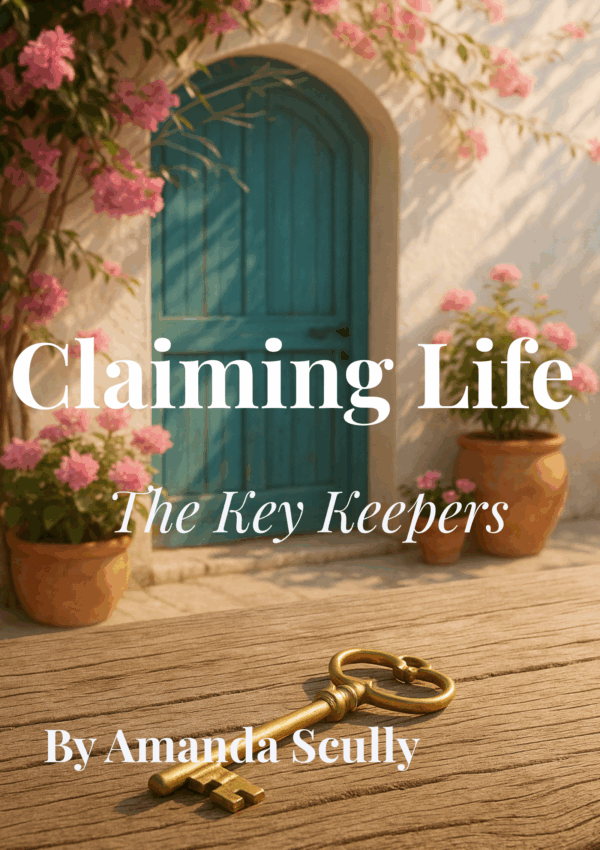


Leave a Reply
You must be logged in to post a comment.