To Every Woman Who Was Brave Enough to Walk Away From Everything — And Choose Herself Instead
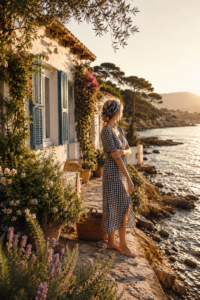
There is a small white house with blue shutters on the Route des Canebiers in Saint-Tropez.It sits right on the water. The Mediterranean comes almost to the garden wall. In the morning the light on the sea is extraordinary — that particular southern French light that painters have been trying to capture for two centuries and that still defeats them because it is not just light, it is warmth and salt and the smell of wild herbs and the sound of the water against the rocks and all of this together makes something that cannot be reduced to colour on a canvas.A woman lived in that house for sixty-seven years.She arrived in 1958 — the most desired woman in the world, the most photographed face of the twentieth century, the woman that the whole world called simply BB.
When she bought La Madrague it was part boathouse, part fisherman’s shack, without even water, gas or electricity.
She loved it immediately. Not for what it was but for what it felt like — which was freedom.
La Madrague became a place of resistance. A private space transformed into a symbol of withdrawal from the spectacle of fame.
She died there on the 28th of December 2025. She was ninety-one years old. The most regular guests in her final years were the dogs, cats, geese, sheep and goats she had taken in.
She had something to say to you. She has been waiting to say it for a long time. Now — more than ever — it is time to listen.
—–
THE LETTER
La Madrague, Saint-Tropez
A morning in early summer — the sea is calm and the wild herbs in the garden smell of everything good
Dear Modern Woman,
I want to begin with the morning I walked away.
It was 1973. I was thirty-nine years old. I was one of the most famous women who had ever lived — my face had been on the cover of every magazine in the world, my films had been seen by hundreds of millions of people, my name was known in every country on earth.
And I was exhausted.
Not from the work — though the work was relentless. Not from the fame — though the fame was a kind of prison I had never agreed to enter. I was exhausted from the performance of being Brigitte Bardot. From the constant, relentless, entirely external demand to be what the world had decided I was — a symbol, an object, a face, a body, a fantasy belonging to everyone except myself.
In 1973 at the height of her fame Bardot retired from acting. It was not a retreat caused by decline but a deliberate refusal of the system that had built her image.
I want you to hear that clearly. Not a decline. A refusal.
I refused.
I refused to keep giving the world a version of myself that belonged to them rather than to me. I refused to keep performing a life I had not chosen. I refused to keep being desired by everyone and known by no one — which is one of the loneliest conditions available to a human being.
I came home to La Madrague. I put on an old shirt and a pair of worn trousers. I walked to the water. I breathed the salt air.
And for the first time in years — perhaps the first time in my adult life — I felt completely, quietly, entirely myself.
The bravest thing I ever did was not the films or the photographs or the dancing or the love affairs. The bravest thing I ever did was stop.
—–
ON LA MADRAGUE — THE HOUSE THAT BECAME HER TRUE SELF
La Madrague became almost as legendary as Bardot herself. People imagined it as glamorous — a Riviera villa worthy of the woman who had put Saint-Tropez on the map. What it actually was — what it always was — was something much better than glamorous.
It was simple.
White walls. Blue shutters. A garden running down to the sea. Wild herbs — rosemary and thyme and lavender — growing between the stones. Olive trees. The sound of the water always present, always changing, always the same.
La Garrigue, her second property on the Capon hill, was her office — the engine of her activism. La Madrague was her relaxation. Her refuge. The place where the world could not reach her and she did not need to be anyone except the woman who walked to the water every morning and breathed.
It is surrounded by wild herbs and flowers.
This is what beauty looks like when it is completely honest. Not the beauty of a magazine or a film set. The beauty of a life pared down to what actually matters — the light, the water, the animals, the silence, the wild herbs growing between the stones.
You do not need the villa. You need the spirit of it. The willingness to strip away everything that is performance and leave only what is true. What would your La Madrague look like? What would remain if you removed everything you maintain for the benefit of other people’s opinion of you?
—–
ON HER STYLE — THE BOHEMIAN PHILOSOPHY
The world remembers Brigitte Bardot in two ways.
The first is the sex symbol version — the red lips, the elaborate hair, the costume of desire.
The second — the one that actually influenced fashion more deeply and more permanently — is the Saint-Tropez version.
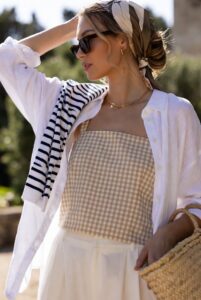
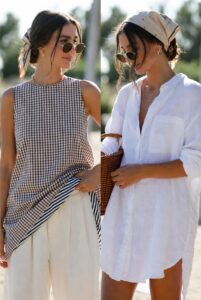
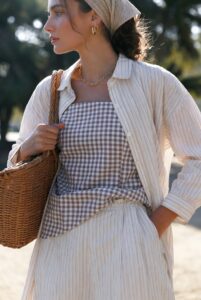
Gingham. Simple checked fabric in black and white or blue and white. She wore it as a bikini top tied at the front. She wore it as a dress. She wore it because it was cheerful and inexpensive and utterly without pretension.
Her hair — the famous Bardot hair — was not styled. It was piled loosely on top of her head with the particular carelessness of someone who had more important things to think about than her hair.
She was barefoot whenever she could be.
She dressed like a woman who was comfortable enough in her own body and her own life that the clothes were simply the practical covering of both — not the performance, not the statement, not the armour.
This is the most radical style philosophy of all: dress as though you have already arrived. As though you have nothing to prove and nowhere to perform and the whole of the afternoon is yours to spend exactly as you please.
—–
HER COLOUR PALETTE
Sun-bleached white — the colour of the house walls and the soft cotton shirt
Gingham blue and white — the colour she made famous and that has never gone out of style
Warm sand — the colour of the beach at noon
Wild lavender — the colour of the Provençal hills
Terracotta — the colour of the flowerpots and the Provençal tiles
Deep marine blue — the colour of the sea and the blue shutters she kept for sixty-seven years
—–
THE BARDOT WARDROBE TODAY
A gingham top or dress in any colour worn with absolute ease
High waisted wide leg trousers in warm white or sand
A simple striped marinière — Breton stripes worn with everything
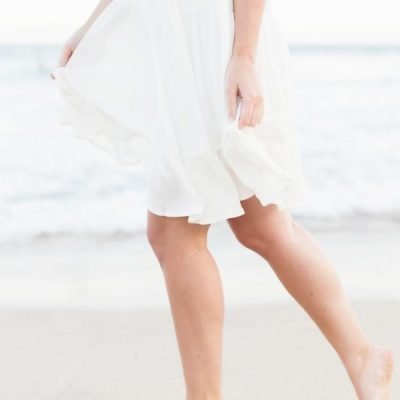
A linen shirt dress in sun-bleached white worn loose with flat sandals
Leather flat sandals — always flat, always worn in
A wicker or straw basket as a bag
Hair piled loosely and not fussed over
A headscarf tied loosely in the hair
Simple gold chain and small hoop earrings
—–
HER HOME — THE SPIRIT OF LA MADRAGUE
White walls — always. The light on white walls in a southern house is the most beautiful interior design decision available.
Blue shutters — she kept them the same blue for sixty-seven years. Find your blue. Keep it.
The garden going pleasantly wild — wild herbs between the stones. Roses allowed to do what roses want to do.
Animals everywhere — a home that has been loved by animals carries something in its walls that a home without them does not.
The simple table — fish from the market. Provençal vegetables. Good bread. Rosé wine from the region. Eaten outside whenever possible.
Books — always books. In every room. Read.
—–
HER TABLE — WHAT BRIGITTE SERVED
Fresh fish grilled simply with olive oil and lemon and herbs from the garden.
Ratatouille — courgettes, aubergines, tomatoes, peppers — cooked slowly in good olive oil until everything collapsed into something rich and fragrant.
Salade Niçoise — proper Niçoise with tuna, eggs, anchovy, bitter greens and a dressing of olive oil and red wine vinegar.
Bread from the local boulangerie — always, every day, still warm.
Pale rosé from Provence — the wine of a meal eaten outside in the south of France with nothing pressing and nowhere to be.
The Bardot Table:
An old linen cloth. Mismatched plates collected over decades. Simple glasses. Wild flowers from the garden in a terracotta pot. Outside always if possible. In the evening, a candle. The sea audible in the background. The animals nearby. Everything that actually matters gathered in one place.
—–
ON THE ANIMALS — HER GREATEST LOVE
She established the Brigitte Bardot Foundation for the Welfare and Protection of Animals in 1986 and devoted the rest of her life to advocating for animal welfare, fighting against the fur trade, factory farming and animal abuse worldwide.
She gave everything for them. Her money. Her time. Her public platform. Decades of her life.
La Garrigue housed a menagerie of rescued animals — sheep, goats, pigs, a mare, a donkey, a pony, countless dogs and cats — many saved from slaughterhouses. The estate also housed a small private chapel, Notre-Dame de la Garrigue, where she buried her beloved animal companions.
The small chapel in the garden for the buried companions is one of the most moving things I have ever read about anyone. The acknowledgement that grief for an animal is real grief.
Love what is real. Not the abstract, the aspirational, the performed. Love what is actually in front of you — the animal at your feet, the sea outside your window, the person sitting across the table, the garden that needs tending.
—–
ON HER REINVENTION — THE SECOND LIFE
Brigitte Bardot is the greatest reinvention story in ClaimingLife history.
She was, by the world’s definition, everything. Beauty. Fame. Desire. Wealth. Power. The most coveted woman of her generation.
In 1973 at the height of her fame she retired from acting — a deliberate refusal of the system that had built her image. She returned permanently to Saint-Tropez and devoted her life to animal rights activism.
She was thirty-nine years old.
She had sixty-seven years at La Madrague after that. Sixty-seven years of the life she had actually chosen.
The real life is always the one you choose after the performance is over. The one you build not for applause but for yourself. The one that exists when the cameras have gone and the crowds have dispersed and you are left with just the sea and the morning light and the question of how you actually want to spend your one extraordinary life.
She answered that question at thirty-nine. The answer was: simply. Quietly. With full commitment to the things that actually mattered.
—–
HER JOURNAL PROMPTS
1. The La Madrague Prompt
If you stripped your life of everything you maintain for other people’s approval — the job title, the social media presence, the version of yourself you perform for the world — what would remain? Is what remains what you actually want?
1. The Blue Shutters Prompt
What is the thing in your life that you have kept exactly as it was for years — not out of laziness but out of love? Identify it. Protect it.
1. The Refusal Prompt
What are you continuing to do — what performance, what role, what version of yourself — that you know in your bones it is time to stop?
1. The Animals Prompt
What is your equivalent of Brigitte Bardot’s animals — the thing outside yourself that you love without reservation, that asks nothing except your presence and your care?
1. The Simple Table Prompt
When did you last eat a meal that was simple and seasonal and eaten outside without any distraction? Plan it. This week.
1. The Reinvention Prompt
If you were going to walk away from the performance of your current life and into the real one — what would that look like? Write it down.
—–
WHAT BRIGITTE WANTS YOU TO KNOW
I had everything the world told me to want. I was desired by everyone and I was lonely in ways that very few people can understand. I was looked at constantly and seen almost never.
I came home to La Madrague. I put on a gingham shirt. I walked to the water. And in the silence that followed — the silence of a life no longer being performed for anyone — I finally heard myself.
I spent sixty-seven years at that house fighting for the animals that cannot speak for themselves. I spent them breathing the salt air and tending the garden and watching the light change on the sea.
I died there on the 28th of December 2025. I was ninety-one years old. The blue shutters were exactly as I had always kept them.
The life that is actually yours is quieter than the one the world offers you. It is smaller in terms of audience and larger in terms of meaning.
Walk away from the performance.
Come home to your La Madrague.
Put on the gingham. Go to the water. Listen for yourself in the silence.
You are in there. You have always been in there.
Claim her.
With love from the blue shutters —
Brigitte
Who chose the sea and the animals and the simple life — and called it everything
—–
AMANDA’S NOTE
She died in December 2025.
I was already writing this letter when I heard the news — already thinking about what Brigitte Bardot’s life meant for ClaimingLife and for every woman who has ever felt trapped in the performance of a life that did not quite fit.
The performance lasted about twenty years. The real life lasted sixty-seven.
Which one mattered?
The blue shutters are still there on the Route des Canebiers. The sea is still coming in to the garden wall. The wild herbs are still growing between the stones.
She chose well. I want to choose that well. I think you do too.
With love and a gingham shirt and bare feet on warm stones —
Amanda
—–
WHERE TO FIND HER
Saint-Tropez, Côte d’Azur, France
The old port at dawn. The market. The beach in September when the crowds have gone and the sea is still warm from the summer. The Route des Canebiers where La Madrague sits behind its gate — blue shutters facing the sea exactly as she always kept them. The lavender fields of the Var an hour inland. Go. Breathe. Listen.
—–
This post is part of the Letters From Her Across Time series at ClaimingLife.com.
Time does not wait for us to claim life. Read ClaimingLife.com to claim yours.


Leave a Reply
You must be logged in to post a comment.