There is a palace at Versailles.
You may have seen it in photographs — the Hall of Mirrors stretching endlessly, chandeliers catching the light of a thousand candles, gold gleaming from every surface, gardens so perfectly arranged they seem to belong to a dream rather than a country.
I lived there.
And I want to tell you something about living in the most beautiful palace in the world:
It was a cage.
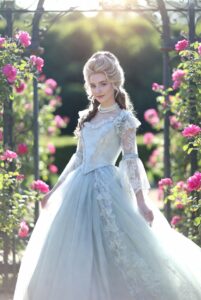
A gilded one — powder blue and gold, draped in silk and heavy with the scent of jasmine and rose — but a cage nonetheless. Every morning my ladies dressed me according to strict court protocol. Every afternoon I performed my role as Queen of France for an audience that was never satisfied. Every evening I smiled and danced and ate macarons and pretended that this was enough.
The world looked at me and saw excess. Frivolity. A woman who cared only for powder and pastries and the next beautiful thing to arrive from Paris.
They were wrong.
What they mistook for frivolity was survival.
What they called excess was joy — deliberately, defiantly chosen in the midst of a life I had not asked for.
I was fourteen years old when they sent me to France.
This is the letter I wish someone had written to me then.
You may have seen it in photographs — the Hall of Mirrors stretching endlessly, chandeliers catching the light of a thousand candles, gold gleaming from every surface, gardens so perfectly arranged they seem to belong to a dream rather than a country.
I lived there.
And I want to tell you something about living in the most beautiful palace in the world:
It was a cage.
A gilded one — powder blue and gold, draped in silk and heavy with the scent of jasmine and rose — but a cage nonetheless. Every morning my ladies dressed me according to strict court protocol. Every afternoon I performed my role as Queen of France for an audience that was never satisfied. Every evening I smiled and danced and ate macarons and pretended that this was enough.
The world looked at me and saw excess. Frivolity. A woman who cared only for powder and pastries and the next beautiful thing to arrive from Paris.
They were wrong.
What they mistook for frivolity was survival.
What they called excess was joy — deliberately, defiantly chosen in the midst of a life I had not asked for.
I was fourteen years old when they sent me to France.
This is the letter I wish someone had written to me then.
The Letter
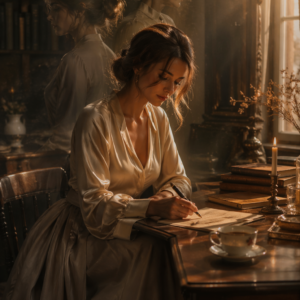
Petit Trianon, Versailles
A Tuesday morning, the roses just opening
Petit Trianon, Versailles
A Tuesday morning, the roses just opening
The Letter
Petit Trianon, Versailles
A Tuesday morning, the roses just opening
Petit Trianon, Versailles
A Tuesday morning, the roses just opening
Dear Modern Woman,
I have been watching you.
I see you in your powder blue — that beautiful icy colour that seems to have taken over your world this year, just as it once took over mine. I see you arranging your macarons on gold trays, lighting your candles, draping your pearls across your dressing table.
I see you being called too much.
Too feminine. Too decorative. Too concerned with beauty when there are more serious things to attend to.
I know this feeling intimately.
They wrote pamphlets about me. Terrible ones. They called me Madame Deficit — as though the country’s problems could be laid at the hem of my gown. They resented my roses, my ribbons, my refusal to apologise for finding joy in beautiful things.
Here is what I want to tell you across all these centuries:
Your love of beauty is not weakness. It is wisdom.
The world has always been difficult. There has never been a moment in history when a woman could say — now is the right time to arrange flowers and light candles and wear powder blue lace and eat a macaron. There has always been something more urgent. Something more serious. Something that makes beauty seem self-indulgent.
Do it anyway.
I created my Petit Trianon — my small sanctuary away from the court — because I understood something that took me years to learn: a woman who has no joy cannot give joy. A woman who has no beauty in her life becomes hollow. The world does not need your hollowness. It needs your fullness.
So fill yourself.
I have been watching you.
I see you in your powder blue — that beautiful icy colour that seems to have taken over your world this year, just as it once took over mine. I see you arranging your macarons on gold trays, lighting your candles, draping your pearls across your dressing table.
I see you being called too much.
Too feminine. Too decorative. Too concerned with beauty when there are more serious things to attend to.
I know this feeling intimately.
They wrote pamphlets about me. Terrible ones. They called me Madame Deficit — as though the country’s problems could be laid at the hem of my gown. They resented my roses, my ribbons, my refusal to apologise for finding joy in beautiful things.
Here is what I want to tell you across all these centuries:
Your love of beauty is not weakness. It is wisdom.
The world has always been difficult. There has never been a moment in history when a woman could say — now is the right time to arrange flowers and light candles and wear powder blue lace and eat a macaron. There has always been something more urgent. Something more serious. Something that makes beauty seem self-indulgent.
Do it anyway.
I created my Petit Trianon — my small sanctuary away from the court — because I understood something that took me years to learn: a woman who has no joy cannot give joy. A woman who has no beauty in her life becomes hollow. The world does not need your hollowness. It needs your fullness.
So fill yourself.
Now — I want to speak to you about your world specifically. Because I have been watching, and I see the trends swirling around you, and I recognise every single one of them.
The powder blue. Yes. This was always mine. Icy, feminine, quietly powerful. I wore it at Versailles when I wanted to feel like myself rather than a queen. I wore it in my garden when the roses were blooming and the world felt, briefly, like it belonged to me. Wear it. Wear it every day. Let it be your armour and your softness at once.
The lace. Oh, the lace. There is nothing in the world like the weight of fine lace against your skin. I had my lace made in Alençon — the most delicate in France. The women who made it worked by candlelight because daylight was too harsh for such fine work. Remember that when you wear lace: someone made it in the most careful, most devoted way imaginable. Wear it as the act of beauty it is.
The pearls. A woman in pearls is a woman who understands that some things are timeless. I wore mine every day. Not to impress anyone. But because they felt like a quiet declaration: I am a woman of substance. I am a woman who has always been here and will always be here.
The macarons. People have laughed at me for centuries for my macarons. Let them. There is a particular kind of joy in a beautiful thing that is also delicious — in something that exists purely to delight. The world needs more of this, not less. Put your blue macarons on a gold tray. Light a candle beside them. Sit by your fireplace in your lace and pearls and eat one slowly.
This is not indulgence. This is resistance.
The fireplace. The warmth. The castlecore interiors your generation has fallen in love with — the velvet, the gilt, the candlelight, the sense that a room should feel like an embrace. I understand this completely. My Petit Trianon was built on exactly this principle: that a woman’s space should feel like sanctuary. Like permission. Like home.
Create that space. Wherever you are. However modest your room. One candle, one flower, one beautiful thing chosen with intention — and you have your Petit Trianon.
The powder blue. Yes. This was always mine. Icy, feminine, quietly powerful. I wore it at Versailles when I wanted to feel like myself rather than a queen. I wore it in my garden when the roses were blooming and the world felt, briefly, like it belonged to me. Wear it. Wear it every day. Let it be your armour and your softness at once.
The lace. Oh, the lace. There is nothing in the world like the weight of fine lace against your skin. I had my lace made in Alençon — the most delicate in France. The women who made it worked by candlelight because daylight was too harsh for such fine work. Remember that when you wear lace: someone made it in the most careful, most devoted way imaginable. Wear it as the act of beauty it is.
The pearls. A woman in pearls is a woman who understands that some things are timeless. I wore mine every day. Not to impress anyone. But because they felt like a quiet declaration: I am a woman of substance. I am a woman who has always been here and will always be here.
The macarons. People have laughed at me for centuries for my macarons. Let them. There is a particular kind of joy in a beautiful thing that is also delicious — in something that exists purely to delight. The world needs more of this, not less. Put your blue macarons on a gold tray. Light a candle beside them. Sit by your fireplace in your lace and pearls and eat one slowly.
This is not indulgence. This is resistance.
The fireplace. The warmth. The castlecore interiors your generation has fallen in love with — the velvet, the gilt, the candlelight, the sense that a room should feel like an embrace. I understand this completely. My Petit Trianon was built on exactly this principle: that a woman’s space should feel like sanctuary. Like permission. Like home.
Create that space. Wherever you are. However modest your room. One candle, one flower, one beautiful thing chosen with intention — and you have your Petit Trianon.
Now — I want to speak to you about your world specifically. Because I have been watching, and I see the trends swirling around you, and I recognise every single one of them.
The powder blue. Yes. This was always mine. Icy, feminine, quietly powerful. I wore it at Versailles when I wanted to feel like myself rather than a queen. I wore it in my garden when the roses were blooming and the world felt, briefly, like it belonged to me. Wear it. Wear it every day. Let it be your armour and your softness at once.
The lace. Oh, the lace. There is nothing in the world like the weight of fine lace against your skin. I had my lace made in Alençon — the most delicate in France. The women who made it worked by candlelight because daylight was too harsh for such fine work. Remember that when you wear lace: someone made it in the most careful, most devoted way imaginable. Wear it as the act of beauty it is.
The pearls. A woman in pearls is a woman who understands that some things are timeless. I wore mine every day. Not to impress anyone. But because they felt like a quiet declaration: I am a woman of substance. I am a woman who has always been here and will always be here.
The macarons. People have laughed at me for centuries for my macarons. Let them. There is a particular kind of joy in a beautiful thing that is also delicious — in something that exists purely to delight. The world needs more of this, not less. Put your blue macarons on a gold tray. Light a candle beside them. Sit by your fireplace in your lace and pearls and eat one slowly.
This is not indulgence. This is resistance.
The fireplace. The warmth. The castlecore interiors your generation has fallen in love with — the velvet, the gilt, the candlelight, the sense that a room should feel like an embrace. I understand this completely. My Petit Trianon was built on exactly this principle: that a woman’s space should feel like sanctuary. Like permission. Like home.
Create that space. Wherever you are. However modest your room. One candle, one flower, one beautiful thing chosen with intention — and you have your Petit Trianon.
The powder blue. Yes. This was always mine. Icy, feminine, quietly powerful. I wore it at Versailles when I wanted to feel like myself rather than a queen. I wore it in my garden when the roses were blooming and the world felt, briefly, like it belonged to me. Wear it. Wear it every day. Let it be your armour and your softness at once.
The lace. Oh, the lace. There is nothing in the world like the weight of fine lace against your skin. I had my lace made in Alençon — the most delicate in France. The women who made it worked by candlelight because daylight was too harsh for such fine work. Remember that when you wear lace: someone made it in the most careful, most devoted way imaginable. Wear it as the act of beauty it is.
The pearls. A woman in pearls is a woman who understands that some things are timeless. I wore mine every day. Not to impress anyone. But because they felt like a quiet declaration: I am a woman of substance. I am a woman who has always been here and will always be here.
The macarons. People have laughed at me for centuries for my macarons. Let them. There is a particular kind of joy in a beautiful thing that is also delicious — in something that exists purely to delight. The world needs more of this, not less. Put your blue macarons on a gold tray. Light a candle beside them. Sit by your fireplace in your lace and pearls and eat one slowly.
This is not indulgence. This is resistance.
The fireplace. The warmth. The castlecore interiors your generation has fallen in love with — the velvet, the gilt, the candlelight, the sense that a room should feel like an embrace. I understand this completely. My Petit Trianon was built on exactly this principle: that a woman’s space should feel like sanctuary. Like permission. Like home.
Create that space. Wherever you are. However modest your room. One candle, one flower, one beautiful thing chosen with intention — and you have your Petit Trianon.
A Note From Amanda
I have thought about Marie Antoinette many times since I first began building Claiming Life.
Not the caricature — not Madame Deficit, not the woman who said let them eat cake, not the symbol of aristocratic excess that history has made of her.
The real one. The fourteen year old girl sent to a foreign country to marry a stranger and perform queenship for a court that was already sharpening its knives.
She coped the way many of us cope — by making her world beautiful. By finding joy wherever she could. By creating, within the gilded cage, a smaller, more intimate space that felt genuinely hers.
We call this frivolous when women do it.
We call it survival when we are feeling generous.
I think it is something else entirely. I think it is wisdom. The deep understanding that a life without beauty — without the Tuesday morning candle, the blue macarons, the pearls, the lace, the fireplace — is not a life fully lived. It is an endurance.
And we were not made merely to endure.
We were made to claim.
Powder blue and all.
I have thought about Marie Antoinette many times since I first began building Claiming Life.
Not the caricature — not Madame Deficit, not the woman who said let them eat cake, not the symbol of aristocratic excess that history has made of her.
The real one. The fourteen year old girl sent to a foreign country to marry a stranger and perform queenship for a court that was already sharpening its knives.
She coped the way many of us cope — by making her world beautiful. By finding joy wherever she could. By creating, within the gilded cage, a smaller, more intimate space that felt genuinely hers.
We call this frivolous when women do it.
We call it survival when we are feeling generous.
I think it is something else entirely. I think it is wisdom. The deep understanding that a life without beauty — without the Tuesday morning candle, the blue macarons, the pearls, the lace, the fireplace — is not a life fully lived. It is an endurance.
And we were not made merely to endure.
We were made to claim.
Powder blue and all.

Leave a Reply
You must be logged in to post a comment.