
To Every Woman Who Ever Held Her Ground
There is something about Scotland that does not let you go.
The light falls differently there — sideways and silver, catching the edges of things: the grey stone of old castles, the surface of a loch at dusk, the purple heather on a hillside that seems to go on forever. The wind carries something in it too. History, perhaps. Or memory. Or the voices of women who lived and fought and loved and refused — long before anyone thought to write their names down.
Two of those women have been waiting a very long time to speak.
One was a queen. The other was a countess. One moved through the world in silk and pearls and devastating beauty. The other sent her maids onto the battlements with white handkerchiefs to mock an English army of twenty thousand men — and won.
Both of them were Scottish. Both of them were extraordinary. Both of them have something urgent to say to you.
This is their letter.
The light falls differently there — sideways and silver, catching the edges of things: the grey stone of old castles, the surface of a loch at dusk, the purple heather on a hillside that seems to go on forever. The wind carries something in it too. History, perhaps. Or memory. Or the voices of women who lived and fought and loved and refused — long before anyone thought to write their names down.
Two of those women have been waiting a very long time to speak.
One was a queen. The other was a countess. One moved through the world in silk and pearls and devastating beauty. The other sent her maids onto the battlements with white handkerchiefs to mock an English army of twenty thousand men — and won.
Both of them were Scottish. Both of them were extraordinary. Both of them have something urgent to say to you.
This is their letter.
Letter One
Holyrood Palace, Edinburgh
An autumn afternoon, the haar rolling in from the Firth of Forth
A Letter from Mary, Queen of Scots — To Every Woman Who Was Punished for Being Too Much
Dear Modern Woman,
I was born a queen.
Six days old, and already the weight of a crown I could not yet see. My father — James V of Scotland — had wanted a son. He looked at me, his newborn daughter, and turned his face to the wall. He died a week later. Some say of a broken heart. Some say of shame after the defeat at Solway Moss. I say it does not matter why. What matters is what came next.
What came next was me.
I want to tell you something about being born into a world that already has an opinion about who you are and what you are worth. About growing up knowing that your value is measured in dynasties and alliances and the sons you might one day produce. About learning, very early, that the things that make you vivid and alive and dangerous — your intelligence, your beauty, your refusal to be managed — are the same things that will eventually be used against you.
I was all of those things. And they were used against me.
But here is what I want you to understand:
I did not diminish myself. Not once. Not even at the end.
Holyrood Palace, Edinburgh
An autumn afternoon, the haar rolling in from the Firth of Forth
A Letter from Mary, Queen of Scots — To Every Woman Who Was Punished for Being Too Much
Dear Modern Woman,
I was born a queen.
Six days old, and already the weight of a crown I could not yet see. My father — James V of Scotland — had wanted a son. He looked at me, his newborn daughter, and turned his face to the wall. He died a week later. Some say of a broken heart. Some say of shame after the defeat at Solway Moss. I say it does not matter why. What matters is what came next.
What came next was me.
I want to tell you something about being born into a world that already has an opinion about who you are and what you are worth. About growing up knowing that your value is measured in dynasties and alliances and the sons you might one day produce. About learning, very early, that the things that make you vivid and alive and dangerous — your intelligence, your beauty, your refusal to be managed — are the same things that will eventually be used against you.
I was all of those things. And they were used against me.
But here is what I want you to understand:
I did not diminish myself. Not once. Not even at the end.
On Being Too Much
They said I was too beautiful. Too charming. Too Catholic. Too French. Too passionate. Too political. Too independent for a woman. Too dangerous for a queen.
John Knox — that thundering, joyless man — stood in St Giles Cathedral in Edinburgh and preached against me. Called me a harlot. Called female rule a monstrosity against nature. Came to my own palace at Holyrood and told me to my face that I was an affront to God.
I listened. I argued back. I wept once — not from weakness, but from fury at the sheer injustice of it. And then I went back to ruling my kingdom.
The women who are told they are too much are almost always exactly enough. The world simply hasn’t grown large enough yet to contain them.
If you have been told you are too much — too loud, too ambitious, too sensitive, too intense, too complicated — I want you to hear this from across four centuries:
You are not too much. You are exactly right. The room is just too small.
Find a bigger room.
They said I was too beautiful. Too charming. Too Catholic. Too French. Too passionate. Too political. Too independent for a woman. Too dangerous for a queen.
John Knox — that thundering, joyless man — stood in St Giles Cathedral in Edinburgh and preached against me. Called me a harlot. Called female rule a monstrosity against nature. Came to my own palace at Holyrood and told me to my face that I was an affront to God.
I listened. I argued back. I wept once — not from weakness, but from fury at the sheer injustice of it. And then I went back to ruling my kingdom.
The women who are told they are too much are almost always exactly enough. The world simply hasn’t grown large enough yet to contain them.
If you have been told you are too much — too loud, too ambitious, too sensitive, too intense, too complicated — I want you to hear this from across four centuries:
You are not too much. You are exactly right. The room is just too small.
Find a bigger room.
On Love and Its Consequences
I loved unwisely. I will not pretend otherwise.
Francis — my first husband, the gentle French dauphin — I loved tenderly, as one loves something fragile and already fading. He died young. I was eighteen years old and a widow.
Darnley — my second husband, that beautiful, vain, disastrous man — I loved with the whole of my heart for approximately six months, before I understood what he was. What followed was one of the great catastrophes of my life. He was murdered. I was blamed. History has never quite let me recover from him.
Bothwell — my third husband — is the one they use to destroy me still. Even now, centuries later.
I do not ask you to approve of my choices. I ask you only to consider what it meant to be a woman making any choices at all in the sixteenth century. To be a queen with feelings. To want love and power simultaneously, when the world insisted you could only have one.
The modern woman knows this feeling. You are told to be ambitious but not too aggressive. Warm but not too emotional. Beautiful but not vain. Loving but not dependent.
The contradictions are designed to exhaust you into compliance.
They exhausted me too. But I never complied.
I loved unwisely. I will not pretend otherwise.
Francis — my first husband, the gentle French dauphin — I loved tenderly, as one loves something fragile and already fading. He died young. I was eighteen years old and a widow.
Darnley — my second husband, that beautiful, vain, disastrous man — I loved with the whole of my heart for approximately six months, before I understood what he was. What followed was one of the great catastrophes of my life. He was murdered. I was blamed. History has never quite let me recover from him.
Bothwell — my third husband — is the one they use to destroy me still. Even now, centuries later.
I do not ask you to approve of my choices. I ask you only to consider what it meant to be a woman making any choices at all in the sixteenth century. To be a queen with feelings. To want love and power simultaneously, when the world insisted you could only have one.
The modern woman knows this feeling. You are told to be ambitious but not too aggressive. Warm but not too emotional. Beautiful but not vain. Loving but not dependent.
The contradictions are designed to exhaust you into compliance.
They exhausted me too. But I never complied.
On Imprisonment — and What You Do Inside It
I was imprisoned for nineteen years.
Nineteen years in the damp castles of England, under the careful custody of my cousin Elizabeth, who was afraid of me — rightly so — and could neither execute me nor let me go.
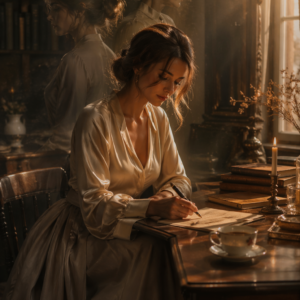
In those nineteen years, I embroidered. I wrote letters. I plotted. I prayed. I kept my mind alive and my spirit intact. I refused to become the broken, diminished thing my imprisonment was designed to make me.
On the morning of my execution, I dressed with extraordinary care. I wore crimson — the colour of martyrdom in the Catholic faith. I had my ladies dress my hair. I walked to the scaffold at Fotheringhay Castle with my head high and my hands steady.
They say I smiled.
I believe I did.
Not because I was unafraid. But because there was nothing left that they could take from me that I had not already decided to give.
There is a kind of freedom that exists only on the other side of everything being taken away. A clarity. A lightness. A knowledge of exactly who you are when you have nothing left to perform.
I found it at the end. I wish I had found it sooner.
I want you to find it now — while you still have everything.
I was imprisoned for nineteen years.
Nineteen years in the damp castles of England, under the careful custody of my cousin Elizabeth, who was afraid of me — rightly so — and could neither execute me nor let me go.
In those nineteen years, I embroidered. I wrote letters. I plotted. I prayed. I kept my mind alive and my spirit intact. I refused to become the broken, diminished thing my imprisonment was designed to make me.
On the morning of my execution, I dressed with extraordinary care. I wore crimson — the colour of martyrdom in the Catholic faith. I had my ladies dress my hair. I walked to the scaffold at Fotheringhay Castle with my head high and my hands steady.
They say I smiled.
I believe I did.
Not because I was unafraid. But because there was nothing left that they could take from me that I had not already decided to give.
There is a kind of freedom that exists only on the other side of everything being taken away. A clarity. A lightness. A knowledge of exactly who you are when you have nothing left to perform.
I found it at the end. I wish I had found it sooner.
I want you to find it now — while you still have everything.
What Mary Wants You to Know
Claim your room. Claim your crown. Not the one anyone else places on your head — the one you place there yourself, in the quiet of your own morning, when no one is watching.
You are not too much. You are not too little. You are exactly what Scotland needs — what the world needs — right now.
“In my end is my beginning.”
This was my motto. Let it be yours too.
With love across four centuries —
Mary Regina
Queen of Scotland, France and the right to be exactly who I was
Claim your room. Claim your crown. Not the one anyone else places on your head — the one you place there yourself, in the quiet of your own morning, when no one is watching.
You are not too much. You are not too little. You are exactly what Scotland needs — what the world needs — right now.
“In my end is my beginning.”
This was my motto. Let it be yours too.
With love across four centuries —
Mary Regina
Queen of Scotland, France and the right to be exactly who I was
Letter Two
Dunbar Castle, East Lothian
January 1338 — the thirteenth day of the siege
A Letter from Black Agnes, Countess of Dunbar — To Every Woman Who Held the Castle Alone
Dear Modern Woman,
They came on a Tuesday.
Twenty thousand of them. The finest English army Edward III could muster, led by the Earl of Salisbury himself — a man so confident of victory that he brought his mangonels and his siege engines and his towers by ship, because he expected to need them for only a few days before I surrendered.
He did not know me.
My husband Patrick was away. Most of the men were gone. I had my ladies in waiting, a handful of guards, the castle servants, and a store of winter supplies that I had made very sure was well stocked — because I am the kind of woman who makes very sure.
When Salisbury rode up to my gate and demanded I surrender Dunbar Castle, I leaned over the battlement and told him what I thought of his demand:
“Of Scotland’s King I haud my house,
I pay him meat and fee,
And I will keep my gude auld house,
While my house will keep me.”
He was not pleased.
Good.
Dunbar Castle, East Lothian
January 1338 — the thirteenth day of the siege
A Letter from Black Agnes, Countess of Dunbar — To Every Woman Who Held the Castle Alone
Dear Modern Woman,
They came on a Tuesday.
Twenty thousand of them. The finest English army Edward III could muster, led by the Earl of Salisbury himself — a man so confident of victory that he brought his mangonels and his siege engines and his towers by ship, because he expected to need them for only a few days before I surrendered.
He did not know me.
My husband Patrick was away. Most of the men were gone. I had my ladies in waiting, a handful of guards, the castle servants, and a store of winter supplies that I had made very sure was well stocked — because I am the kind of woman who makes very sure.
When Salisbury rode up to my gate and demanded I surrender Dunbar Castle, I leaned over the battlement and told him what I thought of his demand:
“Of Scotland’s King I haud my house,
I pay him meat and fee,
And I will keep my gude auld house,
While my house will keep me.”
He was not pleased.
Good.
On Holding Your Ground When Everyone Expects You to Yield
The siege began in earnest on the thirteenth of January. Salisbury’s men hurled great boulders from their siege engines against my walls. Day after day, the stones fell. The noise was tremendous. The damage to my battlements was real.
Every evening, when the bombardment paused, I took my ladies out onto the ramparts in our Sunday finest. We dusted the marks of the shot from the stonework with our white handkerchiefs. Casually. As though tidying up after an inconvenient guest.
Salisbury was furious. His men were furious. An army of twenty thousand men, being taunted by a woman with a handkerchief.
This is what I want you to understand about holding your ground:
It is not always about matching their force with equal force. Sometimes it is about refusing to give them the satisfaction of seeing you frightened. Sometimes it is about stepping onto the battlement in your finest dress and letting them see that their boulders have not broken you.
Sometimes the most powerful thing a woman can do is dust off the damage and carry on.
The siege began in earnest on the thirteenth of January. Salisbury’s men hurled great boulders from their siege engines against my walls. Day after day, the stones fell. The noise was tremendous. The damage to my battlements was real.
Every evening, when the bombardment paused, I took my ladies out onto the ramparts in our Sunday finest. We dusted the marks of the shot from the stonework with our white handkerchiefs. Casually. As though tidying up after an inconvenient guest.
Salisbury was furious. His men were furious. An army of twenty thousand men, being taunted by a woman with a handkerchief.
This is what I want you to understand about holding your ground:
It is not always about matching their force with equal force. Sometimes it is about refusing to give them the satisfaction of seeing you frightened. Sometimes it is about stepping onto the battlement in your finest dress and letting them see that their boulders have not broken you.
Sometimes the most powerful thing a woman can do is dust off the damage and carry on.
On Being Underestimated
They underestimated me because I was a woman. Because my husband was away. Because the odds were twenty thousand to one. Because it was winter. Because they had better weapons and more men and the full force of the English crown behind them.
They thought the castle would fall in days.
It held for five months.
Salisbury tried everything. He built a great battering ram — called it a sow. I dropped the boulders his own catapults had flung at me onto his sow and crushed it to pieces. I may have mentioned this at some volume.
He bribed one of my guards to leave the gate unlocked. My guard took his money — and then came straight to me and told me everything. I set a trap. Salisbury almost walked into it. Almost.
He threatened to hang my brother John if I did not surrender. I pointed out that if John died without children, I would inherit the Earldom of Moray. His death would only benefit me.
He put the noose away.
I sent him a fresh loaf of bread and a bottle of fine wine the following morning — delivered loudly, so all his men could see — to demonstrate that we were not the ones who were hungry.
On the tenth of June, after five months, William Montagu, Earl of Salisbury — one of the finest military commanders in England — packed up his army and went home.
A ballad was written about me:
“Cam I early, cam I late,
I found Agnes at the gate.”
I was always at the gate. That was the whole point.
They underestimated me because I was a woman. Because my husband was away. Because the odds were twenty thousand to one. Because it was winter. Because they had better weapons and more men and the full force of the English crown behind them.
They thought the castle would fall in days.
It held for five months.
Salisbury tried everything. He built a great battering ram — called it a sow. I dropped the boulders his own catapults had flung at me onto his sow and crushed it to pieces. I may have mentioned this at some volume.
He bribed one of my guards to leave the gate unlocked. My guard took his money — and then came straight to me and told me everything. I set a trap. Salisbury almost walked into it. Almost.
He threatened to hang my brother John if I did not surrender. I pointed out that if John died without children, I would inherit the Earldom of Moray. His death would only benefit me.
He put the noose away.
I sent him a fresh loaf of bread and a bottle of fine wine the following morning — delivered loudly, so all his men could see — to demonstrate that we were not the ones who were hungry.
On the tenth of June, after five months, William Montagu, Earl of Salisbury — one of the finest military commanders in England — packed up his army and went home.
A ballad was written about me:
“Cam I early, cam I late,
I found Agnes at the gate.”
I was always at the gate. That was the whole point.
What Agnes Is Holding Right Now
You have a castle. You may not call it that. You may call it your business, your home, your family, your creative work, your health, your peace of mind, your sense of self.
But you have something worth defending. And there are days — perhaps many of them — when it feels like the siege engines have been rolled out. When the boulders are falling. When the odds are impossible and your resources are thin and the people who should be standing beside you are somewhere else entirely.
On those days, I want you to remember me.
Put on your Sunday finest. Walk out onto the battlement. Dust off the damage with your white handkerchief.
And let them see that you are still standing.
Hold your castle, dear woman. Hold it with everything you have. Because the castle that matters most is the one inside you — and no army in the world can take that without your permission.
“Of Scotland’s King I haud my house.”
Hold yours.
With fierce love from the battlements —
Agnes
Black Agnes, Countess of Dunbar
Who held the castle for five months and never once considered surrender
You have a castle. You may not call it that. You may call it your business, your home, your family, your creative work, your health, your peace of mind, your sense of self.
But you have something worth defending. And there are days — perhaps many of them — when it feels like the siege engines have been rolled out. When the boulders are falling. When the odds are impossible and your resources are thin and the people who should be standing beside you are somewhere else entirely.
On those days, I want you to remember me.
Put on your Sunday finest. Walk out onto the battlement. Dust off the damage with your white handkerchief.
And let them see that you are still standing.
Hold your castle, dear woman. Hold it with everything you have. Because the castle that matters most is the one inside you — and no army in the world can take that without your permission.
“Of Scotland’s King I haud my house.”
Hold yours.
With fierce love from the battlements —
Agnes
Black Agnes, Countess of Dunbar
Who held the castle for five months and never once considered surrender
A Note From Amanda — On Walking In Their Footsteps
Scotland does something to a woman.
I felt it the moment I began planning my own journey there — this pull toward something ancient and true and deeply female. As if the landscape itself is made of the same material as the women who shaped it. Stone and storm and stubborn, magnificent refusal.
Mary and Agnes lived seven hundred years ago. Their castles are mostly ruins now, their names known only to history enthusiasts and the occasional school curriculum. But their stories — their real stories, the ones beneath the dates and the battles and the political machinations — are the most ClaimingLife stories I have ever encountered.
Two women. Two completely different ways of holding your ground.
Mary held hers with grace and beauty and the devastating power of a mind that refused to stop working even in a prison cell.
Agnes held hers with wit and courage and a white handkerchief on a battlement, staring down twenty thousand men and finding the whole thing faintly amusing.
Both of them are in me. I suspect both of them are in you too.
If you are ever lucky enough to stand in Scotland — to feel that particular light on your face and that particular wind in your hair — I want you to seek them out. Walk where they walked. Stand where they stood. Let the stone speak.
Scotland does something to a woman.
I felt it the moment I began planning my own journey there — this pull toward something ancient and true and deeply female. As if the landscape itself is made of the same material as the women who shaped it. Stone and storm and stubborn, magnificent refusal.
Mary and Agnes lived seven hundred years ago. Their castles are mostly ruins now, their names known only to history enthusiasts and the occasional school curriculum. But their stories — their real stories, the ones beneath the dates and the battles and the political machinations — are the most ClaimingLife stories I have ever encountered.
Two women. Two completely different ways of holding your ground.
Mary held hers with grace and beauty and the devastating power of a mind that refused to stop working even in a prison cell.
Agnes held hers with wit and courage and a white handkerchief on a battlement, staring down twenty thousand men and finding the whole thing faintly amusing.
Both of them are in me. I suspect both of them are in you too.
If you are ever lucky enough to stand in Scotland — to feel that particular light on your face and that particular wind in your hair — I want you to seek them out. Walk where they walked. Stand where they stood. Let the stone speak.
Walking In Their Footsteps — A Scotland Travel Guide
Follow Mary Queen of Scots
Linlithgow Palace, West Lothian
This is where she came into the world — born in the great royal palace on the loch on the 8th of December, 1542. The palace is a magnificent ruin now, its great hall open to the sky, the fountain in the courtyard still standing where it stood when Mary was carried through as a newborn. Stand beside that fountain. Think of the six-day-old queen who would change history. Feel the weight of beginnings.
Holyrood Palace, Edinburgh
This is where Mary ruled — where she danced and debated and received ambassadors and argued with John Knox and loved unwisely and lived with the full, glorious, dangerous force of her personality. The palace is still a royal residence today, but Mary’s rooms are open to visitors. Walk through them. Touch the low doorway through which her secretary Rizzio was dragged before being murdered fifty-six steps away. Feel what it meant to be a queen who was also desperately, dangerously human.
Edinburgh Castle
High on the volcanic rock above the city, this is where Mary gave birth to her son — the future James VI of Scotland and James I of England. The tiny room where he was born still exists. It is smaller than you expect. Stand in it. Consider what she felt in that moment — relief, love, the complicated hope that this child might save her.
Loch Leven Castle, Kinross
This is where they imprisoned her. A small tower on an island in a loch — beautiful and utterly inescapable. Mary spent almost a year here before escaping by boat, hidden under a cloak. You can take a ferry to the island today. Stand in the tower. Look out at the water. Understand that even here, she was planning.
St Giles Cathedral, Edinburgh
Walk the Royal Mile to this magnificent medieval cathedral and think of Mary standing here, facing John Knox’s thundering disapproval, refusing to back down. The cathedral is free to enter. The history is free to feel.
Linlithgow Palace, West Lothian
This is where she came into the world — born in the great royal palace on the loch on the 8th of December, 1542. The palace is a magnificent ruin now, its great hall open to the sky, the fountain in the courtyard still standing where it stood when Mary was carried through as a newborn. Stand beside that fountain. Think of the six-day-old queen who would change history. Feel the weight of beginnings.
Holyrood Palace, Edinburgh
This is where Mary ruled — where she danced and debated and received ambassadors and argued with John Knox and loved unwisely and lived with the full, glorious, dangerous force of her personality. The palace is still a royal residence today, but Mary’s rooms are open to visitors. Walk through them. Touch the low doorway through which her secretary Rizzio was dragged before being murdered fifty-six steps away. Feel what it meant to be a queen who was also desperately, dangerously human.
Edinburgh Castle
High on the volcanic rock above the city, this is where Mary gave birth to her son — the future James VI of Scotland and James I of England. The tiny room where he was born still exists. It is smaller than you expect. Stand in it. Consider what she felt in that moment — relief, love, the complicated hope that this child might save her.
Loch Leven Castle, Kinross
This is where they imprisoned her. A small tower on an island in a loch — beautiful and utterly inescapable. Mary spent almost a year here before escaping by boat, hidden under a cloak. You can take a ferry to the island today. Stand in the tower. Look out at the water. Understand that even here, she was planning.
St Giles Cathedral, Edinburgh
Walk the Royal Mile to this magnificent medieval cathedral and think of Mary standing here, facing John Knox’s thundering disapproval, refusing to back down. The cathedral is free to enter. The history is free to feel.
Follow Black Agnes
Dunbar, East Lothian
Take the train from Edinburgh to Dunbar — it takes less than forty minutes and arrives at one of Scotland’s most underrated coastal towns. The ruins of Dunbar Castle sit right at the harbour, battered by the same North Sea winds that Agnes felt on her face seven hundred years ago. Very little remains — the castle was largely demolished over the centuries — but what remains is powerful. Stand on those stones. Look out at the sea. This is where she held the line.
Dunbar Harbour
Walk along the harbour wall and look for the place where Sir Alexander Ramsay came by night with his forty men and his supplies, slipping into the castle through a hidden sea gate to break the siege. The harbour is beautiful — fishing boats, sea birds, the smell of salt and history. Have a coffee in one of the harbour cafés. Think of Agnes receiving that shipment of food and sending her freshly baked loaf to Salisbury the following morning.
The East Lothian Coastline
Drive or cycle the East Lothian coastal path — one of Scotland’s most beautiful and undervisited stretches of coastline. The views across to the Bass Rock and the Isle of May are extraordinary. The light is extraordinary. The wind is extraordinary. And everywhere you look, you are in Agnes’s landscape — the land she defended, the sky she watched, the sea that saved her.
Dunbar, East Lothian
Take the train from Edinburgh to Dunbar — it takes less than forty minutes and arrives at one of Scotland’s most underrated coastal towns. The ruins of Dunbar Castle sit right at the harbour, battered by the same North Sea winds that Agnes felt on her face seven hundred years ago. Very little remains — the castle was largely demolished over the centuries — but what remains is powerful. Stand on those stones. Look out at the sea. This is where she held the line.
Dunbar Harbour
Walk along the harbour wall and look for the place where Sir Alexander Ramsay came by night with his forty men and his supplies, slipping into the castle through a hidden sea gate to break the siege. The harbour is beautiful — fishing boats, sea birds, the smell of salt and history. Have a coffee in one of the harbour cafés. Think of Agnes receiving that shipment of food and sending her freshly baked loaf to Salisbury the following morning.
The East Lothian Coastline
Drive or cycle the East Lothian coastal path — one of Scotland’s most beautiful and undervisited stretches of coastline. The views across to the Bass Rock and the Isle of May are extraordinary. The light is extraordinary. The wind is extraordinary. And everywhere you look, you are in Agnes’s landscape — the land she defended, the sky she watched, the sea that saved her.
What to Pack for Scotland — Two Suitcases, Two Women, Two Ways of Claiming the Highlands
Scotland demands a particular kind of wardrobe. Not because it is fashionable — though it is, in the most ancient and windswept way — but because it is alive. The weather changes in minutes. The light shifts from silver to gold to pewter in a single afternoon. The landscape moves between dramatic and tender so quickly that you need to be dressed for both.
We asked two women what they would pack.
One was a queen. The other held a castle for five months with a handful of servants and a white handkerchief.
Between them, they have covered everything you need.
Scotland demands a particular kind of wardrobe. Not because it is fashionable — though it is, in the most ancient and windswept way — but because it is alive. The weather changes in minutes. The light shifts from silver to gold to pewter in a single afternoon. The landscape moves between dramatic and tender so quickly that you need to be dressed for both.
We asked two women what they would pack.
One was a queen. The other held a castle for five months with a handful of servants and a white handkerchief.
Between them, they have covered everything you need.
Mary’s Suitcase — Old Money Winter in Scotland
What Mary Queen of Scots would pack today
Mary understood something that most modern women forget when they travel: the way you dress in a place is the way you meet it. She moved through castles and courts and cold Scottish mornings with the same deliberate elegance. She packed as though every day might be witnessed by history.
Because it was. And so is yours.
The Coat — First and Last
One perfectly structured camel wool coat. Long, classic, with clean lapels. This is your armour and your elegance simultaneously. Mary would have worn velvet — you will wear camel — but the intention is identical. To move through the world as though you belong in every room you enter. Which you do.
The Cashmere Layer
Two cashmere turtlenecks — one in cream, one in soft charcoal. Scotland is cold in ways that surprise you, even in spring. The cashmere is not a luxury. It is a necessity dressed beautifully.
The Trouser
One pair of perfectly cut wool trousers in charcoal or navy. High waisted, wide leg, in a fabric with weight. The kind of trouser that says you have arrived with intention.
The Silk Blouse
One ivory silk blouse with a simple collar. This is your Holyrood piece — the thing you wear when you are standing in Mary’s rooms and you want to feel, even fractionally, what she felt. Silk moves differently than cotton. It makes you more aware of your own body. This is deliberate.
The Knitwear
One chunky cream cable knit sweater for the days when the haar rolls in off the Firth and the castle ruins are wreathed in mist and you just need to be warm and beautiful simultaneously.
The Accessories That Mary Would Insist On
— Pearl earrings. Always.
— One silk scarf in cream or ivory — knotted at the neck on the cold days, tied in the hair on the warmer ones.
— A structured leather bag in tan or cognac. One that fits everything and needs no apology.
— Leather gloves in cognac or chocolate — for the days when the East Lothian wind comes in hard off the North Sea.
— One piece of gold jewellery worn every single day. Not saved for evenings. Every day.
The Shoes
— Knee high leather boots in tan or dark brown for the castle visits
— One pair of clean simple heels for Edinburgh evenings
— Comfortable but beautiful walking shoes for the coastal paths
Mary’s Colour Palette for Scotland:
Camel. Ivory. Charcoal. Navy. Cognac. Soft gold. Pearl white.
Nothing that needs to announce itself. Everything that will be remembered.

What Mary Queen of Scots would pack today
Mary understood something that most modern women forget when they travel: the way you dress in a place is the way you meet it. She moved through castles and courts and cold Scottish mornings with the same deliberate elegance. She packed as though every day might be witnessed by history.
Because it was. And so is yours.
The Coat — First and Last
One perfectly structured camel wool coat. Long, classic, with clean lapels. This is your armour and your elegance simultaneously. Mary would have worn velvet — you will wear camel — but the intention is identical. To move through the world as though you belong in every room you enter. Which you do.
The Cashmere Layer
Two cashmere turtlenecks — one in cream, one in soft charcoal. Scotland is cold in ways that surprise you, even in spring. The cashmere is not a luxury. It is a necessity dressed beautifully.
The Trouser
One pair of perfectly cut wool trousers in charcoal or navy. High waisted, wide leg, in a fabric with weight. The kind of trouser that says you have arrived with intention.
The Silk Blouse
One ivory silk blouse with a simple collar. This is your Holyrood piece — the thing you wear when you are standing in Mary’s rooms and you want to feel, even fractionally, what she felt. Silk moves differently than cotton. It makes you more aware of your own body. This is deliberate.
The Knitwear
One chunky cream cable knit sweater for the days when the haar rolls in off the Firth and the castle ruins are wreathed in mist and you just need to be warm and beautiful simultaneously.
The Accessories That Mary Would Insist On
— Pearl earrings. Always.
— One silk scarf in cream or ivory — knotted at the neck on the cold days, tied in the hair on the warmer ones.
— A structured leather bag in tan or cognac. One that fits everything and needs no apology.
— Leather gloves in cognac or chocolate — for the days when the East Lothian wind comes in hard off the North Sea.
— One piece of gold jewellery worn every single day. Not saved for evenings. Every day.
The Shoes
— Knee high leather boots in tan or dark brown for the castle visits
— One pair of clean simple heels for Edinburgh evenings
— Comfortable but beautiful walking shoes for the coastal paths
Mary’s Colour Palette for Scotland:
Camel. Ivory. Charcoal. Navy. Cognac. Soft gold. Pearl white.
Nothing that needs to announce itself. Everything that will be remembered.
Agnes’s Suitcase — Poetcore Summer in Scotland
What Black Agnes would pack today
Agnes did not dress to be admired. She dressed to be effective — and somewhere in that intention, she became magnificent. Her summer Scotland wardrobe is the poetcore woman’s dream: worn leather and cream linen and the kind of tweed that looks like it has already survived three storms and will survive three more.
She packed for a woman who was going to be outside. A lot. In the wind. Near castles.
You are that woman.
The Blazer — Your Castle Walls
One oversized vintage style tweed blazer in tobacco, warm brown or dark olive. This is your Agnes piece. Wear it over everything — over ruffled blouses, over linen dresses, over cream sweaters on the cool summer evenings. Agnes would have worn her plaid wrapped around her shoulders. You will wear tweed. The spirit is the same: something warm, something strong, something that looks like it belongs on a Scottish hillside because it does.
The Linen Dress
One simple linen shirt dress in cream or sage green. This is your Dunbar harbour piece — for the warm afternoons when the sun comes out over the East Lothian coast and you walk along the harbour wall eating fish and chips and feeling like you have arrived somewhere true.
The Ruffled Blouse
One cream ruffled blouse with wide sleeves — the poetcore essential. Agnes would recognise this immediately. Wear it tucked into wide leg trousers, belted at the waist. Wear it loose over dark linen. Wear it on the cliff path above Dunbar with the wind pulling at the sleeves and feel like a woman from a very good novel. Because you are.
The Knitwear
One oversized oatmeal turtleneck for the cool evenings and the misty mornings. Scotland in summer is not reliably warm. The turtleneck is your best friend on the highland days when the mist comes in and the temperature drops and you are standing on a hillside above a ruined castle feeling magnificently alive.
The Wide Leg Trouser
Dark charcoal or warm chocolate brown linen trousers — wide leg, high waisted, with enough movement that the Scottish wind can do its thing. Agnes would approve of a trouser that moves like it has its own opinions.
Agnes’s Essential Accessories
— One worn leather satchel — large enough for a book, a journal, a camera and a flask of tea. This is non-negotiable.
— Brown leather lace up boots — the kind that can handle a coastal path, a castle ruin and a Michelin starred dinner without changing.
— A long dark wool cape or wrap for the highland days — dramatic, practical and deeply Agnes.
— Simple gold hoop earrings or small studs.
— A leather belt worn at the waist over everything.
Agnes’s Colour Palette for Scotland:
Oatmeal. Tobacco. Charcoal. Warm brown. Cream. Heather purple. Moss green. Stone grey.
The colours of the landscape itself. Dress like you belong there. Because you do.

What Black Agnes would pack today
Agnes did not dress to be admired. She dressed to be effective — and somewhere in that intention, she became magnificent. Her summer Scotland wardrobe is the poetcore woman’s dream: worn leather and cream linen and the kind of tweed that looks like it has already survived three storms and will survive three more.
She packed for a woman who was going to be outside. A lot. In the wind. Near castles.
You are that woman.
The Blazer — Your Castle Walls
One oversized vintage style tweed blazer in tobacco, warm brown or dark olive. This is your Agnes piece. Wear it over everything — over ruffled blouses, over linen dresses, over cream sweaters on the cool summer evenings. Agnes would have worn her plaid wrapped around her shoulders. You will wear tweed. The spirit is the same: something warm, something strong, something that looks like it belongs on a Scottish hillside because it does.
The Linen Dress
One simple linen shirt dress in cream or sage green. This is your Dunbar harbour piece — for the warm afternoons when the sun comes out over the East Lothian coast and you walk along the harbour wall eating fish and chips and feeling like you have arrived somewhere true.
The Ruffled Blouse
One cream ruffled blouse with wide sleeves — the poetcore essential. Agnes would recognise this immediately. Wear it tucked into wide leg trousers, belted at the waist. Wear it loose over dark linen. Wear it on the cliff path above Dunbar with the wind pulling at the sleeves and feel like a woman from a very good novel. Because you are.
The Knitwear
One oversized oatmeal turtleneck for the cool evenings and the misty mornings. Scotland in summer is not reliably warm. The turtleneck is your best friend on the highland days when the mist comes in and the temperature drops and you are standing on a hillside above a ruined castle feeling magnificently alive.
The Wide Leg Trouser
Dark charcoal or warm chocolate brown linen trousers — wide leg, high waisted, with enough movement that the Scottish wind can do its thing. Agnes would approve of a trouser that moves like it has its own opinions.
Agnes’s Essential Accessories
— One worn leather satchel — large enough for a book, a journal, a camera and a flask of tea. This is non-negotiable.
— Brown leather lace up boots — the kind that can handle a coastal path, a castle ruin and a Michelin starred dinner without changing.
— A long dark wool cape or wrap for the highland days — dramatic, practical and deeply Agnes.
— Simple gold hoop earrings or small studs.
— A leather belt worn at the waist over everything.
Agnes’s Colour Palette for Scotland:
Oatmeal. Tobacco. Charcoal. Warm brown. Cream. Heather purple. Moss green. Stone grey.
The colours of the landscape itself. Dress like you belong there. Because you do.
The One Thing Both Women Would Pack
A journal.
Mary wrote constantly — letters, poems, prayers — throughout her imprisonment. Her words kept her alive when everything else was being taken from her.
Agnes’s story was never written by her own hand. We know her through the ballads others composed about her, the chronicles others kept. I think about this often. What would she have written if she had been given the page?
Take a journal to Scotland. Write in it every day. In Holyrood and at Dunbar and on the highland paths and in the Edinburgh coffee shops and at the window of your hotel as the haar rolls in at dusk.
Write what you see. Write what you feel. Write what Scotland is doing to you — because it will do something. It always does.
Mary wrote: “In my end is my beginning.”
Agnes would have written something rather more direct. Something involving handkerchiefs and English earls. Something that made you laugh and then feel the back of your throat tighten with recognition.
Write your version.
Claim the page. Claim the landscape. Claim the story.
This is what it means to pack for Scotland like a woman who is Claiming Life.
A journal.
Mary wrote constantly — letters, poems, prayers — throughout her imprisonment. Her words kept her alive when everything else was being taken from her.
Agnes’s story was never written by her own hand. We know her through the ballads others composed about her, the chronicles others kept. I think about this often. What would she have written if she had been given the page?
Take a journal to Scotland. Write in it every day. In Holyrood and at Dunbar and on the highland paths and in the Edinburgh coffee shops and at the window of your hotel as the haar rolls in at dusk.
Write what you see. Write what you feel. Write what Scotland is doing to you — because it will do something. It always does.
Mary wrote: “In my end is my beginning.”
Agnes would have written something rather more direct. Something involving handkerchiefs and English earls. Something that made you laugh and then feel the back of your throat tighten with recognition.
Write your version.
Claim the page. Claim the landscape. Claim the story.
This is what it means to pack for Scotland like a woman who is Claiming Life.

Scotland is waiting for you.
Mary is waiting for you at Holyrood, in rooms that still smell of old wood and cold stone and the particular silence of a life that burned too bright and too brief.
Agnes is waiting for you at Dunbar, at a crumbling harbour castle where the North Sea wind still comes in hard off the water, and where you can still — if you are very quiet and very still — almost hear the sound of a white handkerchief being shaken at an English army.
Go. Walk where they walked. Feel what they felt.
Claim the landscape.
Claim the history.
Claim yourself.
This is what it means to be a woman who is Claiming Life.
With love and a one-way ticket to Edinburgh —
Amanda
Mary is waiting for you at Holyrood, in rooms that still smell of old wood and cold stone and the particular silence of a life that burned too bright and too brief.
Agnes is waiting for you at Dunbar, at a crumbling harbour castle where the North Sea wind still comes in hard off the water, and where you can still — if you are very quiet and very still — almost hear the sound of a white handkerchief being shaken at an English army.
Go. Walk where they walked. Feel what they felt.
Claim the landscape.
Claim the history.
Claim yourself.
This is what it means to be a woman who is Claiming Life.
With love and a one-way ticket to Edinburgh —
Amanda
This post is part of the Letters From Her Across Time series at ClaimingLife.com — where the women of history write directly to the women of today. The travel section is part of Claiming the World — Amanda’s guide to travelling as a woman who is claiming her life.



Leave a Reply
You must be logged in to post a comment.